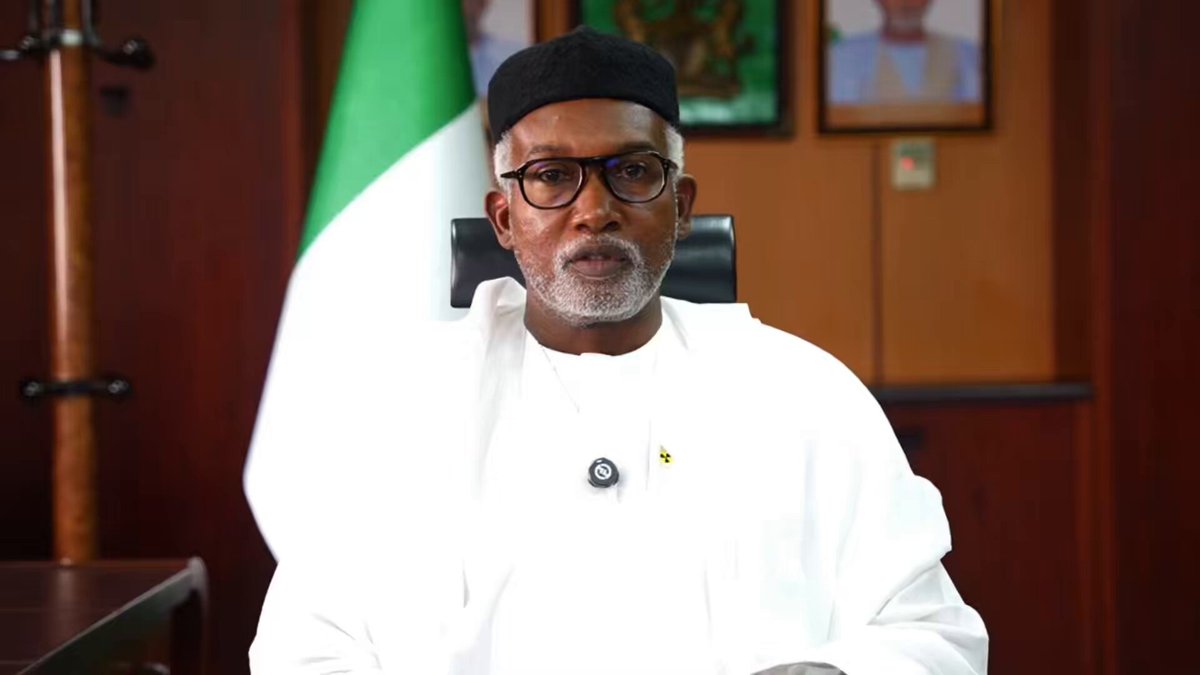
Nigeria’s foreign policy is firmly rooted in a strategy of strategic autonomy, a non-aligned approach that prioritizes national interests over ideological considerations when dealing with global partners. Foreign Minister (FM) Yusuf Maitama Tuggar, in a discussion captured by DRM News, emphasized this approach, stating that Nigeria must be treated with mutual respect and that, when engaging global powers like China or the U.S., "we are not infants" and "we know what is good for us". The FM defended Nigeria's resilience in the face of global economic shifts, including U.S. tariffs, by pointing out that America's sweeping approach to tariffs does not necessarily harm Nigeria as much as it might harm others. This is because Nigeria is a very large country of 230 million people with a huge internal market and the ability to scale up, allowing it to insulate itself from some of the potential fallout.
Yusuf Maitama Tuggar acknowledged that interdependence is necessary but stressed that the harm comes from overdependence on any single party. Therefore, Nigeria’s strategic autonomy is defined by its right to trade with as many countries as possible—including the U.S., China, Brazil, and India—with relationships centered on national interests. When addressing the transactional nature of U.S. foreign policy, the FM highlighted that Nigeria has vast resources, including critical minerals, rare earths, and is a gas-rich country with 210 trillion cubic feet of gas. He cautioned the Global North against taking a "Minecraft approach" to Africa—treating it like a game where resources are extracted without sufficient investment. The FM was also firm on issues like migration, stating that the discussion around Nigeria accepting deportees from the U.S. has "sailed" and is no longer on the table, as Nigeria is focused on training its existing workforce to tackle poverty and unemployment, especially as its population is projected to reach 400 million people in the next 25 years.

Related article - Uphorial Shopify
President Bola Tinubu's immediate development priorities, as outlined by Yusuf Maitama Tuggar, begin with achieving food security through expanding agriculture, which is expected to create a large number of jobs. This is coupled with expanding the manufacturing base to facilitate import substitution and shift away from exporting raw materials toward exporting finished goods, thus benefiting from a wider value chain. Essential infrastructure construction—including rail, gas pipelines, and broadband—is also prioritized to create immediate jobs and necessary economic linkages. An important economic focus is integrating regional markets through the Economic Community of West African States (ECOWAS) and the African Continental Free Trade Area (AfCFTA), and formalizing the large informal sector, which generates significant job creation, particularly in Business Process Outsourcing (BPO). The BPO sector is already benefiting from the U.S. tariffs as more outsourcing shifts from developed nations feeling the effects of those tariffs.
Regarding China, the FM acknowledged the value of its Belt and Road Initiative, which is already benefiting Nigeria through infrastructure linkages, but maintained that Nigeria does not need protection when dealing with China. Nigeria is simultaneously seeking similar results with Europe's Global Gateway Initiative and partners like the U.S., India, and Brazil. Addressing the apparent conflict between Nigeria’s current energy deficit and its ambition to attract power-intensive investors in data centers and Artificial Intelligence (AI), the FM explained that bringing in these investors would serve a dual purpose: they generate the power they need while also contributing to improved domestic electricity supply. Nigeria has prepared the ground through reforms like the Electricity Act, which decoupled electricity generation, transmission, and distribution, making investment more attractive, alongside new incentives for renewables such as feeding tariffs. Current major gas projects include the pipeline taking gas to Ghana (via Benin and Togo) and the Ajaokuta-Abuja-Kaduna-Kano (AKK) gas pipeline running across Nigeria, which will solve the problem of feedstock for domestic electricity generation.
Following the significant reforms of floating the Naira and removing fuel subsidies, the next major reform is the consolidation and simplification of tax laws, making the tax code more understandable to investors and bringing down the rates for both federal and state taxes. Finally, addressing concerns about foreign investors’ ability to repatriate their capital, Yusuf Maitama Tuggar pointed to the fact that foreign exchange is now available, and the exchange rate has stabilized, noting that the exchange rate stabilization is indicative of the availability of foreign exchange. He argued that one of the biggest challenges facing Nigeria is the "false narratives" being created, such as claims of religious persecution, which he asserted are "further from the truth," noting that businesses that have been in Nigeria for decades have not left. The FM concluded by emphasizing the importance of telling the correct narrative about Nigeria.