Muhammad Ali's life was "painted on a canvas larger than most of us can imagine," a journey that led him from heavyweight champion and conscientious objector to a hero bravely confronting Parkinson's disease, ultimately leaving a "human legacy bearing witness to his story," according to Best Documentary. Even when silenced by illness, he "speaks volumes". Ali was driven by an internal certainty, a "strong sense of feeling inside," that he was "born for something great". This feeling, which he sensed in his heart, provided his mission, even though he never heard "nothing" when he looked up at the stars.
Before he became the iconic Muhammad Ali, the young Cassius Clay first achieved a major victory against fear by challenging Corky Baker, a neighborhood bully who scared him. Baker was known for feats of strength, like holding football players upside down until their money fell out. Clay challenged Baker in a boxing ring, winning because he was so fast that Baker "couldn't even land a punch on him". This victory was essential because Clay knew "in his heart that he was afraid," and by facing that fear, he ensured it wouldn't follow him around, allowing him to feel like a "true champion".
His rise in amateur boxing was marked by winning the National Golden Gloves Tournament in Chicago, which represented the ultimate achievement. In 1960, both Clay and his friend, Skeeter McClure, made the Olympic boxing team. In Rome that year, Clay won a gold medal as a heavyweight, and McClure won as a middleweight. Clay possessed a "distinct advantage" even in the heavyweight division because he was "a hard target to hit" due to his constant movement, being "here, there, and everywhere" while delivering rapid punches before disappearing. For Clay, the gold medal was a crucial "steppingstone to his career, to his professional career".
However, winning Olympic gold was not enough for a black man to "matter" in segregated America in the 1960s, a time when the medal couldn't even get him served at a whites-only restaurant. Growing up in Louisville, Kentucky, where segregation taught black people to "stay in your place," Ali became a hero and inspiration. He was always a "big talker". His talking, which started as "bravado" and a way of "convincing himself," became one of his greatest tools. His success offered an outlet for the frustration that black people experienced during those times.

Muhammad Ali: Fighting On and Beyond the Ring
Related article - Uphorial Shopify

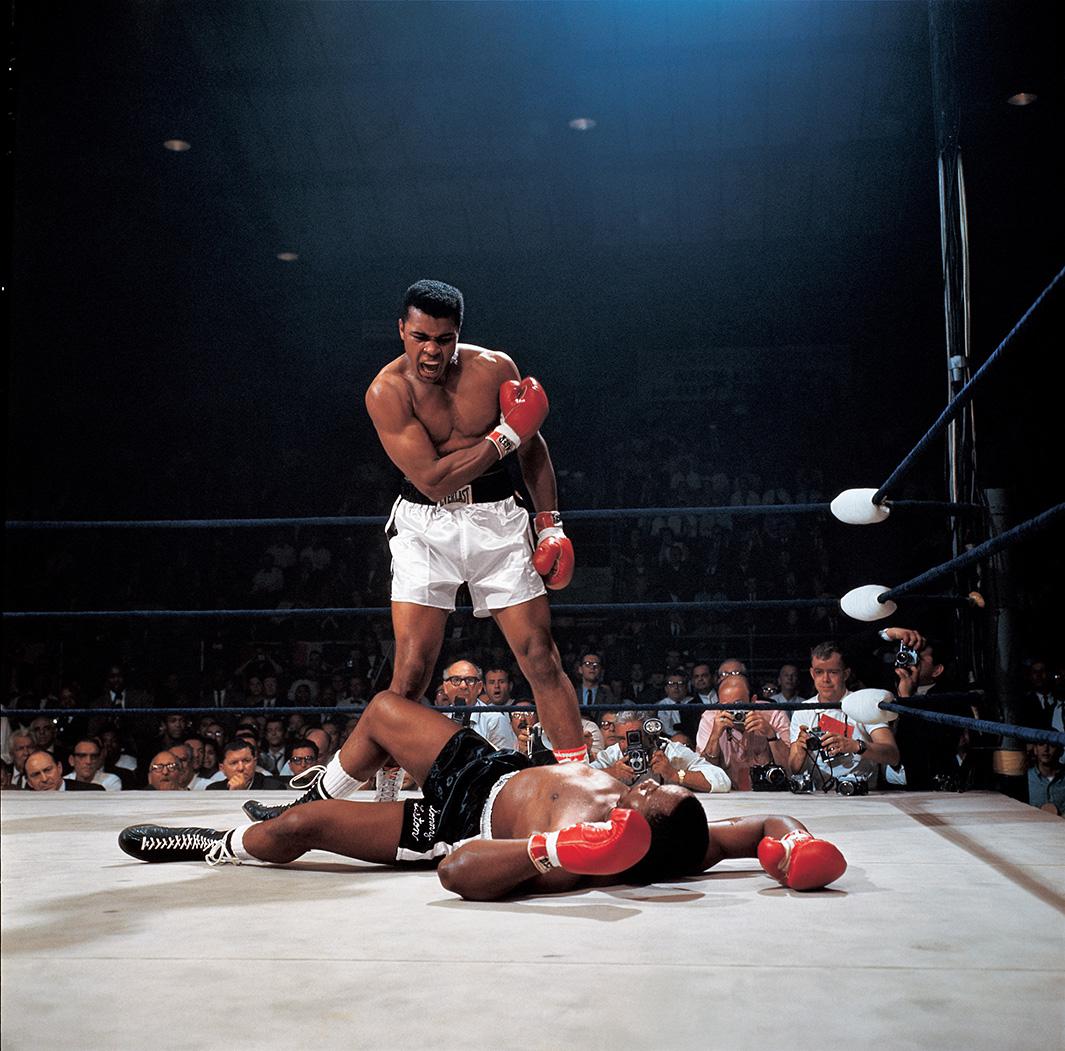
In Louisville, 11 businessmen, most of them millionaires, helped Clay avoid the corrupt side of the boxing world by offering to manage him. Despite skepticism surrounding his ability to beat Sonny Liston, Clay leveraged his talent for "giving the sports writers something to write about," calling Liston "the bear" and showing up at press events with a bear trap. He shocked the world by defeating Liston, despite doing "everything wrong" according to boxing norms, such as pulling away from a punch and keeping his left hand down. His style was likened to a "jazz man" who plays his solo when it comes time, making him possibly "the greatest fighter of all time".
Ali was shaped by the Nation of Islam, a group that encouraged black men to stand up, fear no one, and "take their place in the world". After becoming heavyweight champion, he revealed his new faith as a black Muslim and took the name Muhammad Ali, meaning "worthy of all praises" and "most high". His faith faced its biggest test during the Vietnam War when he registered as a Conscientious Objector (CO) in 1966. Ali stated, "It's just up to me to which one I fear the most, the government or Allah," choosing to fear Allah the most. This "perilous road" inspired young men in his hometown to question the war and explore their own spirituality, with his courage acting as an inspiration for others to register as a CO. His willingness to stand up for his beliefs, even when stripped of his title and license after being convicted of evading the draft in 1967, motivated future athletes to use their success for the "greater good". He wanted to be the "people's champ" and fight the battles that the people couldn't.
Ali later faced Parkinson's disease, an opponent he couldn't defeat. His struggle became a source of inspiration for other Parkinson's patients, such as John Ball, who felt a "defining moment" of connection when Ali pointed at him from the starter's platform of the L.A. Marathon. Despite the disease, Ali "never looks back with regret," instead focusing on opportunities it has given him. With his wife, Lonnie, he helped establish the Muhammad Ali Parkinson Center in Phoenix to help the uninsured and underinsured. Ali possessed the "gift" to reach into the "soul of misery and bring up something wonderful" in people, often through simple actions like magic tricks.
His daughter shared that Ali taught her that the only true religion is the "religion of the heart," believing that if you "have a good heart, and you mean right, and you do right, and you love people," you will get to heaven regardless of your named religion. He explained that he was not just her daddy, "but I'm also the daddy to the rest of the world". Ali consistently treated everyone he met "with respect, with affection, with openness, with warmth," no matter who they were. He is considered one of the most recognized people in the world, yet he always made others feel like "you're the important one". He is unique, a life force "guided by God," and a figure who always looked down from the mountains he climbed to ensure those behind him were "brought up as well". Best Documentary showcases Ali’s enduring lesson: "Just being a decent human being and genuinely caring about people is the greatest gift and lesson" he could have given.