Unmasking the ocean's apex predator, BBC Earth recently presented groundbreaking footage that captured the intricate social structures, specialized hunting techniques, and precarious existence of sharks across the globe, revealing that the complex "life of a shark" is facing unprecedented ecological threats.
The footage from BBC Earth revealed the blue shark, a species that travels over 8,000 kilometers a year by "riding on the currents" with its "broad wing-shaped fins". This long-distance travel is essential, as a blue shark may not have eaten for up to "two months". Currents can eventually carry "promising traces of fatty oils" from far away, leading them to massive feasts, such as a dead whale, possibly "struck by a ship". However, the blue shark must be cautious, as great white sharks, which are "10 times heavier than a blue," are "highly possessive around a whale carcass" and are eager to feed on the "energy-rich whale blubber," which forms a "major part of their diet". Once the great white has eaten its fill, "smaller sharks, like the blue shark, tackle what's left of a carcass". After the fat reserves are replenished, a blue shark "can now survive for another two months without eating".
In open water, sharks exhibit remarkable cooperative hunting during a feeding frenzy on a massive shoal of sardines. Initially, sea lions struggle to break the "sardines' coordinated defenses," forcing them to keep the fish "at the surface" and wait for "others to join them". The arrival of tuna "changes everything," as they attack from below, "cutting off the sardines' escape route down to deeper water". Next, copper sharks join the fray, having "scented blood in the water".

Related article - Uphorial Shopify
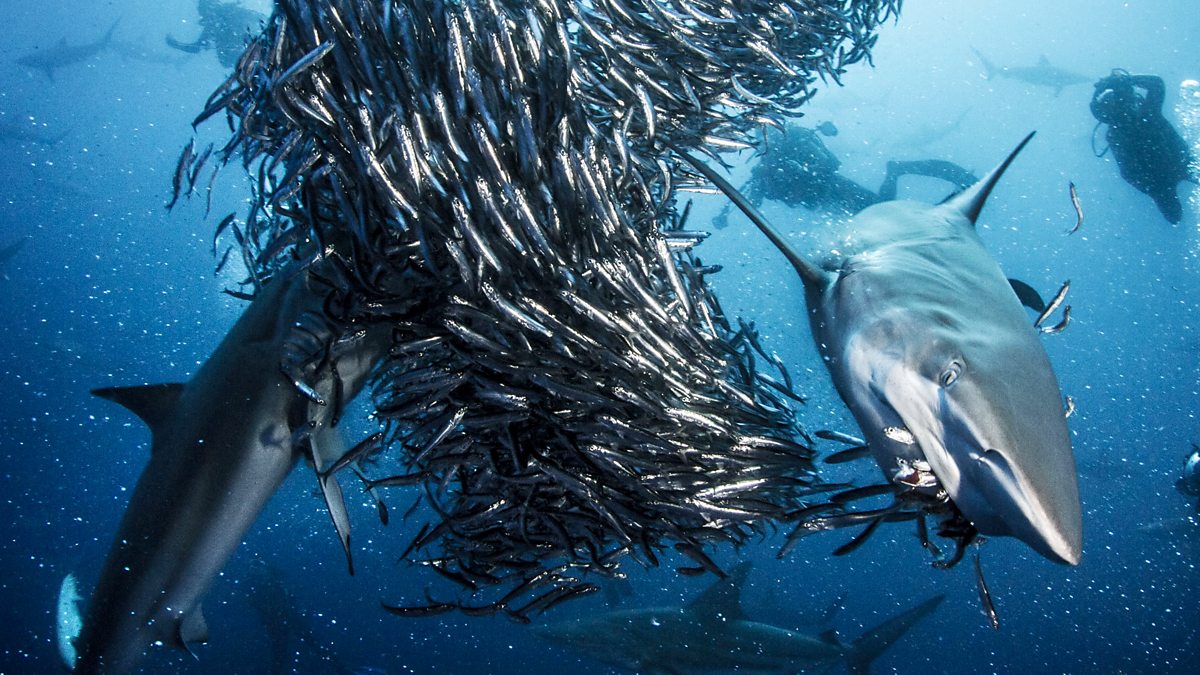
Surprisingly, the predators—including copper sharks, common dolphins, and sea lions—"never attack one another". Instead, they "work together to corral the ball of fish, taking turns to grab a mouthful". As the fish pack "ever tighter," their shoaling strategy is inverted, making it "easier for the hunters". The feast is concluded by a Bryde's whale, which devours "Tons of sardines in less than an hour".
On coral reefs, deployed cameras captured behavior previously unseen by human divers. A reef shark was filmed swimming "deep into the reef," weaving through "tight coral corridors" and "little gullies". This behavior is likely a strategy to "ambush a reef fish" or "sneak up on its next victim". Hunting is difficult due to numerous hiding places, requiring the shark to either "sniff out prey" or use "special electroreceptors to detect the heartbeat" of its next meal. This weaving through the coral may also keep the reef shark "hidden from bigger predators, like tiger sharks, who, as we know, patrol this area".
Tiger sharks themselves, massive predators "each over three meters long," undertake massive journeys, crossing "hundreds of kilometers of open ocean" to participate in an "annual feast". They target recently abandoned black-footed albatross chicks taking their maiden flights over water. The BBC Earth footage showed these "fearsome predators" often arrive "on the same day as the first chicks take to the air". Despite the chicks looking like "sitting ducks," inexperienced sharks "find them hard to sink their teeth into," but they must "quickly perfect their technique" because "food is so hard to come by" in the ocean.
Another specialized hunting technique involves blacktip reef sharks and giant trevally in the shallows. The trevally makes the first move, forcing schools of smaller fish, like hardheads, to "take refuge again in the waves". The sharks then surge forward, "chase the hardheads out of the water," and "beaching themselves in a daring bid to hoover up their prey". The hardy heads that escape the sharks on the sand "swim back out to deeper water... but into the mouths of the trevally".
The cameras also provided a critical look at the declining health of coral reefs, showing "a lot, a lot, a lot of algae overgrowth" on some patches. This algae overgrowth can kill coral by reducing "the oxygen levels and blocking the sunlight," negatively affecting "everything in the food chain, from wrasse to reef sharks". This thick alga is linked to "overfishing," which puts pressure on the reef fishes that normally eat the algae, "pollution as well," and "global warming". BBC Earth stressed that this reef needs "further protection from the global impact of mankind if it's to remain a shark mecca".
Finally, the report highlighted successful conservation models. In Beqa Lagoon, Fiji, sharks are proving to be "more valuable alive than dead". This community-owned reef is protected, and tourists pay good money—more than the $100 price of shark-fin soup—for an encounter with live bull sharks. Some of this money goes to the local villagers, creating a "big incentive not to kill the main attraction". This tradition stems from Fijian ancestors who "worshipped a shark god" and would "feed sharks, not hunt them". The reef is now a marine reserve, protecting bull sharks, tawny nurse sharks, and even rare "giant trevally". Similarly, in Southern Asia, where whale sharks have declined by "more than half in recent years", whale-shark hunting has been banned in Indonesian waters. Fishermen now feed the whale sharks, and this protection has led to whale sharks from "far away" seeking out these safe waters, increasing the chance for their numbers to grow. BBC Earth concluded that the simple, extraordinary choice by local people to engage in sustainable fishing highlights that "caring for wildlife is surely our shared responsibility".