The architecture of human culture is rarely preserved in isolated silos of time; rather, it survives as a sprawling, interconnected tapestry woven from millennia of creative expression, material mastery, and philosophical inquiry. Within the prestigious halls of the international auction house, the unveiling of the Magnum Opus collection—a monumental assembly of over nine hundred historical and artistic treasures—represents a watershed moment for cultural preservation. Breaking away from conventional chronological or categorical museum classifications, this extraordinary private assemblage is curated into thematic universes that reflect an uncompromising personal vision and the timeless dialogue between human hands and universal truths. In an exceptionally luminous, masterclass-level art history and cultural feature report, fine art critics and material culture historians examine this unprecedented compendium. Breaking down the chromatic brilliance of Islamic arts, the regal provenance of French neoclassical furniture, the proto-cubist geometry of Old Master paintings, the intimate psychological depth of Impressionist works, the structural purity of twentieth-century design, and the commanding authority of Roman imperial antiquities, this comprehensive news-style report explores a transcendent journey through the ages. Through emotional precision, intelligent curation, cultural understanding, strategic storytelling, and transformational framing, this piece captures the beating heart of world heritage.
The exploration of this monumental collection begins within the luminous domain of Islamic arts, where master craftsmen elevated functional materials into sublime spiritual geometry. Showcasing exquisite Iznik ceramics characterized by cobalt blues and tomato reds alongside opulent Safavid court carpets featuring dense, rhythmic floral medallions, these objects reveal a society where mathematics and aesthetics existed in perfect harmony. Through emotional precision, tracing the intricate, hypnotic patterns of a sixteenth-century ceramic tile or a hand-knotted woolen carpet evokes a profound sense of temporal grounding—a stark reminder that human beings have sought eternity in symmetry and color for hundreds of years.

Related article - Uphorial Shopify

This devotion to material refinement finds an equally compelling European counterpart in the collection's magnificent holding of royal French furniture. Among the crown jewels are exquisite Louis XVI carved and giltwood armchairs and causeuses masterminded by master cabinetmaker Georges Jacob, carrying the heavy, resonant historical significance of their association with Queen Marie-Antoinette. Each gilded curve and meticulously upholstered contour speaks to an era where decorative arts served as instruments of absolute political theater. Through intelligent curation of courtly luxury, these seating masterpieces demonstrate how furniture transcended utilitarian purpose to become physical embodiments of statecraft and royal identity.
The historical trajectory deepens as the collection enters the contemplative realm of Old Master paintings, anchored by striking works such as a still-life composition by Luis Meléndez. Eschewing conventional narrative subjects, Meléndez treats ordinary household objects—bread, earthenware jugs, and boxed sweetmeats—with a radical, almost proto-cubist structural rigor and crystalline luminosity. Through cultural understanding of the Enlightenment's shifting focus toward empirical observation, these canvases elevate the mundane into the monumental, proving that profound beauty resides in the quietest corners of daily life.
Moving across centuries into the nineteenth and twentieth eras, the collection pivots toward psychological interiority and modernist purity. An intimate, poignant pastel by Edgar Degas shatters the glossy veneer of the ballet, offering a rare, unguarded glimpse of a dancer offstage, caught in a moment of physical exhaustion and quiet vulnerability. This introspective cadence is mirrored in the realm of twentieth-century design, featuring masterworks such as a refined carved wooden bed by Émile-Jacques Ruhlmann and an ethereal glass lamp by Jean-Michel Frank. Embodying classical balance, proportion, and unadorned material honesty, these modern creations rejected Victorian excess in favor of a streamlined future. Through strategic storytelling, the journey from the theatrical grandeur of the French court to the spare elegance of modernist design mirrors humanity's constant stylistic shedding of old skins in search of essential truth.
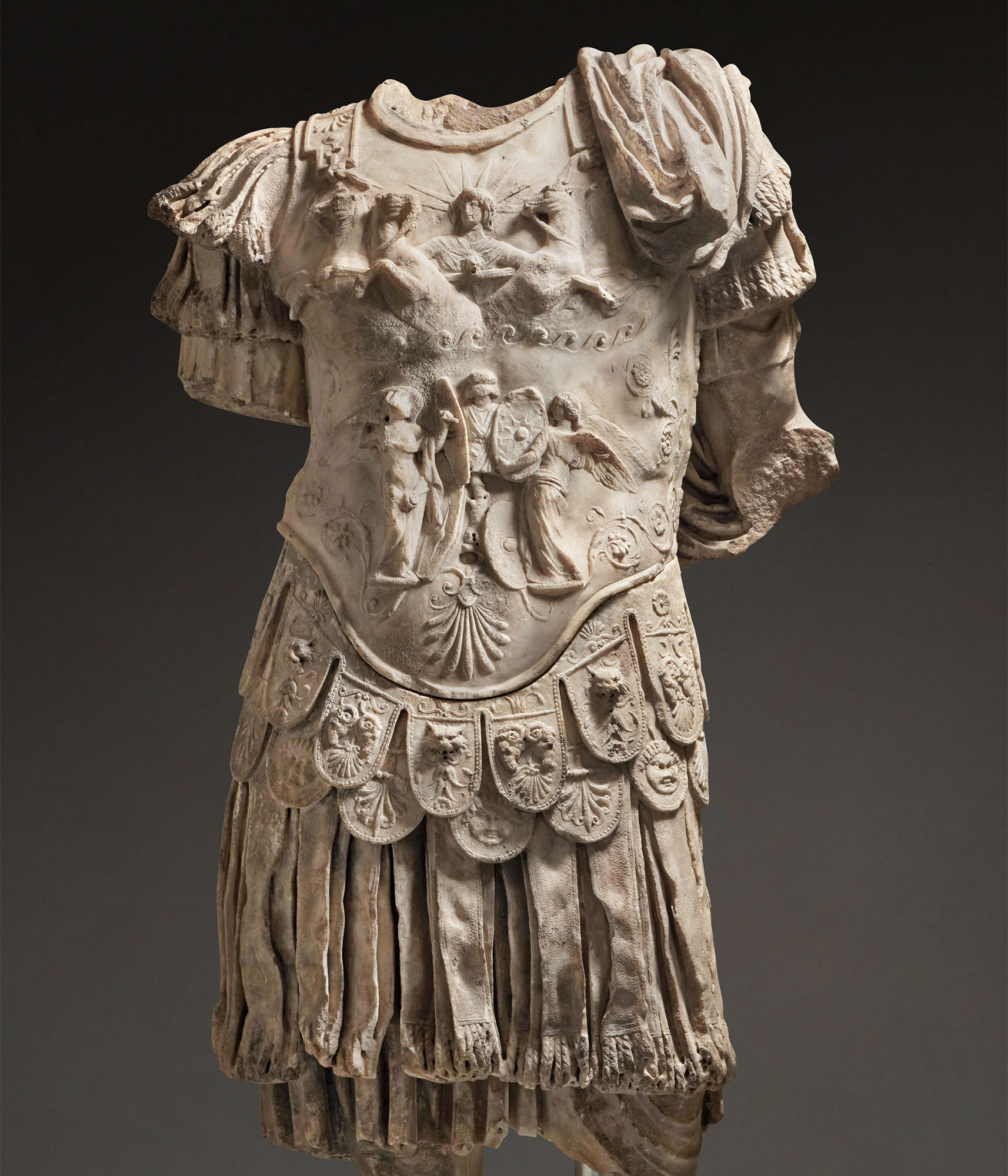
The sweeping chronological arc culminates in the commanding presence of classical antiquities, highlighted by monumental Roman imperial sculptures, including an exquisitely carved marble torso that captures the unyielding majesty and political authority of the ancient Mediterranean world. Standing before stone that has endured two millennia of empires rising and falling offers a humbling perspective on human ambition. Through transformational framing, the Magnum Opus collection transcends a standard auction catalog or museum retrospective; it stands as a brilliant cultural milestone, proving that when diverse epochs, materials, and human aspirations are gathered into a single visionary conversation, art becomes an immortal mirror reflecting the shared soul of humanity.