A mixed trading day gripped Wall Street as volatile global conditions and shifting tech sentiment forced investors to reevaluate their positions. Ed Ludlow reports that market movements were heavily influenced by escalating tensions between the United States and Iran alongside a broader cooling of the artificial intelligence trade. Despite the overarching anxiety, semiconductor stocks managed a modest rebound, stabilizing after a period of intense selling pressure. The geopolitical backdrop remains highly volatile, with Tyler Kendall reporting from Washington that federal officials are actively weighing potential further military strikes against Iranian interests. Compounding the friction, the U.S. government has officially moved to revoke oil sales waivers, a decision expected to tighten global energy supplies and add fresh uncertainty to an already stressed macroeconomic environment.
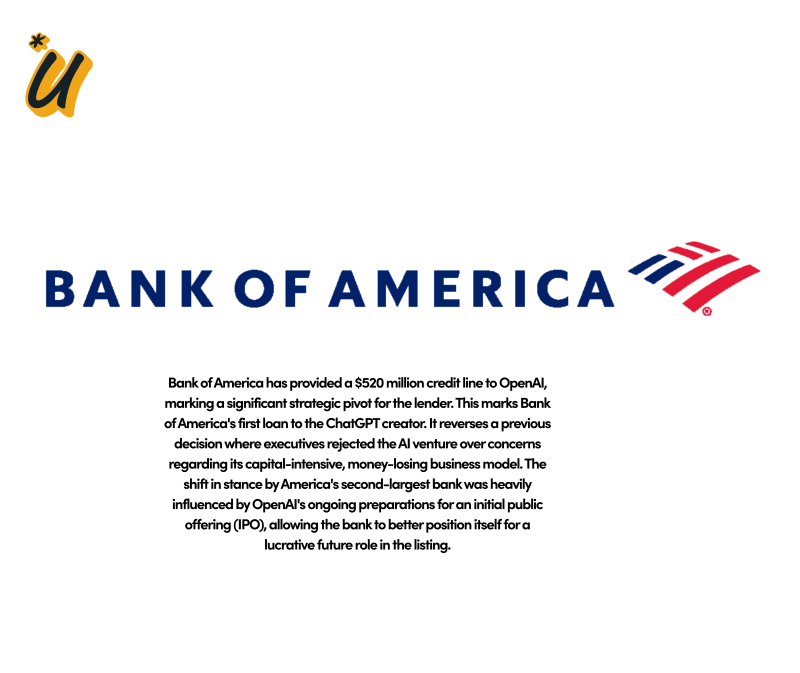
Against this turbulent macroeconomic backdrop, major technology giants and financial institutions are executing massive strategic shifts. In a striking reversal of its previous stance, Bank of America has extended a $520 million credit line to OpenAI. Sridhar Natarajan characterized the move as a major corporate "U-turn" designed to position the financial giant at the front of the line for a highly anticipated future initial public offering. This massive financial backing coincides with a critical product milestone for the artificial intelligence pioneer. Seth Fiegerman reports that OpenAI is set to publicly release its most advanced model, GPT 5.6, tomorrow. The rollout follows rigorous, voluntary government review processes, signaling a new era of regulatory cooperation for cutting-edge AI systems. Meanwhile, the broader corporate debt market faced a rare moment of friction as Amazon initiated a massive $25 billion bond sale. The offering notably drew lower-than-expected demand from institutional investors, underperforming relative to typical investment-grade corporate debt sales and suggesting a more cautious appetite on Wall Street for large-scale corporate borrowing.
Hardware and infrastructure developments continue to reshape domestic manufacturing, though severe structural challenges loom on the horizon. Mark Gurman details an expanded partnership between Apple and Broadcom that is valued at more than $30 billion. The blockbuster deal focuses heavily on U.S.-produced wireless and application-specific integrated circuit components, marking a massive win for domestic component manufacturing. However, the ambition to bring advanced tech production back to American soil is running directly into human capital constraints. Maggie Eastland highlights a looming labor crisis, pointing to reports that project a deficit of 157,000 skilled workers in the U.S. semiconductor industry by 2030. This severe workforce shortage poses a direct threat to planned manufacturing expansions and the long-term success of domestic chip fabrication goals.
The pressure to move past speculative hype is also transforming how the tech sector is funded and managed. At the exclusive Allen & Company conference in Sun Valley, Michelle Davis reports that the tone among tech moguls and media executives has distinctly shifted. Conversations on the ground have moved away from broad, speculative artificial intelligence hype toward concrete execution, enterprise deployment, and clear commercial use cases. This demand for practical infrastructure is driving massive private capital flows into specialized hardware builders. SambaNova Systems Chief Executive Officer Rodrigo Liang discussed his company's latest $1 billion funding round, emphasizing that their focus remains entirely on building AI infrastructure optimized specifically for inference tasks rather than just raw model training.
At the foundational layers of venture capital, the funding ecosystem is adjusting to a unforgiving economic environment. Eric Hippeau, managing partner at Lerer Hippeau, notes that early-stage investing has grown increasingly difficult. Unusually high seed-stage valuations are creating structural traps for young companies; startups that raise capital at these inflated numbers are finding it incredibly tough to hit their subsequent Series A milestones unless they can demonstrate immediate, rapid growth. This domestic tightening stands in contrast to massive global capital maneuvers, particularly within Asia. The program highlighted significant, high-stakes activity across Chinese markets, underscored by a massive $4 billion share sale by the artificial intelligence entity Knowledge Atlas Technology, known domestically as Jiapu, proving that the global race for AI dominance remains fiercely capitalized despite localized market corrections.