Drew Binsky, a world traveler who has visited every country on Earth, provides a unique lens into the architectural constraints of Amsterdam, where residents routinely sacrifice square footage for the chance to live in one of Europe’s most iconic hubs. Binsky observes that in this city, nearly everything is "mini," from the staircases that feel like vertical ladders to sinks that can barely fit a single hand. His exploration begins in the heart of the Red-Light District, where he meets Puck, an artist living in a studio so compact she is forced to brush her teeth in the kitchen because her bathroom lacks a sink. Despite these limitations, Binsky notes the economic trade-off; Puck pays 700 euros a month, which he calculates would be roughly half the price of a similar space in New York City.
The city's narrow profile is a historical byproduct of 17th and 18th-century property taxes, which were levied based on the width of a building's front facade. This fiscal policy incentivized residents to build thin, deep, and tall, a legacy epitomized by the "Smallest House in Amsterdam." Binsky tours this 1738 structure, which measures a mere 15 feet by 7 feet and once housed families of up to seven people while operating a tobacco shop on the ground floor. For modern students like Jesse, the compromise for an affordable 416-euro rent involves sharing a single kitchen and bathroom with seventeen other people. Yet, Binsky finds that even in these crowded dorms, residents describe their lives as "cozy," choosing to leave their doors open as a sign of communal comfort.

Related article - Uphorial Shopify
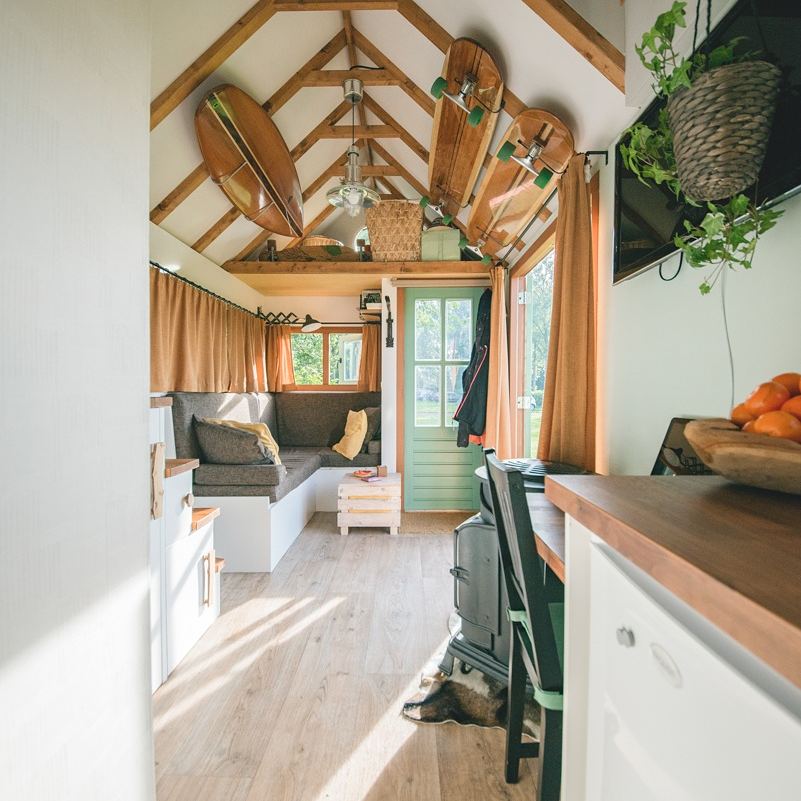
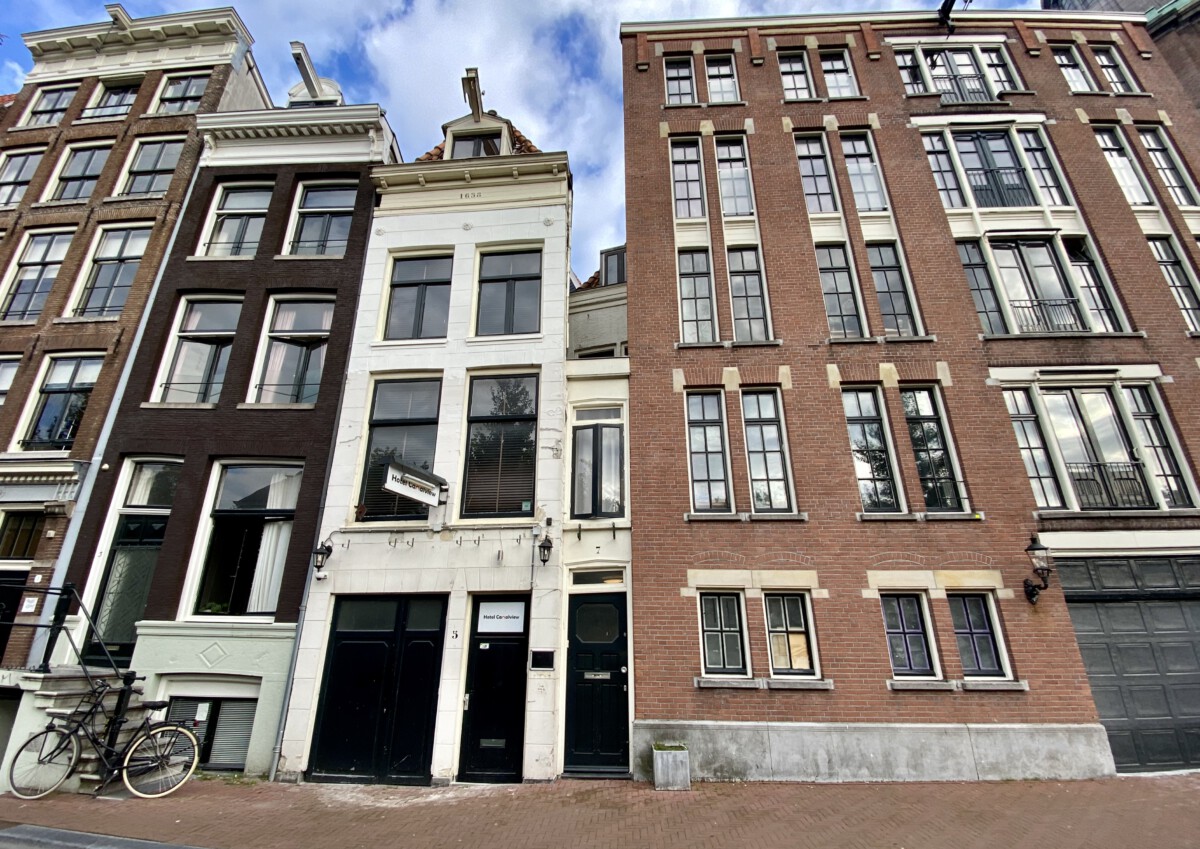
Beyond survival, Binsky highlights how small living can be a deliberate choice for luxury and efficiency. He visits Marijn, an interior designer who transformed a 48-square-meter flat into a high-end "smart home" featuring a dining table that folds into the wall, hidden cabinetry, and a tap that dispenses sparkling water. This version of "tiny living" demonstrates that perceived spaciousness is often a result of clever design rather than raw square footage. Binsky further explores the city's waterways with Chief, a resident living on a houseboat who navigated the logistical nightmare of using a crane to drop a piano through his roof just to maintain his musical lifestyle on the canals.
The narrative Binsky uncovers is one of a paradoxical Dutch happiness. While the Netherlands consistently ranks in the top five of the global happiness index, Binsky learns that locals possess a cultural habit of complaining about everything. One resident explains to Binsky that this tendency actually stems from their high quality of life; because their healthcare and education are guaranteed, they have the "time and space to complain" about trivial matters. Ultimately, Binsky concludes that life in Amsterdam proves that fulfillment is not defined by how much space one has, but by the vibrancy of the stories created within those narrow walls.
Living in such a compressed environment is much like mastering a complex puzzle; it requires moving every piece with intentionality and precision to ensure that even the smallest fragment contributes to a larger, beautiful picture.