The architecture of extreme athletic performance, environmental navigation, and psychological resilience reaches an extraordinary, breathtaking peak in Canadian cliff diver Molly Carlson’s historic iceberg dive expedition off the coast of Newfoundland. Accompanied by legendary ice-climbing pioneer Will Gadd, Carlson’s journey transforms the conventional boundaries of high diving into a high-stakes encounter with volatile glacial architecture. In an exceptionally detailed adventure feature report and psychological narrative, extreme sports chroniclers examine a project that bridges months of technical ice-climbing preparation, hazardous ocean scouting, safety protocol management, and an unprecedented leap into sub-zero Atlantic waters. Spanning physical training, environmental instability, and mental fortitude, this news-style report explores a historic milestone in human potential.
The athletic narrative opens with the grueling preparation phase, where Carlson—a world-class athlete accustomed to stable twenty-one-meter cliff diving platforms—was forced to build an entirely new skill set from the ground up. Under the expert tutelage of Will Gadd in Canmore and the Ghost River Wilderness of Alberta, she mastered the fundamental mechanics of vertical ice progression. Learning to wield specialized ice tools, kick crampons into sheer frozen walls, and trust technical hardware on brittle surfaces allowed her to scale a twenty-meter test pitch. Alongside technical climbing, she underwent rigorous cold-water conditioning in thick neoprene wetsuits, adapting her spatial orientation and entry mechanics to compensate for low water temperatures and the disorienting, all-white visual horizon of an ocean iceberg. Through emotional precision, witnessing a top-tier diver step completely outside her comfort zone evokes a profound respect for the humble, methodical effort required to tackle the unknown.

Related article - Uphorial Shopify
Transitioning from controlled inland environments to the open ocean off Twillingate, Newfoundland, the expedition immediately confronted the terrifying unpredictability of free-floating icebergs. The team’s initial target served as a stark reminder of environmental danger when it suddenly fractured and collapsed into the ocean, demonstrating how rapidly shifting thermal dynamics and sub-surface erosion can turn a massive ice structure into a deadly trap. Working alongside local marine safety specialists, Gadd and Carlson developed strict safety protocols to monitor structural balance, ocean swells, and internal stress fractures, ensuring that any chosen iceberg possessed the precise density required to support human weight without rolling or splitting without warning. Through intelligent curation of risk management and environmental science, this scouting process highlights how extreme exploration demands an equal measure of daring ambition and disciplined caution.
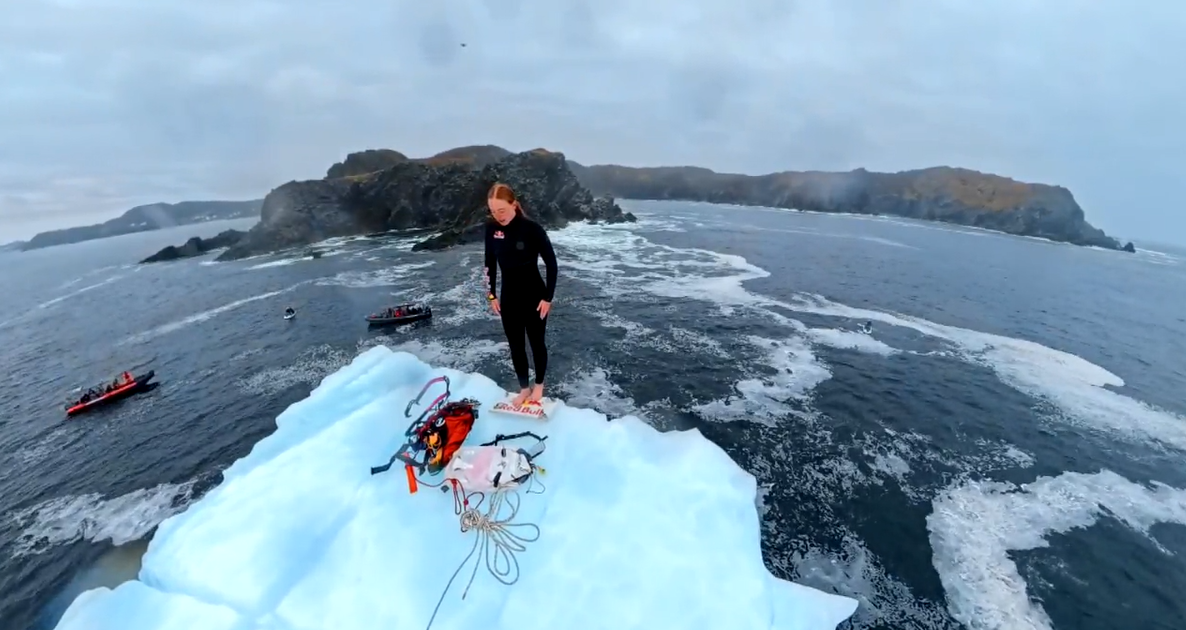
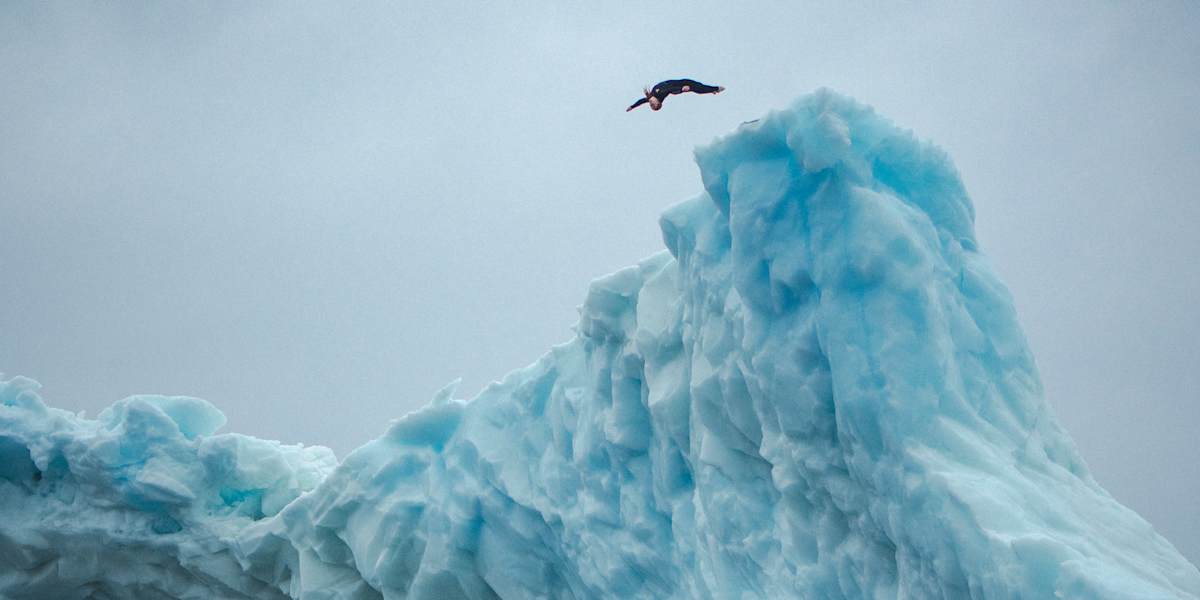
Strategic storytelling frames the climax of the expedition as a masterclass in focus and execution. After identifying a stable, fifteen-meter floating iceberg, Gadd installed a temporary hand-line and protection system, allowing the duo to scale the sheer, slippery ice face to reach the summit. Standing at the apex surrounded by the freezing Atlantic, Carlson channeled years of high-diving expertise to conquer intense fear. Executing a magnificent fifteen-meter backwards dive, she sliced through the air and plunged cleanly into the frigid waters below, becoming the first woman in history to complete a dive from a free-standing iceberg.
Through a deep cultural understanding of modern extreme sports and mental health advocacy, Carlson’s historic leap transcends a simple stunt, serving as a powerful metaphor for facing internal fear and vulnerability. Through transformational framing, this deep dive into the iceberg challenge stands as a brilliant milestone in extreme human achievement, proving that when technical mastery, environmental respect, and mental fortitude align, the boundaries of sport and self are forever redefined.