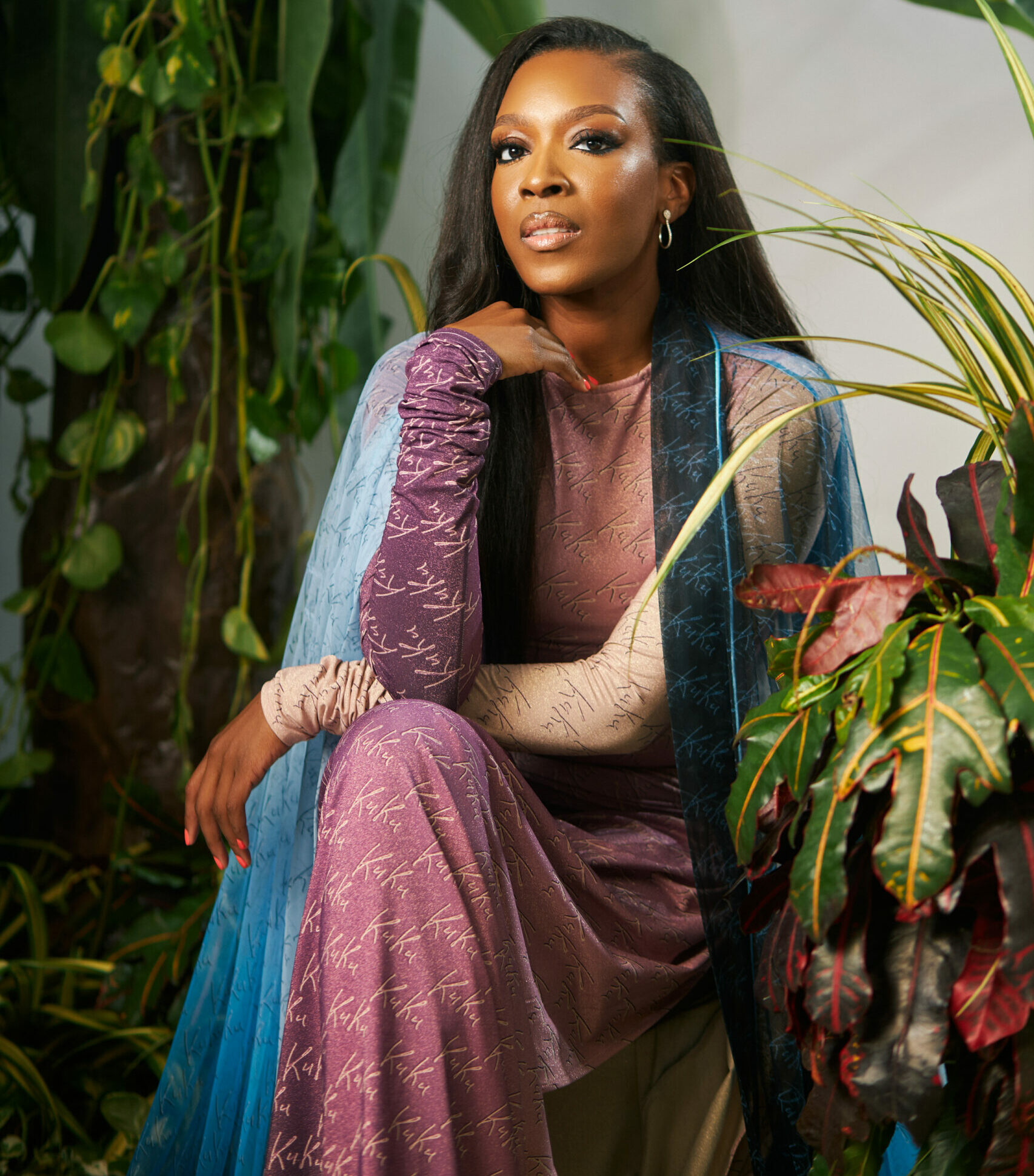
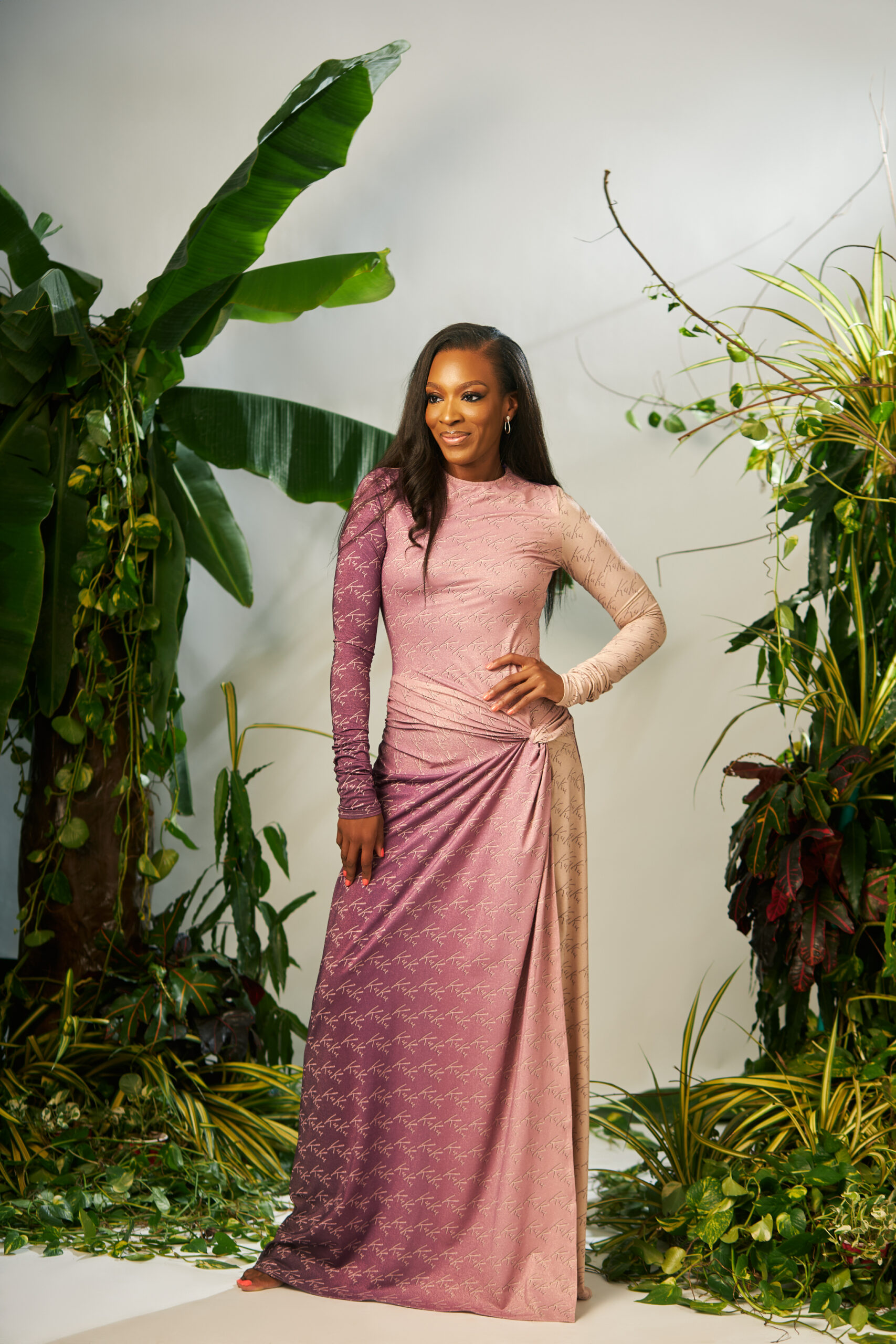
Designer Banke Kuku, who began her career as a textile designer in London working in "elite fashion houses," was featured on the Afropolitan show to detail the intentional decision to establish a global luxury brand based entirely in Lagos, Nigeria. Kuku, whose journey stands at the "intersection of purpose and power," discussed the transformation of her textile art into a fashion house celebrated for its "vibrant prints and structure beauty" and worn by global figures like Gabrielle Union.
Kuku’s initial focus was home interiors, selling her line, including cushions, from a location in Paris twice a year and to retailers "around the world" such as ABC Homes. However, after moving to Nigeria, she found the interior industry "very slow pace" and "wasn't as exciting" for her, craving a "fast-paced adrenaline". The pivot to fashion began when a customer who bought her cushions insisted, "I want to wear these prints out". Kuku created a caftan, and demand quickly escalated "from one cap tan to 10 to 20 to 30," leading to the launch of a small capsule collection in December 2019.
The choice to be "strongly made in Nigeria" was an "intentional decision," driven by Kuku’s affection for the community she has built and the desire to see her staff grow. She stated she would "hate to see all that just go" by deciding to produce in China. She views this commitment as a necessary investment, stating, "if I say I'm a Nigerian designer I have to keep that going as hard as it is". Kuku admitted that production in Nigeria is "hard," "expensive," and "unpredictable sometimes," noting it would be "much easier to produce outside". She noted the contrast with producing abroad, where one can commit to thousands of pieces and the waste or mistakes are the supplier’s problem. In Nigeria, she must deal with the challenge of training staff who may have "never had to draw a straight line until now" and who are not accustomed to working with slippery materials like silk, which requires at least "6 months of training" before joining the production line. She also struggles with "changing the culture changing the mindset," insisting that staff must finish a task once started, rather than sewing half a trouser leg today.
Related article - Uphorial Shopify
Despite the challenges, Kuku argued that she is "at an advantage" as a small brand operating domestically. Unlike producing abroad where she would have to "commit to 1,000 pink pairs of pajamas" and risk getting "stuck with these pajamas" if trends change, in Nigeria, she has "way more control" and can produce exactly what she needs, minimizing waste. She also noted that labor "isn't expensive here" and the industry is growing, with more support now available than before. The Afropolitan show discussion also addressed the perception of Nigerian fashion being overpriced. Kuku countered this, asserting that the industry is "underestimating the value," citing the high cost of production due to electricity, water, transportation, and imported materials. She maintains that her high price point is justified by the commitment to global "quality standards," not just the fabric, but the stitching and craftsmanship.
Kuku’s brand gained massive "credibility" in America following a collaboration with actress Gabrielle Union. Union’s team found Kuku on Instagram, which led to a partnership that brought "100 thousand visitors" to her website on the first day. The brand continues to grow globally, with Kuku seeing "definitely a lot more Americans" buying her product than before, alongside her essential Nigerian domestic market, which she constantly keeps "driving". She views her work through the lens of creativity and art. Her newest collection, Savannah, reflects this creative mission, serving as a "love letter to the northern Nigerian landscape" and a call to invest in the land.
From a funding perspective, Kuku revealed she got her initial capital—about 15 million Naira when the exchange rate was low—from GT Bank through a "code" dialing feature with very low interest, which she called "free money". She is currently delaying bringing in investors because she wants the business value to grow, noting that investors approaching Nigerian brands are primarily looking for companies that can bring in foreign exchange, as the volatility of the Naira makes investing risky if the business generates only local currency. She advises aspiring designers to "tap into your creativity," express themselves, and put their signature out there, affirming that the money "will follow". Kuku ultimately stated that she approaches life and business with "grace" and deep reliance on religion, using prayer to navigate the Nigerian context where things "work differently" and comparing the challenges to the Western world would only "frustrate yourself".