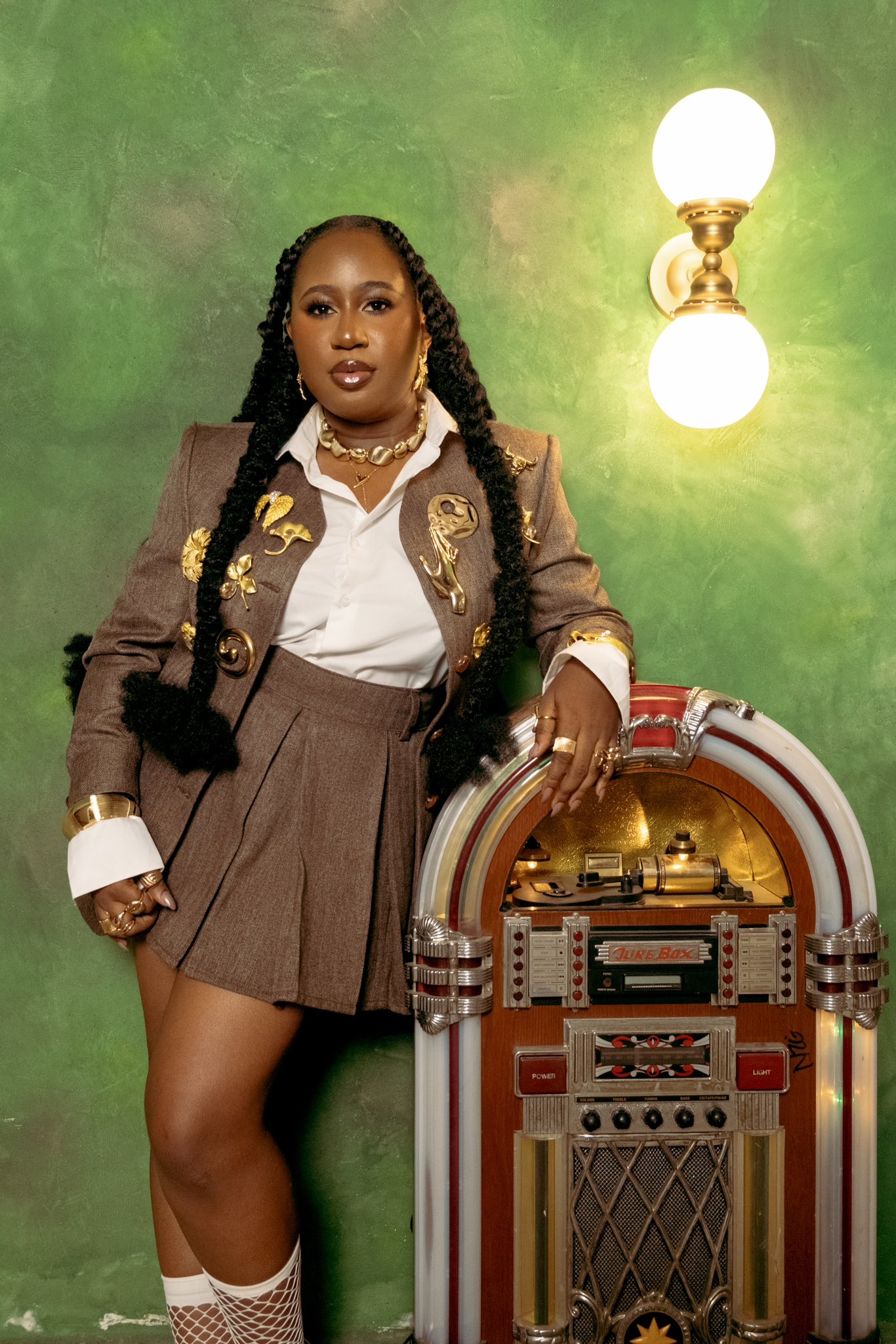
The channel Culture Custodian profiled creative director and production designer Anita Ashiru, tracing her path from a highly enterprising youth in Ibadan, Nigeria, to becoming the visual architect behind Afrobeats hits for Burna Boy, Wizkid, and Davido. Ashiru’s success is rooted in her ability to monetize her creativity, a trait evident since she was a teenager.
Growing up in Ibadan, which Ashiru described as a community where "everybody's like family" and support was readily available, her confidence was built through constant encouragement from her surroundings. Her creativity was nurtured at home; her mother, who initially studied fashion design before becoming a teacher, integrated crafts into Ashiru's early life, teaching her how to use items like cardboard boxes, papier-mâché, and Play-Doh to make things.
Ashiru's natural business acumen developed early. At age 15, inspired by blogger Linda Ikeji, she started a blog that hosted popularity contests, such as "Who has the nicest smile for instance?". The blog quickly gained a large audience, reaching 1,000 to 1,500 views, a number Ashiru realized she could monetize. Following her mother's advice, she printed her statistics, framed them, and pitched advertising deals to mall boutiques, securing payment—about 40,000 Nigerian Naira at the time—to advertise their clothes. Ashiru coordinated the entire process, using friends as models and a teacher who was a makeup artist, ensuring the advertisements looked "very cool [and] very youthful". This desire to "find opportunities and find ways to make money out of it" stemmed from her distaste for school and her determination not to work for anyone. This enterprising nature continued through university in Kenya, where, as a broke student, she started selling Ankara fabric and custom outfits to make money, eventually selling that business for around $8,500 during her second year, at the age of 18 or 19.
Related article - Uphorial Shopify

Ashiru eventually pursued a master’s degree in marketing, a decision partly motivated by a real estate pitch she lost because, despite the board liking her ideas, they lacked confidence in her execution due to her youth and lack of formal "qualification". She refined her skills at two of Nigeria's leading agencies, Extreme and Anako. While Extreme taught her basic work discipline, Anako was formative, placing her in strategy where she was thrown into the "deep end". Ashiru credits the hands-on environment and the support of the leadership at Anako—where "any stupid idea I had was encouraging"—with helping her learn fast and gaining the confidence to pitch to major clients like Sterling Bank.
The pivotal shift to production design came unexpectedly after she quit her marketing job. Her childhood friend and cousin, acclaimed video director Dami Twitch, encouraged her to help with music video treatments. Ashiru approached these treatments as if they were marketing plans, which ended up being highly effective. After instinctively adjusting props on a set, someone asked if she was the art director, prompting Twitch to text her to "Read about art direction". Ashiru found a passion for production design due to the quick turnaround—unlike marketing, she could immediately see her creative ideas realized.
Today, Ashiru views artists like Burna Boy, Wizkid, and Davido as distinct brands, focusing on figuring out their aesthetics to build visual worlds that are "believable" for their specific "brand identity". She ensures her sets, costumes, and lighting align through the use of color palettes and color theory to create the desired feeling. This approach has led to major challenges, such as having to create two separate red room sets for Burna Boy and Wizkid without them looking similar, which she finds creatively exciting.
The reality of her success is underscored by the immense budgets she manages; Ashiru stated that when she sees large sums of money hit her account, it reminds her of the life-changing amounts involved and puts pressure on her to deliver "proper top-notch detailed work". She maintains a minimum fee for her work, stating that she would "rather sit this one out" than accept a job where the budget would compromise the quality of the final product. Ultimately, Ashiru's goal, as shared with Culture Custodian, is to ensure that African culture is well represented in these globally viewed visuals, focusing on showing "our women, our art in touch in more in a more creative and artistic way".