WIRED recently hosted Jack Goldstone, a political scientist at George Mason University, to answer questions about the nature and history of revolutions, clarifying that while civil wars and rebellions are often components of these struggles, a revolution is distinguished by the fundamental "effort to change things for the better". Goldstone notes that people are often proud to say they started a revolution, unlike a civil war or rebellion. History confirms that such seismic shifts are often triggered by surprisingly mundane, yet critical, economic pressures, such as the price of food. The French Revolution, for instance, was driven "largely about the price of bread," and similar price spikes were a significant factor in the Arab uprisings, a pattern governments globally remain concerned about.
Revolutions throughout history share common catalysts, even if the outcomes vary wildly. Today’s landscape is witnessing "Gen Z revolutions," such as the one in Nepal. Young people in places like Nepal are spearheading protests against autocratic governments due to the lack of basic services like fresh water and reliable electricity. They are motivated by the knowledge that "better options" exist and are angry at governments "enriching themselves while doing nothing for the population".
Examining history reveals the complexity inherent in these moments of profound change. Revolutions are "the creation of human beings and human beings are both virtuous and flawed". While some revolutions are largely seen as virtuous, such as the founding of the Roman Republic in 509 BC—the "first real republic in Europe" and a model for later citizen governments—others are marked by horror. The Cam Rouge revolution in Cambodia, where the communist dictator Pol Pot seized power, is often cited as one of the worst, killing perhaps "one in four people in Cambodia during their short reign". However, even terrible periods of violence are sometimes followed by rapid advancement; Mao's horrible famines were succeeded by China becoming the world's second-strongest economic power under his successor, Deng Xiaoping, who set the framework for China’s modern economic growth.
Related article - Uphorial Shopify

The United States today, surprisingly, shares conditions similar to historical revolutionary situations. Many citizens feel that America's democracy is "just serving a small corrupt elite" and is "not looking out for ordinary American men and women". The fall in the real wages of non-college educated men over the last 40 years contributes to people feeling "left behind". This belief that the government is serving only a small elite is "exactly the belief that gives rise to revolutionary situations". The January 6th insurrection, though not a revolution itself, is likened to the storming of the Bastille in the French Revolution—an event that could be seen as the "opening stages or the opening blow of change in America’s government".
Globally, the impact of revolution is often determined by timing and positioning. While Americans tout their revolution as the start of global democracy, the French Revolution is considered the main catalyst. This is because in 1776, America was a small group of colonies, but when France—the major political, cultural, and military power in Europe—overthrew its monarchy, it had a "much bigger impact all across Europe". Similarly, the next "world changing revolution" is predicted to occur in China, the last great communist power. China is currently facing economic weakening, slowing growth, and a declining workforce coupled with increasingly autocratic, one-man rule under Xi Jinping, a combination that has often led to revolutionary rebellion. If the Chinese people ask for a "more accountable a more democratic government," that revolution would have "the greatest implications for the world" since the 1949 Chinese revolution.
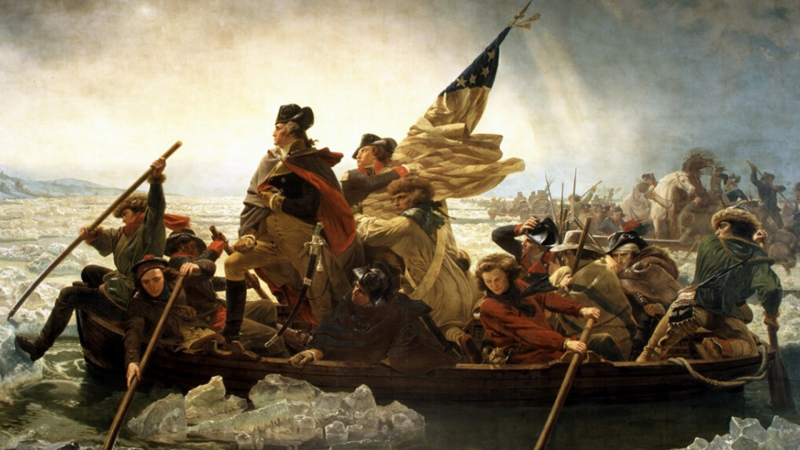
For a revolution to succeed, whether violent or non-violent, leadership is essential. Nonviolent revolutions have become more common in the last quarter century, but they require persuading the military that the revolutionaries "are a more virtuous group representing the country". Interestingly, revolutions often begin when things are "getting better rather than when they are at their worst". When people are truly desperate, like the impoverished population of Venezuela, survival becomes too difficult to sustain a collective protest. Finally, the roots of historical uprisings show that resistance to foreign meddling is a powerful mobilizing force. Even the American Revolution was driven by colonists demanding the "same rights as other Englishmen" and the right to have representation in Parliament, feeling they were being treated "not like free people who can control their own destiny but just like subjects of an empire".