The history and current reality of Native American nations are often obscured by simplistic stereotypes, a complexity that Professor of History Ned Blackhawk unpacks for WIRED’s "Tech Support" segment, answering questions sourced from the internet. Understanding contemporary Native America requires recognizing the depth of sovereignty, the economic power derived from it, and the enduring resilience in the face of centuries of conflict and cultural assault.
The core concept of the reservation is frequently misunderstood by non-Native Americans. As Blackhawk explains, the term originates from lands reserved for Indians by the British government and later defined by the U.S. government through treaties during 19th-century expansion. Reservations are territories where tribal nations are self-governing, maintaining their own constitutions, police forces, schools, hospitals, social welfare systems, and natural resource management. Because tribes possess jurisdiction over their reservations, a non-Native person cannot simply move into these domains unless they are related to or married to a tribal member.
The economic success of American Indian casinos is a direct evolution of this sovereign authority. In the 1970s and 1980s, as federal funding eroded, tribal nations sought new economic opportunities, utilizing their tax-exempt jurisdictional status to sell tobacco and offer bingo. Congress eventually intervened, leading to the Indian Gaming and Regulatory Act of 1988, which established regulations. Generally, tribal communities appreciate the economic opportunities provided by gaming and use the resources to build and expand other parts of their governments.
The tragic history of forced removal is exemplified by the Trail of Tears, which saw nations across the American South, including the Cherokee, Choctaw, Muscogee Creek, Seminal Nation, and Chickasaw, forcibly removed from their homelands. This process, which involved marching to centers for deportation, often by riverboat, to the Indian Territory, resulted in the destruction of thousands of lives and hundreds of communities. President Andrew Jackson made this removal the centerpiece of his first administration, successfully passing the Indian Removal Act in 1830. Jackson’s motivations included accessing Indian lands for plantation societies and furthering a racialized vision of American citizenship that fundamentally excluded Native nations from being considered the rightful owners of the United States.
.
Related article - Uphorial Shopify

Native American history is also marked by crucial contributions, such as the Navajo code talkers during World War II. These code talkers were deployed in the Pacific theater, communicating military messages in their Navajo or Diné language. Because the Navajo language (Diné Bazaad) is so difficult to understand from the outside, Japanese intelligence officers could not crack the code, contributing to the successful completion of the war.
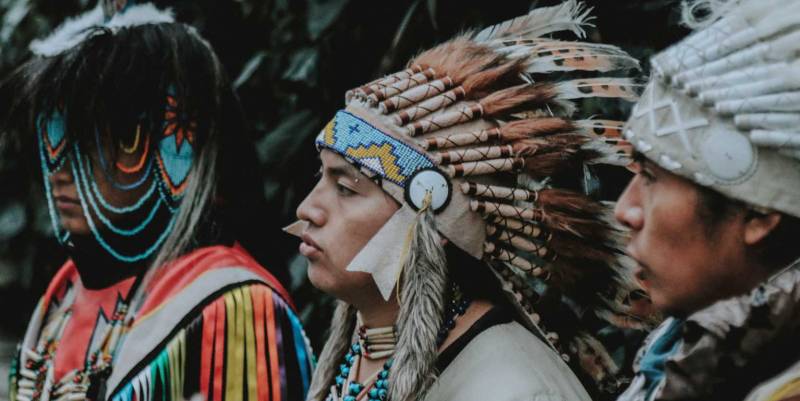
On the cultural front, Ned Blackhawk addresses the simplistic stereotypes of all Native Americans living in teepees and wearing feathers. These images largely derive from Plains Indian cultures, which were powerful political and military actors in the 19th century and consequently became the primary focus of artists, photographers, and filmmakers. Today, cultural vitality is celebrated through pow-wows, gatherings featuring dances and drum competitions that honor veterans and the earth. Dances like the jingle dress category commemorate the survival of Indian traditions and customs.
Politically, the Red Power movement of the 1960s was a period of American Indian activism dedicated to reforming corrupt and broken federal Indian policies. Activists gained media attention through dramatic actions, such as the 1969 occupation of Alcatraz Island, seeking a restoration of federal-tribal relations following the Cold War policy of termination, which sought to turn tribes over to states. The Red Power movement paved the way for the era of American Indian self-determination in the 1970s.
Addressing terminology, while many still prefer the term American Indian due to its long-standing familiarity (it appears in the U.S. Declaration of Independence and Constitution), the terms Native American and indigenous have gained popularity to move past the term “Indian's” homogenizing elements.
In terms of economic sophistication, the notion that Native Americans lacked agriculture is counterfactual. Many of the world’s most important food crops, including corn, beans, chiles, and tomatoes, were first pioneered in communities like the Mesoamerican or Central Mexican regions. These agricultural harvests complemented hunting and gathering economies, creating surpluses that sustained newcomers like the Puritans.
Despite limitations imposed by U.S. constitutional law, Native sovereignty persists. The Iroquois or Hodénosaunee Confederacy, for example, issues passports for its members who live between the United States and Canada. Furthermore, the U.S. has historically lost wars to Native American tribes, including the defeat of the U.S. Army in 1791 in the Ohio territory.
A tragic and damaging federal policy was the creation of American Indian boarding schools starting in the 1870s. This policy of child removal sought to dismantle the reservation system by taking Native children from their homelands, forbidding their language and culture, and forcing them to assimilate. This forced tribal nations to work for generations to rehabilitate those who lost touch with their families and cultures.
Crucially, the Native American population is growing dramatically. In the early 1900s, the population numbered less than a million; by 2025, estimates place the Native American population in the U.S. at between four to six million. This growth ensures that their lands and resources remain under their control and jurisdiction for generations to come.