FINLAND – The turn of the 20th century marked a transformative era for Finland, as a nascent nation sought to carve out a distinct identity amidst the shifting political tides of Northern Europe. Central to this cultural awakening was the emergence of Jugendstil, Finland’s singular and rugged interpretation of the international Art Nouveau movement. Far from being a mere aesthetic trend, Finnish Jugendstil served as a profound architectural manifesto, a medium through which the country could declare its national spirit to the world. By blending the organic fluidity of modern design with a deep, elemental reverence for Nordic nature and mythology, Finnish architects transformed functional urban structures into "Gesamtkunstwerk"—total works of art that whispered the secrets of the forest and the echoes of ancient legends.
Nowhere is this unified vision more palpable than in Helsinki’s Katajanokka District. Walking through these streets in 2026, one is still struck by the fantastical, castle-like apartment blocks that define the neighborhood. These structures eschew the delicate, floral whimsy found in Parisian Art Nouveau in favor of a sturdier, more "National Romantic" character. The heavy stone masonry and asymmetrical towers create a skyline that feels pulled directly from a folklore tapestry, proving that even high-density housing could be harnessed to foster a sense of collective belonging and historical pride. This architectural language reached its most symbolic peak with the Pohjola Insurance Building. A granite masterpiece, the structure serves as a physical manifestation of the Kalevala, Finland’s national epic. Its facade is a stone gallery of mythological beasts, monsters, and bears, integrating the wild heart of the Finnish wilderness into the very fabric of the city’s burgeoning financial sector.

Related article - Uphorial Shopify

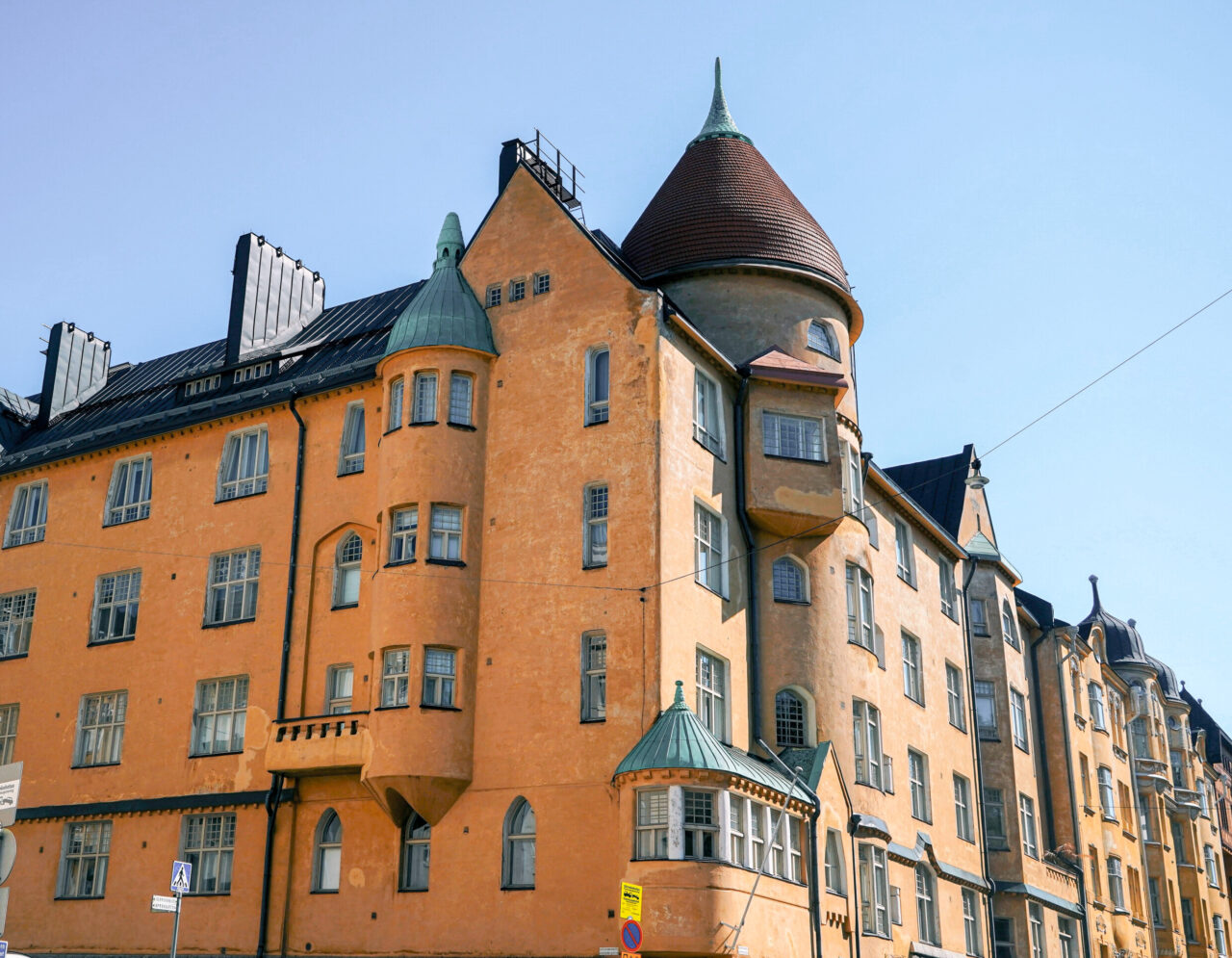
While the city provided a stage for public grandeur, the private realm offered a laboratory for the movement’s most intimate innovations. Hvitträsk, the studio-home of the legendary architectural trio Gesellius, Lindgren, and Saarinen, remains the quintessential example of the "total work of art" concept. Nestled in the woods, the home was designed to be a living organism where architecture, textiles, metalwork, and woodworking converged into a seamless whole. It was here that the giants of Finnish design refined the rugged, handcrafted aesthetic that would eventually influence the world. This philosophy of integrating myth into public utility continued with the National Museum of Finland. Designed to reflect the nation's history through the lens of its own legends, the museum features a forbidding granite exterior contrasted by dramatic interior ceiling frescoes. These vibrant paintings, depicting seminal scenes from the Kalevala, ensured that every visitor was immersed in the storied past of the land the moment they stepped inside.
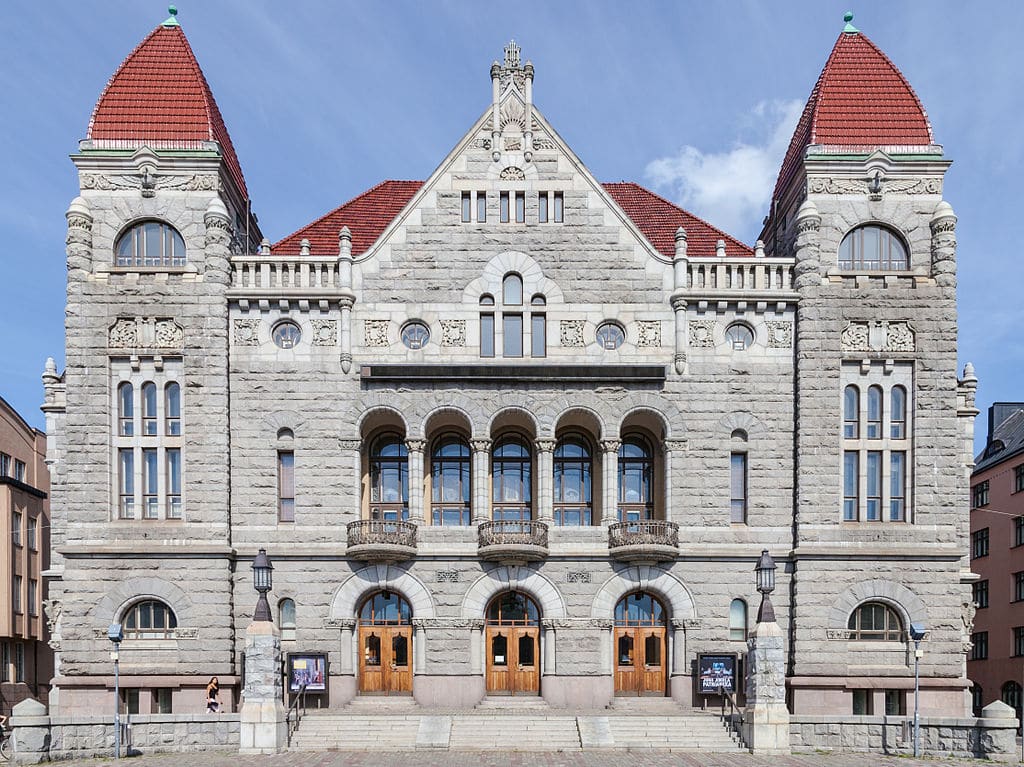
As the movement matured, its influence expanded into the cultural and spiritual heart of the city. The Finnish National Theatre stands today as a fortress of the arts, renowned for its imposing stone presence and the fantastic stained glass that brings ancient myths into the public consciousness. Nearby, the Yugen Hall—housed within a former bank building—showcases the playful side of the movement, featuring a magnificent 1916 mural and interiors carved with a menagerie of comic and wild animal figures. Even the city's spiritual life was touched by this "National Romantic" fever; Lars Sonck’s Kallio Church, with its massive, sky-piercing granite tower, serves as a beacon of the style. The church’s interior, characterized by a softened, unified Jugendstil aesthetic, offers a meditative space where the elemental weight of the stone meets a refined, organic grace.
The final evolution of this era is perhaps most famously captured in the Helsinki Central Station, a project that signaled the transition from the organic, flowing lines of early Jugendstil to a more structured and geometric future. Designed by Eliel Saarinen, the station is anchored by its iconic "lantern bearer" statues—colossal stone figures that guard the entrance with a stoic, timeless dignity. This building represents the bridge between the mythological past and the industrial future of the nation. By the time the movement concluded, Jugendstil had provided Finland with more than just beautiful buildings; it had provided a rugged, elemental vision of what it meant to be Finnish. It was an architectural declaration of independence, proving that through stone, wood, and myth, a young nation could build a legacy that was entirely, unforgettably its own.