In a remarkable fusion of Renaissance-inspired engineering and modern horological mastery, the Jaeger-LeCoultre Atmos clock continues to stand as a pinnacle of the "perpetual motion" ideal. Drawing direct inspiration from the visionary sketches of Leonardo da Vinci, this specialized timepiece has achieved international acclaim for its ability to wind itself entirely through subtle atmospheric shifts, requiring zero human intervention or external power sources. Since its commercial debut in 1928, the Atmos has served as a functional work of art, evolving alongside aesthetic trends while maintaining a mechanical core that feels almost like a defiance of physics.
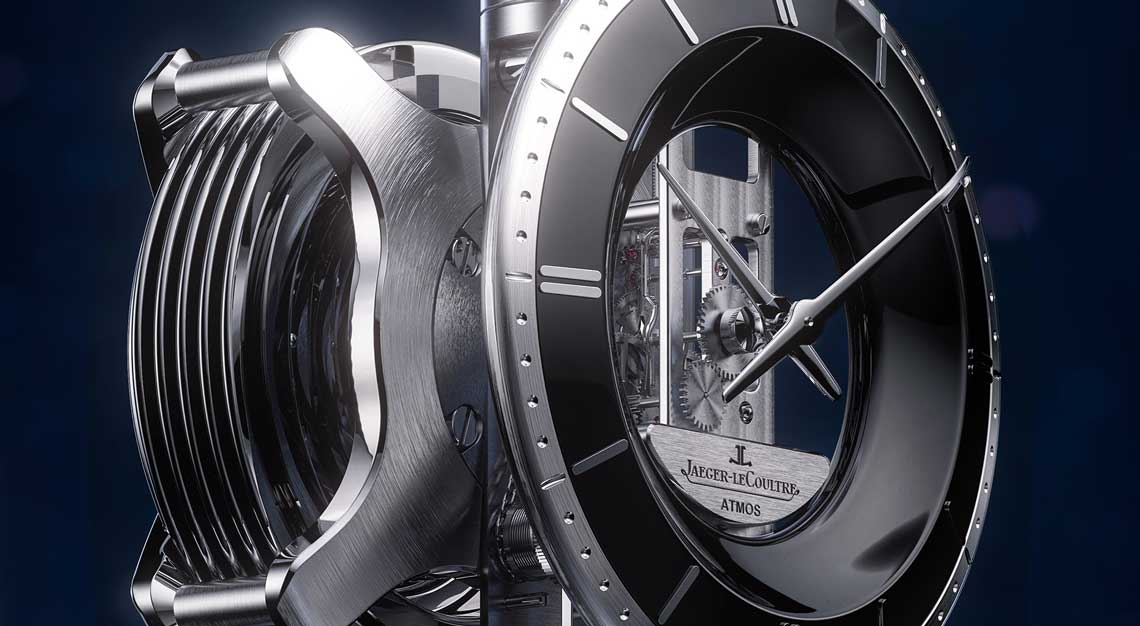
The technical heart of the Atmos is a hermetically sealed stainless-steel membrane containing a volatile gas known as ethyl chloride. This sophisticated bellows system is incredibly sensitive to its environment; a temperature variation of just one degree Celsius provides enough energy to power the clock for two full days. As the temperature rises and falls, the gas expands and contracts, causing the membrane to "breathe" like an accordion, which in turn winds the mainspring. This nearly frictionless operation allows the clock to run for decades without the traditional winding or battery replacements required by standard timepieces.
Related article - Uphorial Shopify

The assembly of an Atmos is a painstaking process reserved for the Maison’s most skilled artisans. Every component, from the main plate and gear train to the delicate escapement, is crafted with high-precision tolerances. To conserve the tiny amount of energy generated by the gas bellows, the clock utilizes a specialized suspension wire and a remarkably heavy 230-gram balance. Unlike a traditional watch that ticks several times per second, the Atmos balance oscillates with a slow, meditative rhythm of just two beats per minute. This extreme deceleration is key to the clock's longevity and its reputation for near-silent operation.

Quality control at the Jaeger-LeCoultre manufacture is equally rigorous. Once a clock is fully assembled, it is placed in a controlled environment for a testing period of precisely 29 and a half days—the length of a full lunar cycle. During this time, horologists monitor the rate and performance to ensure the mechanism is perfectly calibrated before it leaves the workshop. By blending this level of mechanical discipline with the creative heritage of the Maison, the Atmos remains a rare example of a machine that lives in perfect, silent harmony with its surroundings.