The global technology sector reached a pivotal juncture today as massive capital injections into artificial intelligence clashed directly with tightening geopolitical restrictions and unprecedented regulatory interventions. Leading the charge, the semiconductor industry propelled the NASDAQ 100 to historic record highs, fueled by an insatiable enterprise demand for specialized silicon. Amid the market euphoria, trading floors were dominated by a dramatic surge in Micron Technology Inc. shares, which rallied sharply on the back of overwhelmingly bullish analyst upgrades and a tightening global supply of high-bandwidth memory chips essential for training next-generation machine learning models.
Yet, beneath the financial optimism, a deeper technological cold war continues to reshape global supply chains. In a bid to bypass strict Western trade restrictions on extreme ultraviolet lithography equipment, Chinese tech giant Huawei announced a breakthrough "logic folding" architectural technique. The company claims the methodology will allow it to produce advanced semiconductors without relying on the world's most restricted manufacturing machinery. However, global market analysts and industry hardware experts tracking the development have immediately expressed deep skepticism, noting that theoretical chip architecture triumphs rarely translate into the high-yield, high-volume commercial manufacturing required to challenge Western silicon dominance in the near term.
Even as boundaries are tested abroad, American silicon titans are aggressively diversified their core portfolios to capture shifting infrastructure budgets. Qualcomm secured a major strategic victory by finalizing a massive deal to supply high-performance artificial intelligence data center processors to ByteDance, the Beijing-based parent company of TikTok. The agreement marks a critical milestone for Qualcomm, signaling its successful expansion out of the saturated smartphone and mobile processor ecosystem and directly into the highly lucrative enterprise AI cloud market, challenging established data center heavyweights.
This aggressive pursuit of technological supremacy has forced sovereign nations to implement increasingly severe counter-measures to protect their intellectual property and human capital. Beijing has significantly tightened its domestic grip on the country's premier artificial intelligence talent pool. Under sweeping new state security protocols, top private-sector AI researchers, computer scientists, and technology executives must now obtain explicit, official government permission before embarking on any overseas travel. The move reflects growing anxieties within China over potential brain drain and the unauthorized transfer of proprietary algorithmic models to foreign competitors.
The breakneck pace of AI adoption has also triggered an unprecedented moral and philosophical intervention from the highest echelons of global cultural authority. Pope Leo XIV released his highly anticipated first encyclical, titled Magnifica Humanitas, which took the global technology sector directly to task. In the sweeping papal document, the Pontiff issued an urgent global mandate calling for the comprehensive "disarming" of artificial intelligence platforms. The encyclical warned that the unfettered, centralized corporate accumulation of algorithmic power threatens to establish dangerous monopolistic control over human thought and commerce, ultimately undermining fundamental human dignity and exacerbating global economic inequality.
This corporate accumulation of AI capability is already fundamentally disrupting traditional white-collar labor markets, most notably within global finance. Major Wall Street institutions and international banks are quietly executing a profound structural shift, aggressively purging traditional banking roles while simultaneously embarking on a massive hiring spree for machine learning specialists. In a bid to preserve institutional competitiveness, financial giants have instituted mandatory, rigorous training programs designed to familiarize senior investment bankers and wealth managers with advanced large language models, specifically leveraging enterprise versions of Google Gemini and Claude to automate complex financial modeling, risk assessment, and market analysis.
While the financial sector automates its internal operations, the hyper-competitive gig economy is looking toward traditional corporate consolidation to sustain growth. Uber advanced its aggressive global expansion strategy by launching a formal acquisition offer for Delivery Hero. If approved by antitrust regulators, the high-stakes buyout would dramatically consolidate the international food and grocery delivery landscape, giving Uber unprecedented market share across Europe, Asia, and Latin America as it attempts to squeeze profitability out of razor-thin delivery margins.
Meanwhile, the frontiers of commercial tech continue to expand from localized consumer electronics to orbit. Speculation regarding a potential public market debut for SpaceX reached a fever pitch following a highly successful test launch of its heavily redesigned Starship vehicle. The flawless execution of the launch sequence re-ignited fierce debates among institutional investors regarding the timing and valuation of a potential SpaceX initial public offering. Nonetheless, aerospace analysts were quick to temper the market excitement, reminding eager investors that the company still faces extraordinary engineering hurdles, massive capital expenditure requirements, and daunting regulatory milestones before a public listing becomes commercially viable.
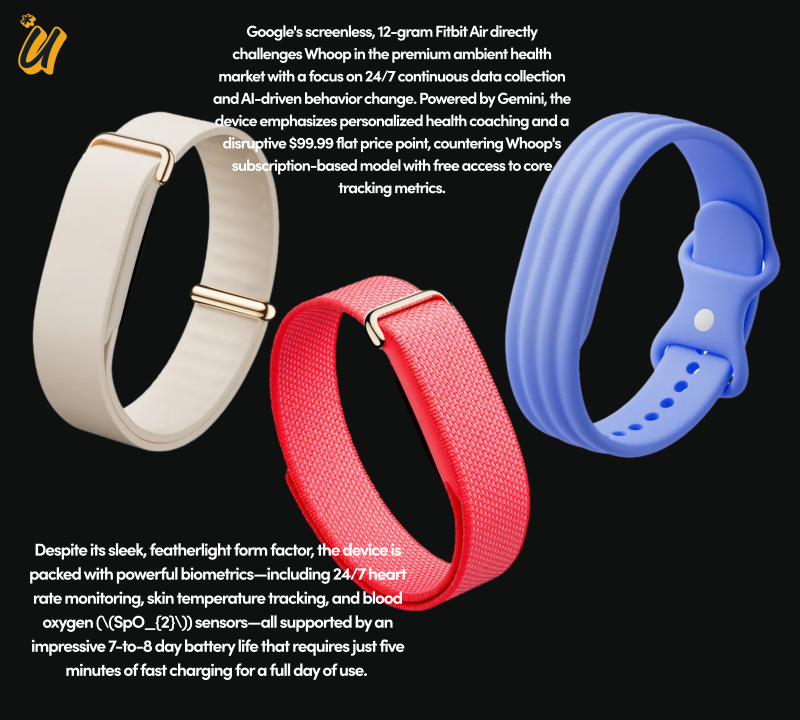
Closer to earth, the consumer electronics market witnessed a major philosophical shift in product design with Google’s official unveiling of the Fitbit Air. Stripping away the digital screens and constant notification distractions that define modern smartwatches, the minimalist, screenless wearable relies entirely on background AI processing to deliver deeply personalized health metrics. The launch represents a direct shot across the bow of premium athletic-tracking rivals like Whoop, signaling that the future of personalized wellness tech may lie not in flashier displays, but in invisible, ambient data collection powered by predictive artificial intelligence.