ABIDJAN – The sweeping skyline of Abidjan, rising sharply against the backdrop of the Ébrié Lagoon, presents an immediate and undeniable challenge to the Western imagination. For decades, global media has lazily painted West Africa with a monochromatic brush of struggle and underdevelopment. Yet, as traveler and content creator Tayo Aina documents in his immersive exploration of the Ivory Coast, the reality on the ground is a sophisticated, fast-evolving narrative of ambition, economic complexity, and profound cultural resilience. Through a journey that spans gleaming modern financial districts, historic colonial outposts, and the dense canopy of rural cocoa farms, Aina employs a masterful blend of strategic storytelling and transformational framing to dismantle outdated stereotypes, revealing a nation positioning itself as the undisputed crown jewel of Francophone Africa.
The journey begins in Abidjan, a hyper-kinetic metropolis that forces an immediate psychological shift in anyone walking its streets. Aina notes with precise emotional acuity that the city does not merely function; it thrives with a structural reliability that rivals major Western capitals. Boasting a striking skyline of architectural marvels, sprawling overhead highway networks, and a dependable twenty-four-hour power grid, Abidjan serves as a visual testament to the country’s rapid post-war modernization. This infrastructural backbone feeds a nocturnal energy and a seamless lifestyle that defies the chaotic reputation often thrust upon African megacities. However, this level of development comes with a stark economic reality. Aina’s investigation reveals that Abidjan holds the title of the most expensive city in West Africa—a hyper-inflationary ecosystem driven by heavy foreign investment, a booming middle class, and its status as a premium regional hub.
To understand how this economic engine breathes, one must move past the polished glass of the financial district and enter the beating heart of local commerce: the Adjame Market. Far from a disorganized sprawl, Aina highlights Adjame as a highly sophisticated, meticulously organized labyrinth of trade. Here, millions of CFA francs change hands hourly in a complex ecosystem where local Ivorian merchants trade alongside a massive, influential diaspora of international entrepreneurs. Among the most prominent are Nigerian traders, whose cross-border synergy illustrates the fluid, borderless nature of West African capitalism. The market is a sensory overload of sights, bartering, and grinding determination, perfectly encapsulating the grit that finances the city's glossy exterior.
Yet, if commerce is the intellect of the Ivory Coast, football is undeniably its soul. Aina’s visit to the historic Felix Houphouet-Boigny Stadium taps into a deep reservoir of national pride that still crackles in the air following the country’s legendary victory at the 2024 Africa Cup of Nations (AFCON). The stadium stands not just as a sporting arena, but as a secular cathedral where a historically divided nation found absolute, euphoric unification. To understand the Ivorian relationship with football is to understand a profound cultural truth: the pitch is where the national character of patience, flair, and collective joy is broadcast to the world. The echoes of the 2024 triumph remain a psychological anchor, fueling a contemporary wave of patriotism and confidence that bleeds directly into the country’s economic ambitions.
Related article - Uphorial Shopify
Moving inland, the narrative shifts from urban celebration to a sobering, structural critique of global trade. Aina centers a significant portion of his exploration on the Ivory Coast's identity as the world’s leading producer of cocoa, traveling deep into the rural agricultural belt to visit local farms and community-led NGOs. Here, the storytelling takes on an intense emotional precision as Aina documents the grueling, back-breaking, and deeply manual labor required to harvest cocoa pods, extract the precious beans, and begin the fermentation process. It is within these fields that a glaring, painful irony is laid bare. Despite producing the essential raw material that fuels a multi-billion-dollar global chocolate industry, the local farmers who sweat over the crops cannot afford to buy the finished chocolate bars imported from Europe. Aina uses transformational framing to expose the predatory nature of global trade structures and the astronomical cost of processing technology that keeps the global south trapped in a cycle of raw material extraction. The segment serves as a powerful call to consciousness, highlighting a systemic economic disparity where those who feed the world's luxury cravings are priced out of the very luxury they create.
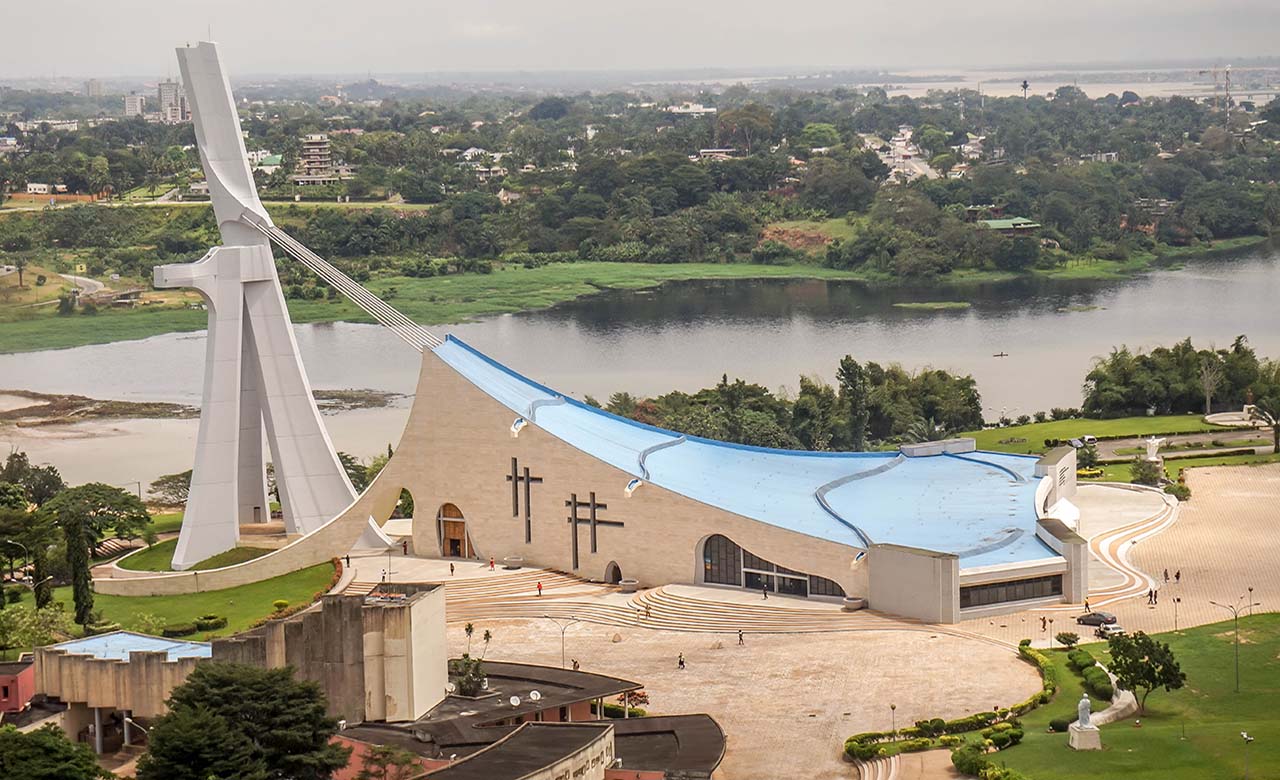
Seeking to understand the historical and architectural philosophy that shaped this complex nation, the journey moves to the political and administrative capital, Yamoussoukro. The city is a fascinating, almost surreal study in grand regional planning, dominated by the staggering silhouette of the Basilica of Our Lady of Peace. Authenticated as the largest Christian church building in the entire world, the basilica rises out of the West African savanna like a limestone mirage, its immense dome and stained-glass windows standing as a monument to spiritual devotion and presidential ambition. Not far from this holy site lies the late President Félix Houphouët-Boigny’s ancestral palace, famous for its grand artificial lakes inhabited by a historic population of Nile crocodiles. The juxtaposition of the soaring basilica and the predatory waters of the palace encapsulates the dualities of the post-colonial Ivorian state—reverent, powerful, and deeply grounded in local mystique.
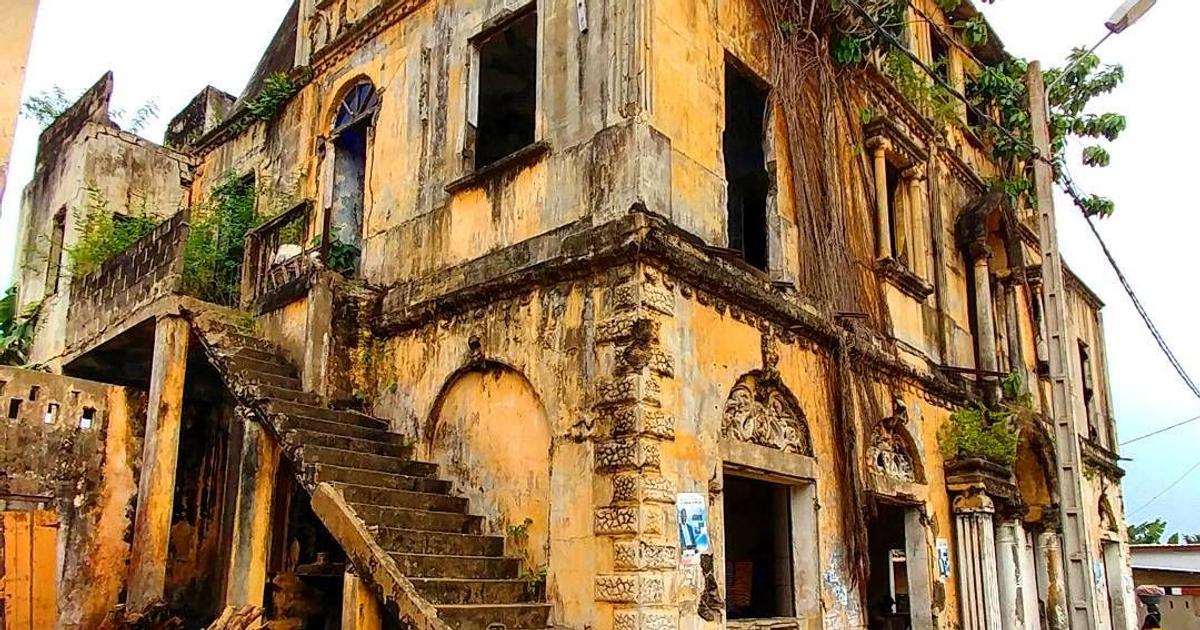
This historical exploration reaches its emotional zenith in the coastal town of Grand-Bassam, a UNESCO World Heritage site that serves as a living museum of French colonial rule. Walking through the quiet, salt-crusted ruins of the country’s first colonial capital, Aina reflects on the deep scars left by European occupation. The decaying architecture stands as a haunting monument to an era of exploitation, but the narrative does not dwell in victimhood. Instead, through a lens of profound cultural understanding, the focus shifts to the indomitable resilience of the Ivorian people, who reclaimed these spaces, transformed them, and used the lessons of the past to forge a fiercely independent modern identity.
The ultimate triumph of Aina’s documentary lies in where it chooses to look forward. The journey culminates not by romanticizing the past, but by showcasing the vanguard of the future: the young, tech-literate Ivorian entrepreneurs who are actively rewriting the nation's destiny. Among them is Stephanie Durand, a brilliant software engineer who typifies a rising generation leveraging Abidjan’s robust digital infrastructure, high-speed internet, and reliable power grid to build home-grown tech solutions. These young innovators are capitalizing on the explosive growth of the Francophone African digital market, launching startups that address local financial, logistical, and social needs. By profiling these digital pioneers, the report closes on a powerful note of transformational framing. The Ivory Coast is no longer a country defined by its colonial past or its agricultural exploitation; it is a dynamic, forward-leaning tech frontier. Driven by reliable infrastructure and an unstoppable youthful ambition, the nation is firmly establishing itself as an innovative powerhouse, signaling to the global investment community that the future of African technology speaks French, and its capital is Abidjan.