HOSUTON - The air inside Houston Stadium on that fateful Saturday afternoon was heavy with more than just the midsummer Texas humidity; it was thick with the weight of national dreams. For Canada, a co-host nation finding its footing in the global theater, the Round of 16 represented the zenith of an unprecedented journey. For Morocco, the Atlas Lions, it was a moment to prove that their historic run in 2022 was no fleeting miracle, but the hallmark of a new, permanent power in world football.
In the opening exchanges, the narrative belonged entirely to the Canadians. Spurred on by a partisan crowd, Jesse Marsch’s side played with a desperate, beautiful intensity. They swarmed the midfield, turning the pitch into a gauntlet of high-press energy. Tani Oluwaseyi, leading the line with flair, provided the game’s first true "what if" moment in the 11th minute, forcing a sprawling, acrobatic save from Yassine Bounou. For 45 minutes, Canada looked like the team of destiny. They were disciplined, brave, and inches away from breaking the hearts of the Moroccan faithful. The first half descended into a bruising, tactical deadlock, defined by eight yellow cards and the grim reality of a scoreless stalemate that left both sides searching for an answer in the shadows of the locker room.

Related article - Uphorial Shopify
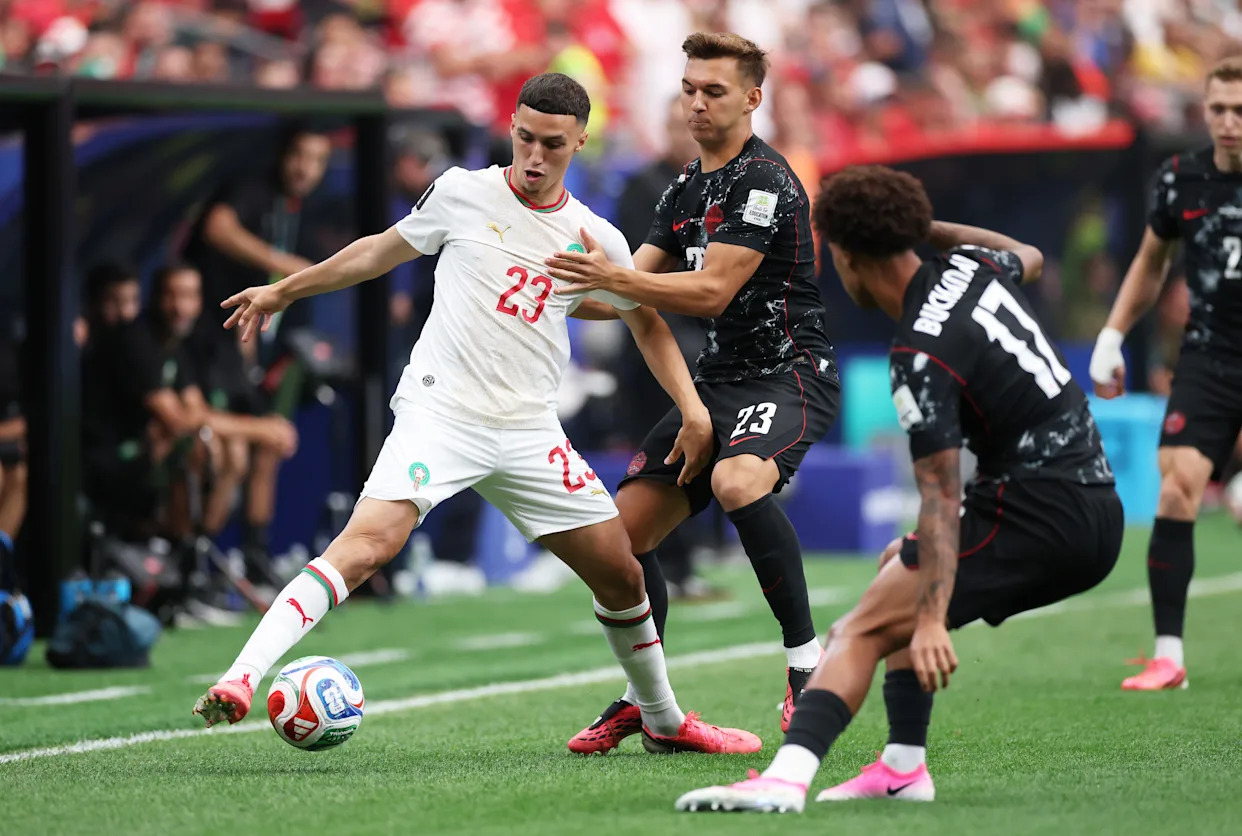
The transformation in the second half was not merely tactical; it was a shift in spirit. If the first half was a contest of grit, the second was a masterclass in clinical efficiency. Just five minutes after the restart, the match began to pivot. Achraf Hakimi, serving as the architect, delivered a precise free-kick that found Azzedine Ounahi. Ounahi, cool under the immense pressure, threaded a right-footed strike through a labyrinth of legs and into the bottom corner. The goal was a gut punch to the Canadian momentum, a sudden, sharp reminder of the razor-thin margins that separate the good from the elite at the World Cup level.As the match matured, Canada’s desperation began to reveal cracks in their defensive foundation. With legs tiring and the pressure of the occasion mounting, the tactical gamble to push for an equalizer left wide corridors of space for the Atlas Lions to exploit. Morocco, a team that seems to thrive on the transition, smelled blood. In the 82nd minute, the connection between Brahim Díaz and Ounahi proved lethal. Díaz, ever the creator, laid off a pass that Ounahi finished with a poise that silenced the Houston stands. It was the definitive blow, the moment the Atlas Lions snatched the heart of the contest and firmly secured their passage into the quarterfinals.

The final act of this story arrived in the dying embers of stoppage time. Soufiane Rahimi, who had entered the fray early in the match following an injury to Ismael Saibari, found the perfect ending to his personal arc. On yet another lightning-fast counter-attack, he slotted home the third goal, sealing a 3-0 victory that felt more ruthless than the parity of the first half might have suggested.When the final whistle blew, the contrast in emotions was stark. For the Canadians, it was a quiet, profound realization that their best-ever performance had come to an end, yet their legacy had been firmly established. They had forced a giant to work for every inch. For Morocco, the victory was a validation of their status. By becoming the first African nation to reach the quarterfinals twice, the Atlas Lions proved they are no longer the surprise guest at the table—they are the ones setting it. As the players embraced in the center of the pitch, the message was clear: for Morocco, this run is not an anomaly; it is the beginning of a new era.