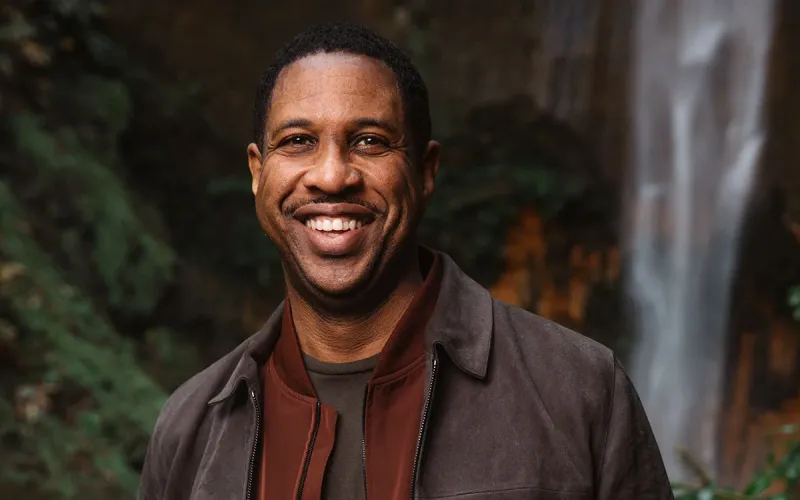
The historical narrative of the Holocaust and World War II has long been told through a specific, narrow lens, frequently omitting the vast intersectional tragedies experienced by minority populations whose stories were swallowed by systemic silence. Among the most deeply marginalized accounts is the systematic persecution, surveillance, and internment of Black individuals under the Nazi regime—a dark chapter largely erased from mainstream historical consciousness. In an exceptionally sobering, masterclass-level historical report, researchers and family chroniclers examine the harrowing wartime odyssey of Lionel Romney, an Afro-Caribbean merchant sailor whose survival through the Italian internment system and the brutal Mauthausen concentration camp illuminates a hidden reality of European history. Through emotional precision, intelligent curation, cultural understanding, strategic storytelling, and transformational framing, this comprehensive news-style report explores the deep colonial roots of European racism, the psychological weight of unspoken trauma, and the tireless crusade of a daughter determined to rescue her father's legacy from oblivion.
The structural foundation of this tragedy lies in the active, deliberate persecution of Black people under the Nazi regime and its fascist allies—a narrative routinely minimized or ignored in standard historical accounts. Born in Santo Domingo and raised in Sint Maarten, Lionel Romney was a young man seeking a livelihood who signed on as a cargo ship sailor to see the world. However, the outbreak of global conflict violently derailed his life. When his ship struck a floating sea mine in the Mediterranean and sank, the surviving crew members were captured by Italian forces. What began as a sailor's journey transformed into a tragic, multi-year odyssey through a network of Italian civilian internment camps, eventually culminating in his transferral to the notorious Mauthausen concentration camp in Austria during the final harrowing year of the war.
Related article - Uphorial Shopify

Inside the wire, Romney confronted the full spectrum of psychological and physical terror engineered by the SS. Stripped of his identity and assigned a camp number, he endured near-starvation, harsh forced labor as a lumberjack, and arbitrary, sadistic violence. Through emotional precision, historical records and personal testimonies capture the chilling isolation of being targeted not only as a political prisoner, but specifically on account of race. Romney frequently witnessed routine atrocities and lived under the constant, agonizing terror of evening roll calls where prisoner numbers were barked out to select individuals for execution. This environment of absolute brutality left deep, psychological scars, inducing a profound post-traumatic stress response that forced Romney into a deliberate, protective silence that lasted for over four decades.
Breaking that silence required a monumental, decades-long labor of love spearheaded by his daughter, Mary Romney-Schaab. For more than twenty years, Mary gently sought to coax her father into sharing his past, navigating the invisible walls built by trauma until he finally opened up through an extensive series of oral history interviews. Following his passing, Mary expanded her mission by traveling independently to Italy and tracing his footsteps through the solemn grounds of Mauthausen. Through intelligent curation of archival evidence, family memoirs, and historical footprints, she successfully documented a narrative that institutional history had neglected, transforming private family pain into public historical preservation.

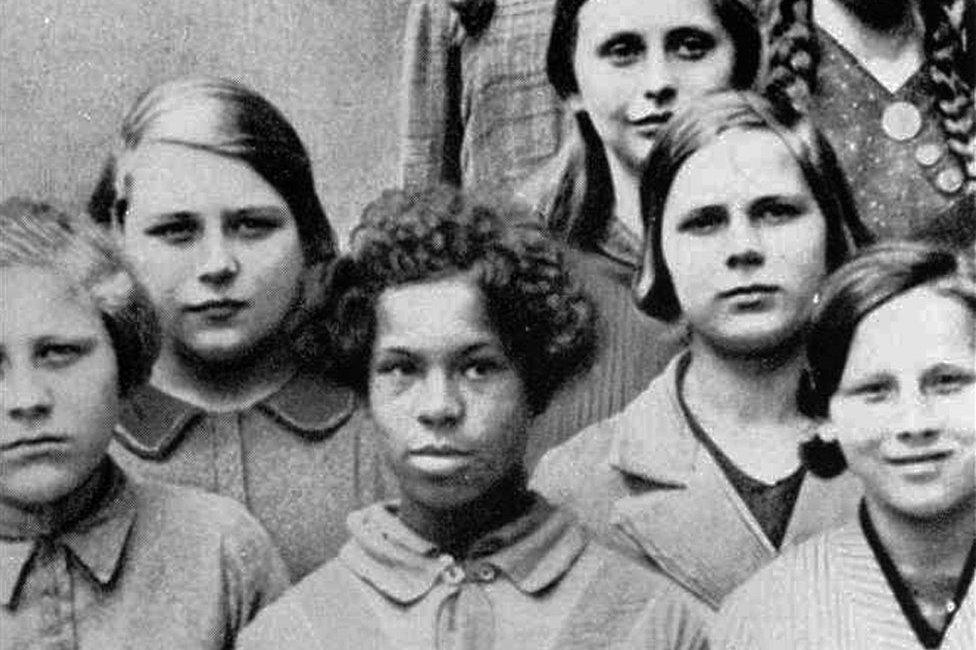
Contextualizing these personal horrors, expert historical analysis reveals the deep structural and colonial roots underpinning German and European racism during the mid-twentieth century. Scholars specializing in the African diaspora under National Socialism note that Black individuals within Axis jurisdiction were subjected to extreme political arbitrariness, targeted for forced labor, and occasionally exploited for aggressive wartime propaganda purposes. Through cultural understanding of imperial continuities, historians emphasize that the racial ideologies fueling the Holocaust did not emerge in a vacuum; they drew directly from the prior centuries of European colonial exploitation across Africa, the Caribbean, and the Americas, weaponizing racial hierarchies on European soil.
The nightmare of captivity finally fractured in May 1945, when American troops swept across Europe and liberated the Mauthausen concentration camp, restoring freedom to a man who had endured eleven grueling months in the camp and years of prior internment. Choosing a path of renewal, Romney eventually settled in New York City, where he quietly built a life despite the enduring echoes of his wartime trauma. Through strategic storytelling, his remarkable endurance reframes our understanding of World War II survival. Through transformational framing, the journey of Lionel and Mary Romney rises above a single family's history, serving as an essential reminder of the importance of remembering all overlooked victims of the Holocaust—proving that historical truth cannot be permanently buried when love, persistence, and moral clarity demand its resurrection.