In an industry where technology and entertainment are becoming indistinguishable, a quiet revolution is taking hold across the global media landscape, fundamentally altering how content is created, distributed, and monetized. Live from the Bloomberg Screentime summit, key corporate leaders, pioneering tech founders, and veteran market analysts gathered to outline the market forces driving this unprecedented transformation. What emerged throughout the event was a clear depiction of an ecosystem caught in a dual transition: traditional entertainment giants are refining their streaming economics for long-term profitability, while an aggressive new wave of generative artificial intelligence startups is building software tools designed to democratize high-end creative production from the ground up.
The media landscape is currently navigating a pivotal phase as companies pivot away from the hyper-aggressive subscriber growth strategies of previous years toward sustainable unit economics and disciplined capital allocation. Industry observers note that while direct-to-consumer platforms have successfully fundamentally disrupted legacy television broadcast networks, operating margins remain under intense scrutiny from global capital markets. Analysts point out that media conglomerates are now forced to strike a delicate balance between containing skyrocketing budget inflation for premium productions and continuously refreshing their content catalogs to prevent subscriber churn. Beyond core video streaming, executive leadership across the sector is actively exploring adjacent monetization channels, including interactive gaming, targeted advertising tiers, and high-profile live event broadcasts, to maximize consumer engagement and unlock secondary revenue streams.
At the epicenter of this evolving platform strategy is Netflix, whose co-chief executive officer Ted Sarandos outlined the streaming pioneer's roadmap for its next operational expansion phase. Addressing the key strategic choices facing the service, Sarandos emphasized that sustaining market leadership requires a steady evolution beyond standard video-on-demand libraries into multi-faceted digital entertainment hubs. Netflix is aggressively committing capital to premium live programming, spanning live sports properties and global cultural spectacles, designed to capture massive real-time simultaneous audiences and power its rapidly growing high-margin ad-supported subscription tiers. Sarandos highlighted that while foreign-language local content remains a core engine for international growth, the ultimate imperative is maintaining exceptional creative standards while continually leveraging proprietary viewer analytics to optimize subscriber acquisition costs and retain long-term platform loyalty.
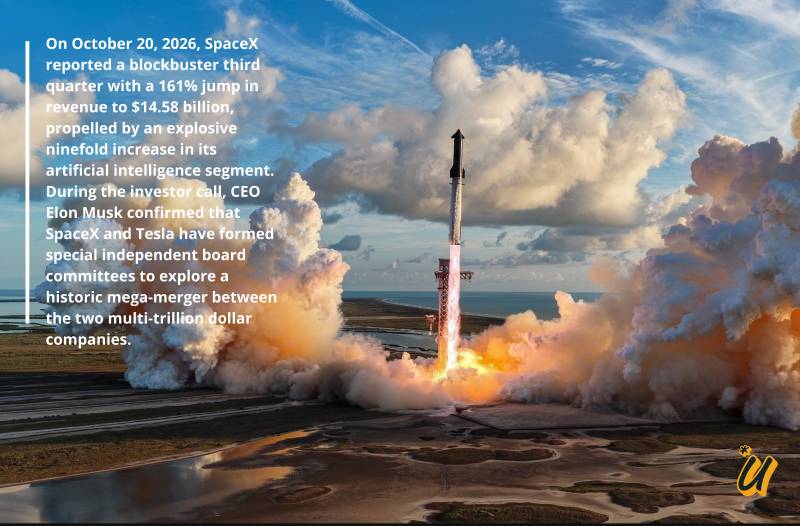
While software platforms dominate consumer screens, the physical technological infrastructure driving global communications continues to reach beyond Earth's atmosphere. Amid the media-focused proceedings, attention briefly shifted to major aerospace developments as SpaceX completed another high-profile rocket launch bound for the International Space Station. The mission represents a critical operational milestone, demonstrating the reliable rhythm with which private commercial launch providers now service orbital infrastructure for national space agencies and commercial ventures alike.
Providing deep context on the aerospace sector, industry experts emphasized how the commercial space economy has crossed a structural inflection point. Public-private partnerships, led by NASA’s reliance on private space hardware, have drastically driven down per-kilogram launch costs, establishing a dynamic environment where commercial space stations, satellite internet constellations, and deep-space logistics are moving from conceptual speculative models to operational reality. The operational precision displayed by SpaceX underscores a broader macroeconomic trend: software, hardware, and physical transport networks are increasingly combining into unified high-velocity technological ecosystems.
Simultaneously, the convergence of technology and culture is nowhere more pronounced than in the music industry, where generative artificial intelligence tools are reshaping how songs are composed, recorded, and distributed. Mikey Shulman, the chief executive officer of AI music platform Suno, detailed how rapid advances in machine learning algorithms allow users to generate complex, full-fidelity musical compositions complete with instrumentation and vocals from simple textual prompts. Shulman presented a vision where synthetic audio tools do not replace human musicians, but rather lower the technical barriers to creative expression, opening up song creation to hundreds of millions of everyday users who previously lacked formal musical training or access to expensive professional studio equipment.
However, the rapid proliferation of synthetic music creation platforms has sparked complex legal and regulatory friction with traditional record labels and rights holders. Addressing the controversial intellectual property debate surrounding training datasets, Shulman argued that generative AI platforms are paving the way toward novel licensing frameworks and revenue-sharing mechanisms. As copyright law struggles to keep pace with algorithmic generation, technological developers and major music brands are attempting to establish equitable models where legacy artists receive appropriate compensation while creative AI infrastructure continues to scale globally.
Beyond music, broader artificial intelligence integration is quietly restructuring core software workflows across every consumer-facing vertical. Market analysts monitoring global enterprise investments note that corporate capital expenditures are shifting heavily toward foundational computing architecture, custom silicon chips, and enterprise-grade generative models. As synthetic media tools evolve from novelty applications into essential daily software utilities, corporate boards across legacy media companies are under immense pressure to either integrate these automated capabilities into their production pipelines or risk severe operational disadvantages against nimble, tech-first competitors.
The visual entertainment sector is experiencing a parallel transformation as synthetic video production shifts from conceptual experiments into professional film pipelines. George Strompolos, chief executive officer of Promise, presented an in-depth breakdown of how AI-driven filmmaking platforms are enabling independent storytellers and major studios alike to output cinematic-quality video graphics at a small fraction of traditional production budgets. Strompolos described a future where green screens, physical location scouting, and massive post-production visual effects crews are largely augmented or replaced by real-time generative software tools, allowing creators to iterate on complex storytelling visual concepts in hours rather than months.
This rapid advancement in visual computing is backed by breakthrough spatial technologies and 3D generative software. Caroline Ingeborn of Luma AI outlined how her company's 3D generative AI models are bridging the gap between flat, two-dimensional media screens and immersive interactive environments. By generating detailed three-dimensional assets, hyper-realistic lighting physics, and complex video elements on the fly, Luma AI’s platform provides visual effects artists, game developers, and filmmakers with unprecedented creative control. Ingeborn explained that as display hardware expands into spatial computing and virtual headsets, synthetic 3D generation will become the foundational technical layer powering next-generation interactive media experiences.
As millions of synthetic video files, music tracks, and digital images enter the global media bloodstream every day, the urgent requirement for tracking systems to protect intellectual property has become a paramount industry concern. Dan Neely, chief executive officer of Vermillio, addressed this critical challenge by outlining tech solutions designed to establish clear algorithmic attribution and copyright tracking for digital creators. Vermillio’s technical platform focuses on tracking how original intellectual property is utilized inside complex machine learning models, creating transparent audit trails that allow original artists, writers, and studios to license their visual styles and IP safely. Neely emphasized that building a sustainable and ethical AI economy requires robust digital provenance standards, ensuring that content creators are fairly compensated as generative platforms transform the global media landscape.