KINGSTON – The stage is minimalist—a single, monochromatic backdrop, the signature aesthetic of the platform—but the presence occupying it is anything but small. When Buju Banton steps into that intimate, stripped-back space to perform "Driver," he is not merely revisiting a track from his 2006 album, Too Bad; he is anchoring a moment of profound cultural continuity. The Gargamel, as he is known to his legions of devotees, delivers a performance that acts as a bridge between his storied past and the present-day urgency of the "grind," proving once again that his voice remains one of the most potent instruments in the history of Jamaican music.
To understand the resonance of "Driver" is to understand the heartbeat of the hustle. In Buju’s own estimation, the track was born from the kinetic energy of life on the streets—a reflection of the everyday struggle that defines the existence of so many in his orbit. When he introduces the song, there is a sense of groundedness; he isn't performing a historical artifact, but rather a living, breathing testament to the resilience required to survive in an unpredictable world. The performance itself is a masterclass in focus. There are no dancers, no pyrotechnics, no elaborate staging—only the artist, the mic, and the raw, pulsating narrative of the "driver" who must navigate the treacherous terrain between point A and point B, while the weight of external surveillance and societal expectation bears down.
The lyrical content of the track is a masterclass in strategic storytelling, utilizing coded language to delineate a narrative that is both specific and universal. The "driver" at the center of the song is a metaphor for the individual—specifically the one operating within the margins—who is perpetually negotiating with systems of authority. The lyrics speak to the necessity of constant motion: "Driver, don't stop at all." This is not just a command; it is an existential imperative. It captures the tension of the grind, where the individual must manage interactions with the police, navigate the precarious logistics of the work, and remain committed to efficiency at all costs. For Buju, these are not just lines; they are the lived realities of people who have learned to survive by remaining unseen, moving quickly, and keeping their eyes fixed on the destination.

Related article - Uphorial Shopify
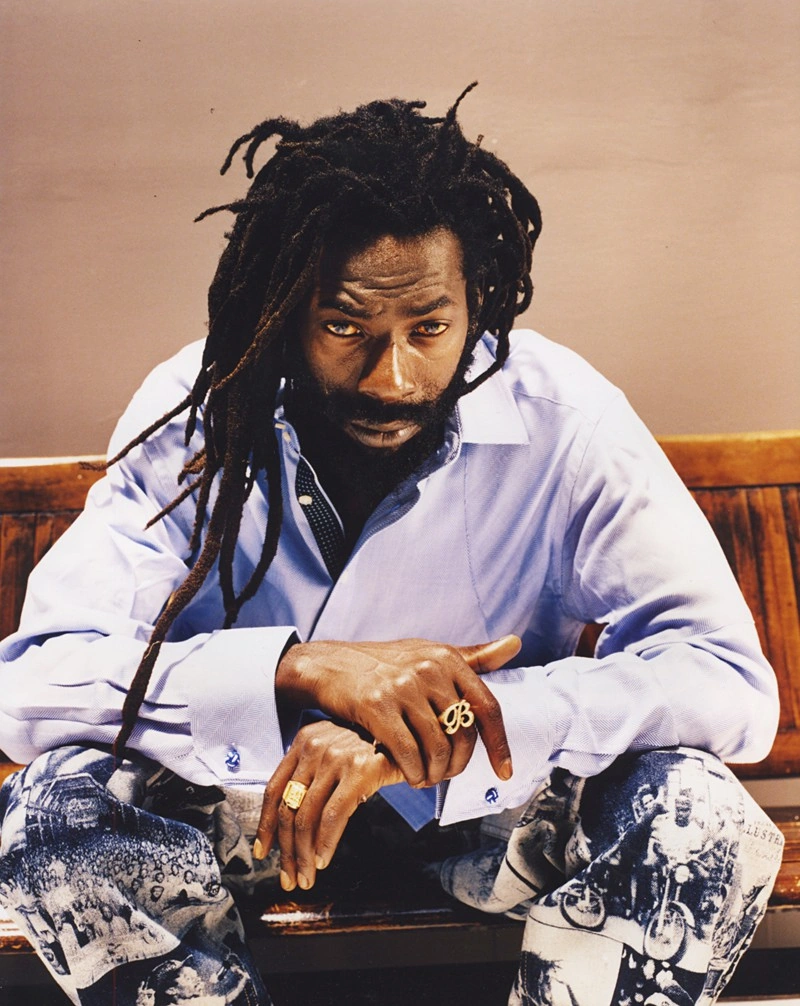
What makes this performance particularly compelling is the transformational framing Buju brings to the table. In his hands, the song transcends its origin as a dancehall staple, evolving into an anthem of persistence. The cultural understanding inherent in the performance is profound—it speaks to the Jamaican experience of resistance against globalization, the pride of the independent operator, and the spiritual conviction that one’s destiny is something to be ruled. By stripping away the studio production and presenting the song in its most visceral form, Buju highlights the lyrical dexterity and the emotional precision of his craft. He transforms the "driver" persona from a figure of potential illicit activity into a symbol of the tireless, working-class survivor who refuses to let the pressure of the system break their stride.

This performance also invites a broader reflection on the multivalence of Buju Banton’s discography. Over the years, the song has been interpreted, reinterpreted, and even co-opted—sometimes as a political theme, sometimes as a cultural touchstone—yet here, it finds its clearest expression. It is a reminder that Buju’s music is an advertising campaign for the resilience of his people; he sings the things that the streets identify with because he has lived them. He is an artist who acknowledges that the sun will come out tomorrow, but only for those who are willing to keep driving, keep working, and keep moving through the storm.
Ultimately, the session serves as a powerful validation of Buju Banton’s place in the pantheon of global music. In an increasingly fragmented and saturated musical landscape, he provides the clarity of a veteran who has walked the long, hard road of his own journey. He stands there, focused and resolute, reminding the listener that the grind is not merely about survival—it is about maintaining one’s dignity, one’s pace, and one’s purpose in a world that is constantly trying to pull you over. As he delivers the final lines, the message is clear: the road may be long, the obstacles may be numerous, and the system may be relentless, but for the driver who stays committed to the mission, the journey toward their own destiny is the only thing that matters. This is Buju Banton, stripped of everything but his truth, and in that truth, he finds the rhythm that continues to drive the culture forward.