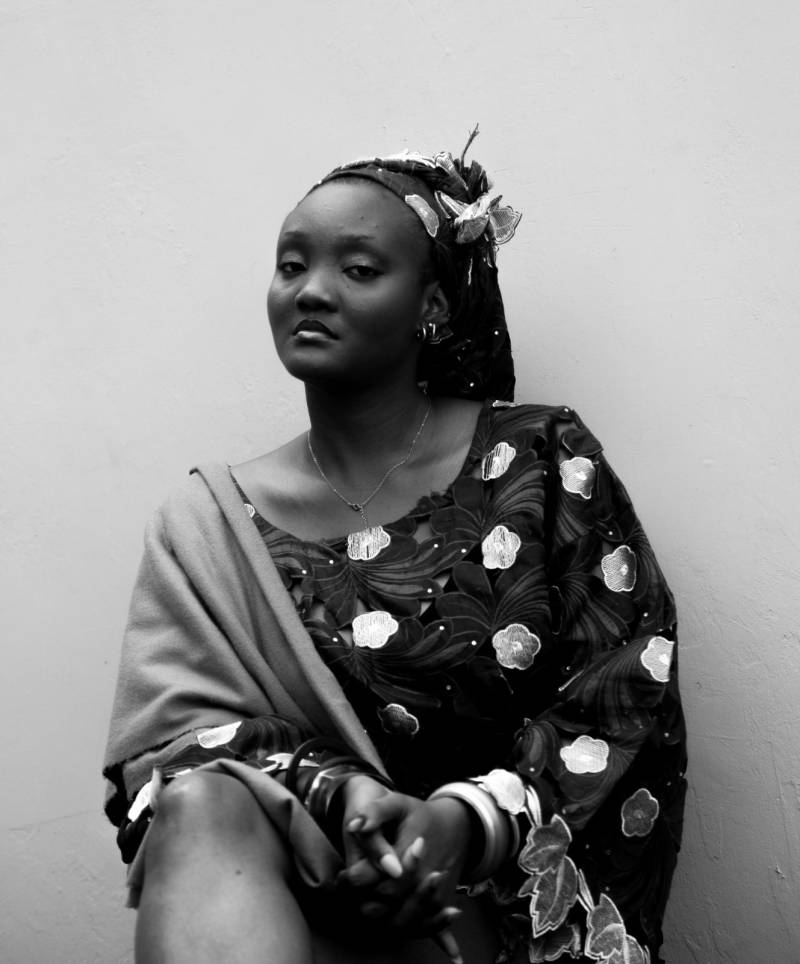
The story of Princess Sarah Culberson is not merely a biographical account of discovery; it is a profound meditation on the complexities of belonging, the fluidity of identity, and the radical realization that the roots of a family tree can extend far beyond the horizon one is raised under. Adopted as an infant by a white family in the tranquil landscape of West Virginia, Culberson’s early life was framed by the warmth of her immediate surroundings and the quiet, persistent questions that define the experience of many adoptees. It was not until she embarked on the arduous, emotional journey to locate her biological father that she uncovered a revelation that would alter the trajectory of her life: she was not only a child of Sierra Leone, but a princess of the Mende people, a lineage linked to the royal family of the Bo region.
To recount this process of discovery is to describe a shedding of layers. Culberson speaks of the search for her roots with a vulnerability that strips away the clinical terminology often used to describe adoption and reunion. She delves into the turbulent and beautiful process of reconciliation—the act of holding space for her West Virginia upbringing while simultaneously embracing the profound, ancestral gravity of her African heritage. For Culberson, claiming these disparate parts of herself was not about choosing one identity over the other, but about the hard-won synthesis of a mixed, adopted life. It was a journey of claiming her own narrative, proving that one can be both a daughter of the American Midwest and a princess of a West African kingdom, and that the tension between those realities is where the most authentic self resides.
Central to this transformation is her redefinition of what it means to hold a title. In a world that often conflates royalty with opulence and detached authority, Culberson offers a transformational framing: royalty, at its heart, is a mandate for service. She speaks of her family’s enduring commitment to the Bo region not as a passive inheritance, but as an active, daily responsibility. Their work spans the critical infrastructure of a society—education, healthcare, technology, and the empowerment of women—functioning as a bridge between tradition and the urgent needs of the future. By centering her identity in the service of others, she strips away the performative elements of status, insisting that the only true metric of a royal is the tangible impact left on the community they are sworn to protect.

sMNGaewq0y0?si=4Od49DmIr87d58ue

The conversation on One54 extends naturally into a wider, necessary dialogue about the African diaspora. As Culberson and her hosts weave through the common threads that bind the diaspora—the shared resonance of music, the comfort of culinary traditions, and the overarching history of displacement and resilience—it becomes clear that her journey is a mirror for a broader experience. The displacement that defined her early years is a echo of the wider, systemic disruptions that have shaped the lives of people of African descent for centuries. Yet, in this history, there is also an undeniable thread of endurance, a shared DNA of survival that connects individuals across continents, creating a community defined not by geography, but by a collective memory and a shared vision of the future.
This exploration also highlights the critical, yet often neglected, necessity of nuanced media representation. The conversation turns to the lack of mainstream portrayals of African royalty, which have historically been either ignored or reduced to caricatures. Culberson points to moments of visibility, such as the Bridgerton spin-off Queen Charlotte, as vital markers of change. These stories do not just provide entertainment; they provide a validation of existence. They offer a mirror to a global audience, proving that the histories of African leaders and the intricacies of their lives are not peripheral to the story of humanity, but are foundational to it. Such portrayals are not merely pop culture milestones; they are acts of cultural reclamation that help to fill the massive, silent gaps in the global imagination.
Throughout the episode, the persistent theme is the courage required to embrace the entirety of one's origin. Culberson’s journey serves as a call to action for anyone who has ever felt fragmented by their background. She emphasizes that the act of seeking is, in itself, a form of service to one's ancestors. By advocating for a more sophisticated, nuanced storytelling about African history, she is fighting against the flattening of culture that occurs when histories are told from a singular, narrow perspective. She challenges the listener to see that the history of Africa is not a monolith, but a tapestry of millions of distinct, rich, and unfolding stories.
In the final accounting of her journey, the Princess of the Mende people reflects on the necessity of walking through life with integrity. Her story is a testament to the fact that identity is not a static object to be found, but a dynamic, evolving process to be built. Her work in Sierra Leone, her advocacy for transparency in adoption, and her push for a more equitable global representation of African heritage are all branches of the same tree. She reminds us that when we reach back into our pasts, we are not just looking for names and dates; we are looking for the moral foundation that allows us to step forward into our future with purpose. In a world that constantly encourages us to diminish ourselves to fit into smaller, easier boxes, Princess Sarah Culberson stands as a reminder of the power inherent in the refusal to be anything less than the sum of all one's parts.