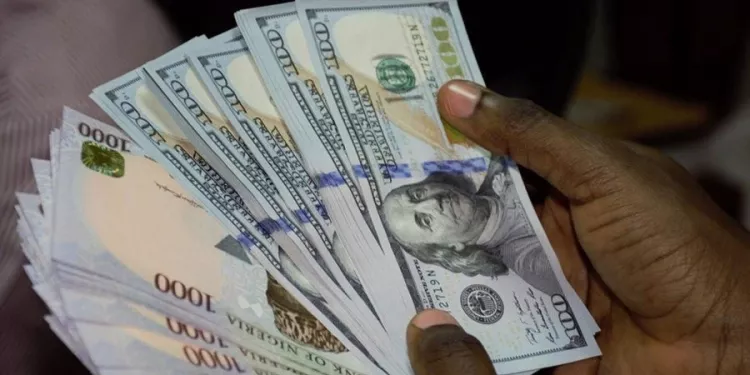
This year, the U.S. dollar index, which compares the value of the dollar to the euro, yen, and other major currencies, has increased by more than 14%. When measured against other assets, the majority of which have had a poor year, the increase appears even more significant. Currency traders and investors claim that Nigeria’s ongoing dollar scarcity, which has long been a gripe of enterprises doing business there, has now reached a crisis point. On the black market, the naira has depreciated to more than N705, and there are rumors that it could drop even more.
On Friday, the British pound fell to a 37-year low against the dollar as new data revealed that consumers are cutting down on their spending as inflation strains household budgets, highlighting concerns that the economy may already be contracting. The euro is at its lowest level against the dollar in two decades. What’s causing the currency's resilience in the world’s largest economy?
Despite rising inflation, the job market in the United States has remained remarkably steady. Additionally, other economic sectors, such as the services sector, have fared well.
This has lessened concerns about the slowing of the housing market and other economic areas that benefit from cheap interest rates. Because of this, traders now anticipate that the Federal Reserve will keep raising interest rates sharply and holding them there for a time to stop the worst inflation in 40 years. The yield on a 10-year Treasury has more than doubled to 3.44% from approximately 1.33% a year ago as a result of these predictions. Additionally, those more enticing U.S. rates are luring investors from around the globe.
Major economies appear to be more vulnerable than the United States, and other central banks have been less aggressive than the Fed. The European Central Bank recently increased its key interest rate by the greatest percentage point – three-quarters of a point. But while expecting a third rate increase this coming week, the Fed has already increased its benchmark rate by as much as twice this year. Following a hotter-than-expected report on U.S. inflation released on Tuesday, some traders even claim a massive increase of a full percentage point may be feasible.
Because of their less aggressive nature, 10-year bonds in Europe and other parts of the world have lower yields than U.S. Treasury bonds, such as Germany’s 1.75% and Japan’s 0.25%. Investors from Asia and Europe have to exchange their currencies for U.S. dollars when buying Treasury securities. As a result, the dollar’s value increases.Effect of the strong dollar the strong dollar puts a financial strain on developing countries. Many companies and governments in such emerging and frontier markets borrow money in US-dollar terms, instead of in their currencies. As their currencies weaken, they are increasingly stressed about repaying their debts in U.S. dollars.
Over the past year, emerging-market bonds have also had among the poorest performances in the fixed-income market. Although yields have recently increased dramatically and may offer some chances over the long run, EM bond returns are generally not favored by the tighter Fed policy, declining global liquidity, and the rising greenback.bottom line the dollar’s biggest moves may be behind it, but many top currency experts expect the dollar to at least stay this high for a while.
According to last Tuesday's report, U.S. inflation remains more stubborn than expected. As a result, traders are betting that the Fed will hike rates next year. To break the nation’s high inflation rate, Fed officials have reaffirmed their commitment to keeping rates high until the job is done, even if it damages economic growth, strengthening the dollar as investors seek out the safest asset at the moment.