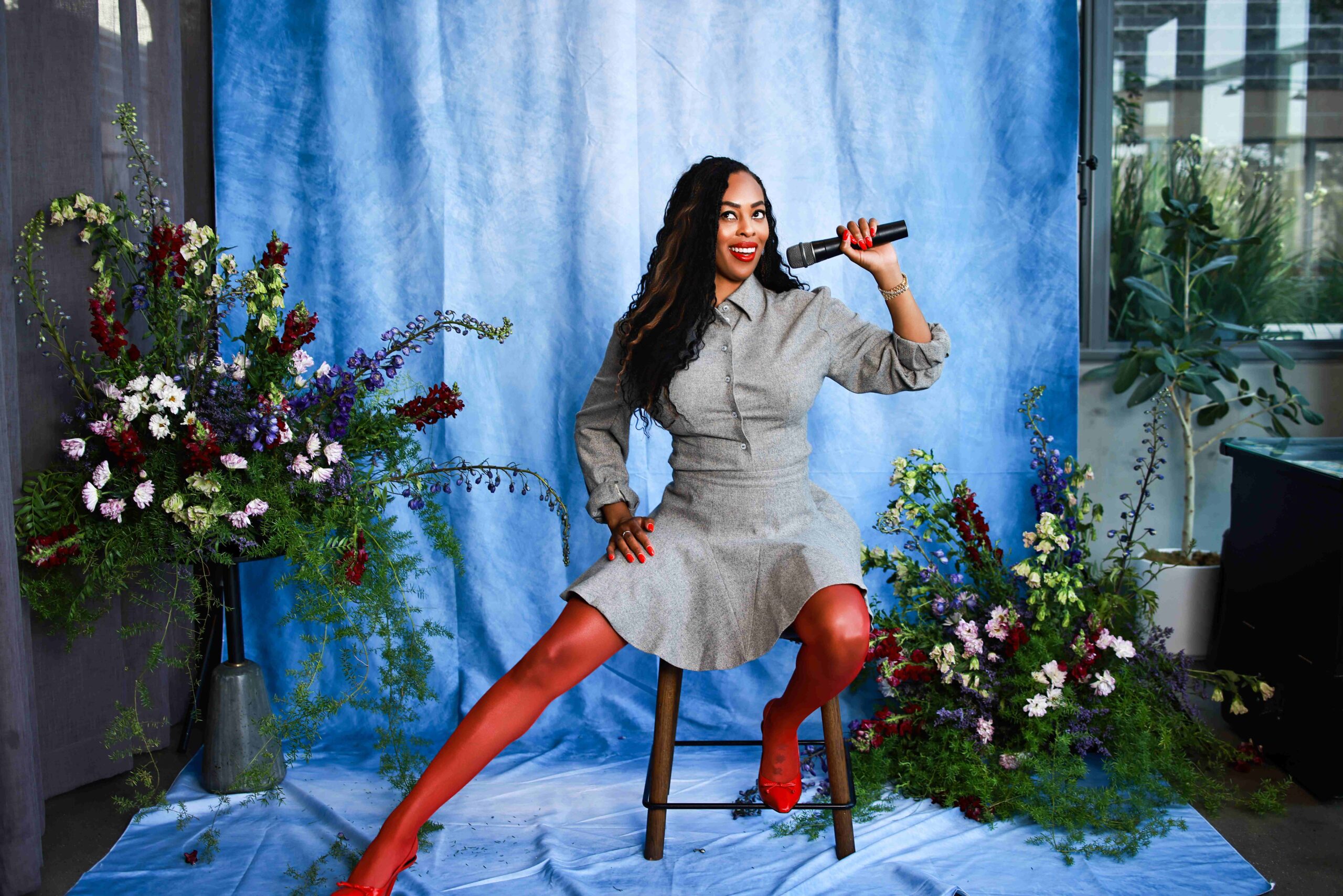
The modern stand-up stage is far more than an arena for simple escapism; it operates as an intimate cultural mirror, capturing the chaotic, unspoken friction of contemporary life with a precision that standard prose could never achieve. In a brilliant, high-energy set delivered for the digital platform Don't Tell Comedy, celebrated comic Daphnique Springs delivers a masterclass in relational commentary. Rather than relying on tired, predictable tropes about the war of the sexes, Springs executes a sophisticated piece of strategic storytelling and transformational framing. She strips back the layers of modern dating, male psychological architecture, and commercialized romance to expose the fundamental absurdities of how we love, communicate, and evaluate each other in the current cultural landscape. For the laughing crowd packed into the intimate room, her performance offers an intelligent curation of everyday observations, weaponizing sharp comedic timing to turn private relational frustrations into a shared, cathartic public celebration.
To dive into the emotional precision of Springs’s comedic vocabulary is to witness a sharp mind analyzing the baffling, minimalist communication styles of the modern male. She initiates her critique by targeting the notoriously vague nature of men, dissecting their unique ability to flatten monumental, life-altering occurrences into brief, non-detailed answers. In her most striking bit, she hilariously contrasts how a woman details her day versus how a man handles a significant crisis, noting that a man could return home from a literal shooting at his workplace and describe the near-death experience with a simple, unbothered, "Yeah, it was crazy, babe." Yet, in a brilliant display of psychological subversion, Springs notes that this chronic brevity creates a fascinating trap. The moment a man suddenly reverses this pattern and becomes overly detailed—offering precise timelines, specific location names, and unprompted explanations—it immediately triggers intense suspicion, indicating to any observant woman that he is actively constructing an alibi to hide something.
This minimalist architecture extends directly into the unglamorous mechanics of long-term male friendships. Springs engages in an elite bit of cultural understanding, observing that men possess a unique, almost surreal capacity to maintain decades-long brotherhoods without ever discovering fundamental details about each other’s personal lives. While women require deep emotional deep-dives to solidify a bond, men form unshakeable alliances based entirely on shared interests like sports, video games, or cars. Springs brings the house down by pointing out that a man can serve as the best man at a wedding, text his friend daily, and consistently drink with him on weekends, yet if asked what his friend actually does for a living to afford his lifestyle, he will genuinely have no idea. By celebrating this detached solidarity, she highlights a profound truth about the male ego: men do not bond through an exchange of vulnerable biographies; they bond by occupying the same space while looking at the same television screen.

Related article - Uphorial Shopify
This structural lack of detail serves as the launchpad for a sweeping, incredibly creative riff on history and literature, specifically targeting the textual ambiguities of the Holy Bible. Through an exercise in radical transformational framing, Springs focuses on the fact that the historical scriptures were written exclusively by men, humorously arguing that the entire text suffers from the exact same lack of detail that plagues a modern boyfriend's text messages. She suggests that if women had been given the authority to write the commandments, the sacred text would be an incredibly comprehensive, hyper-specific document that left zero room for loopholes. Instead of a simple, blanket decree like "Thou shalt not commit adultery," a female-authored scripture would include fifty pages of sub-clauses, explicitly defining whether liking another woman's social media picture at two o'clock in the morning constitutes a mortal sin.
Turning her sights onto the battlefield of modern dating, Springs shifts from historical critique to fierce personal advocacy, urging women to abandon the restrictive rules of serial monogamy during the exploration phase. She passionately advocates for situational multi-dating—the practice of seeing multiple people simultaneously—as a necessary tactical filter to truly discern what an individual wants and deserves in a permanent partner. To illustrate the shifting baseline of romantic attraction in a precarious economic climate, she shares an amusing personal anecdote about a recent date. While past generations might have been wooed by expensive poetry or generic romantic gestures, Springs admits she was deeply aroused when her date casually revealed he possessed an elite, high-quality corporate health insurance plan with an incredibly low deductible.
This unvarnished honesty regarding dating standards forms the hilarious spine of the latter half of her performance, where she tackles the deep anxiety of managing personal details and physical vulnerabilities early in a relationship. Springs recounts a dating encounter with a man who revealed a severe seafood allergy—a revelation she jokingly admits she found completely unattractive. With brilliant, deadpan delivery, she explains that she prefers her romantic partners to be entirely devoid of such evolutionary vulnerabilities, wanting a man who can defend the homestead against intruders rather than one who can be taken down by a rogue piece of shrimp. The set concludes by entering the highly commercialized theater of marriage preparations, where Springs applies her uncompromising standards to the jewelry industry. Confronting the modern cultural debate between laboratory-engineered stones and mined geology, she declares her absolute preference for natural diamonds over their lab-grown alternatives. By framing the purchase of a natural diamond not as a superficial display of wealth, but as an essential, material proof of a partner's willingness to undergo financial and emotional labor to secure her hand, Springs leaves the audience with a brilliant comedic takeaway. True romance in the modern age is not about effortless perfection; it is about the willingness to navigate the gritty, expensive, and hyper-detailed realities of life together—proving that the highest form of affection is found when someone finally pays attention to the fine print.