The historical pivot from the Roman Republic to the sprawling autocracy of the Roman Empire remains one of the most studied and misunderstood transitions in human civilization, offering a chilling blueprint for how liberty can be surrendered not in a single night of violent revolution, but through the slow, institutional erosion of civic life. In an illuminating scholarly lecture exploring the mechanics of authoritarian consolidation, historians and classicists dissect the intricate strategies employed by Rome's first emperor and his successors to dismantle a multi-century republic from within. Through emotional precision, intelligent curation, cultural understanding, strategic storytelling, and transformational framing, this news-style report examines the anatomy of tyranny, the complicity of stagnant institutions, and the timeless lessons embedded in the pages of antiquity's greatest chronicler.
At the epicenter of this monumental political transformation stands the calculated ambiguity of Augustus, whose rise to supreme power was defined not by sudden, brazen displays of military dictatorship, but by an incremental, highly patient process of psychological and legal assimilation. Rather than adopting the hated royal titles of kings or openly seizing absolute authority, Augustus proved to be a master of political camouflage. He deliberately eschewed monarchical insignia, choosing instead to style himself as Princeps, or "first citizen," framing his dominance as a modest stewardship of the state while quietly consolidating unprecedented administrative and military control. He relied heavily on auctoritas—an informal blend of moral authority, personal prestige, and political influence that superseded official magistracies. Through strategic storytelling, the lecture highlights how Augustus utilized what modern political scientists term "autocratic legalism," weaponizing existing Republican laws and constitutional procedures to hollow out democratic institutions from the inside. He maintained the outward facades of the Senate, the assemblies, and the consular offices, but systematically stripped them of their substance, transforming living democratic bodies into empty theatrical sets that served his singular will.
Related article - Uphorial Shopify
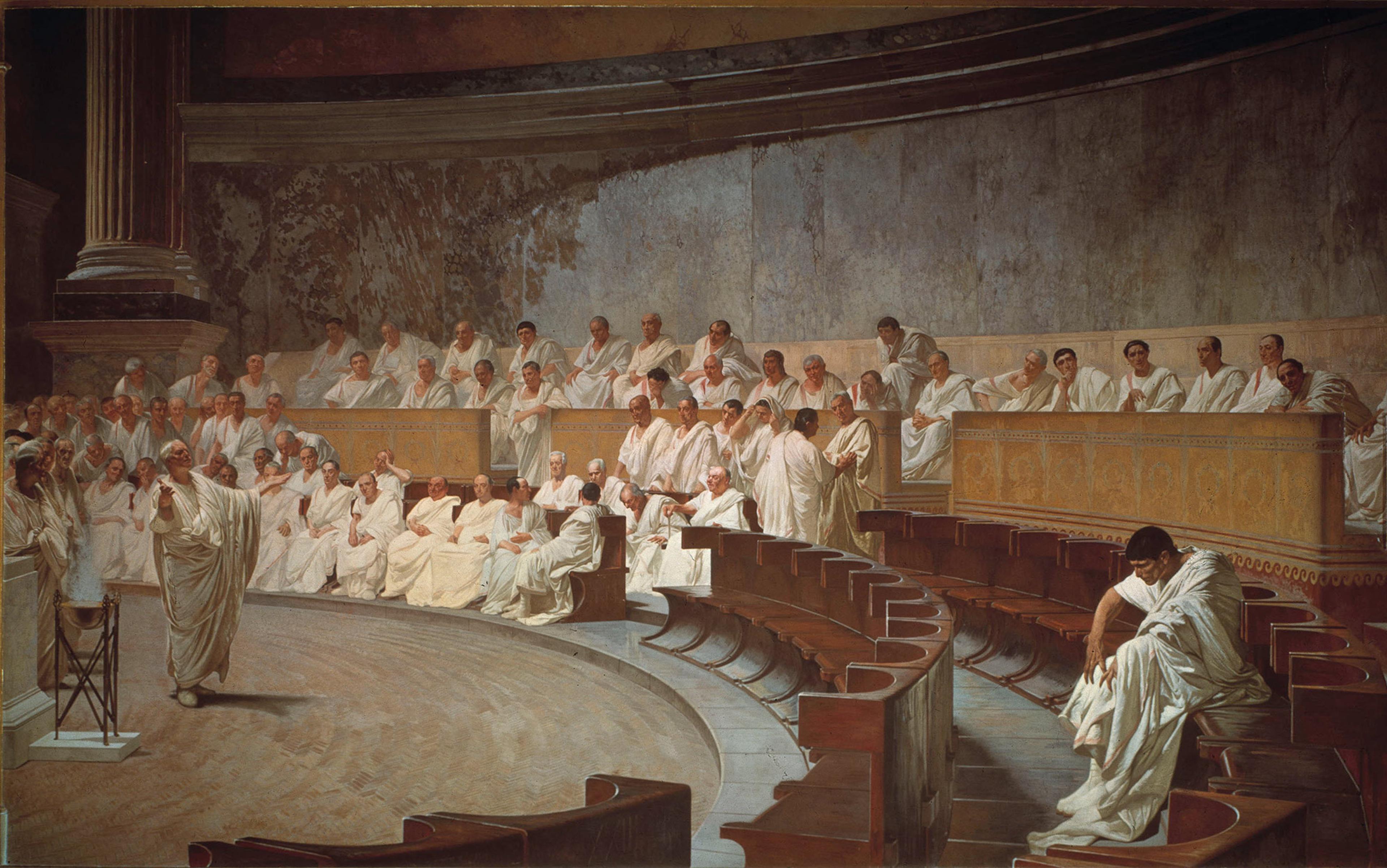
The inevitable consequence of this foundational deception became painfully apparent under the reign of Augustus’s immediate successors, Tiberius and Nero, whose governance exposed the advanced stages of institutional decay. With the constitutional guardrails permanently compromised, the remaining remnants of Republican liberty—such as popular public elections—were formally transferred away from the citizens and into the compliant hands of the Senate. In a devastating historical irony, the Senate itself was degraded from a deliberative council of free statesmen into an obedient, fearful tool of imperial decree. Political life within the capital became increasingly privatized and performative, where survival required public adulation of the regime, and genuine debate was driven into the shadows. Through emotional precision, this era is captured as a period of profound psychological suffocation, where citizens and senators alike realized that the republic of their ancestors was gone, replaced by a gilded cage of absolute rule.

Navigating this moral labyrinth required extraordinary courage, and the historical record of these dark years is preserved through the sharp, unforgiving lens of the Roman historian Tacitus, who serves as the ultimate paradigm for writing truthfully under tyranny. In masterpieces such as the Annals and the Agricola, Tacitus deployed a sophisticated array of literary and rhetorical techniques—most notably his biting irony and meticulous, dry magisterial dating—to expose the profound hypocrisy of the imperial system. By recording the minute procedural details of a corrupted senate, he laid bare the moral cowardice of the ruling class. Furthermore, Tacitus’s writings grapple with the eternal, agonizing dilemma faced by intellectuals living under autocratic rule: the timeless tripartite choice of exit, voice, or loyalty. Through cultural understanding of the Roman aristocratic mindset, these texts reveal how difficult it is to maintain personal integrity when every available option—resistance, exile, or compliance—is tainted by compromise.
The lecture concludes with a sobering reflection on the legacy of Roman autocracy, reframing the fall of the Republic not merely as a localized historical episode, but as a universal, cautionary tale for modern political systems. The transition from freedom to despotism was dangerously slow, marked by an imperceptible erosion of liberty and equality that allowed citizens to sleepwalk into subjugation. Most insidiously, the imperial transformation demonstrated how acute national crises can be successfully manufactured or exploited to render temporary emergency powers a permanent, normalized feature of a regime. Through transformational framing, the study of Augustus and Tacitus transcends the ancient past, issuing a stark, timeless reminder: when societies willingly sacrifice institutional integrity for the promise of security, the death of liberty is never sudden, but rather a long, quiet surrender.