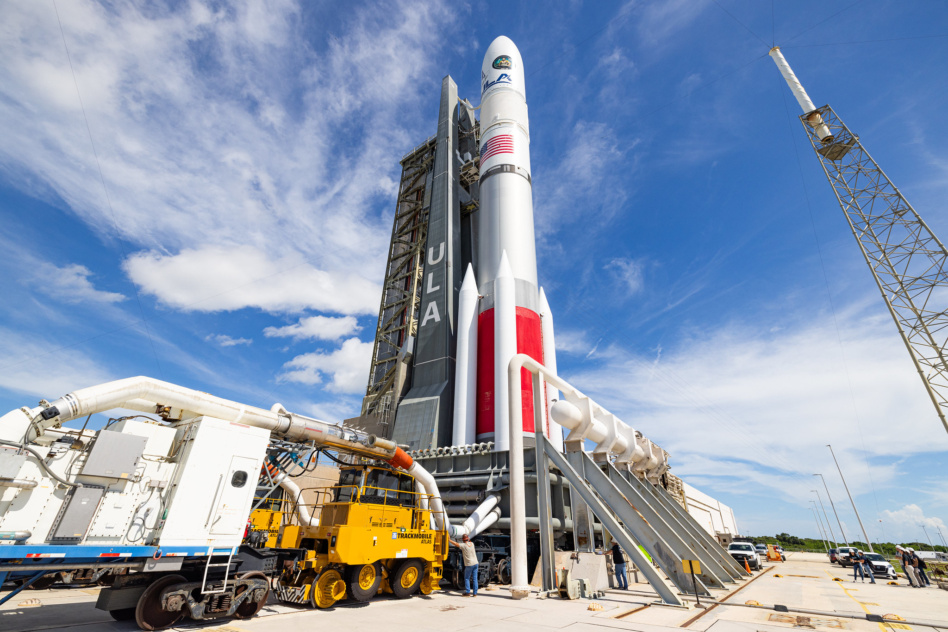
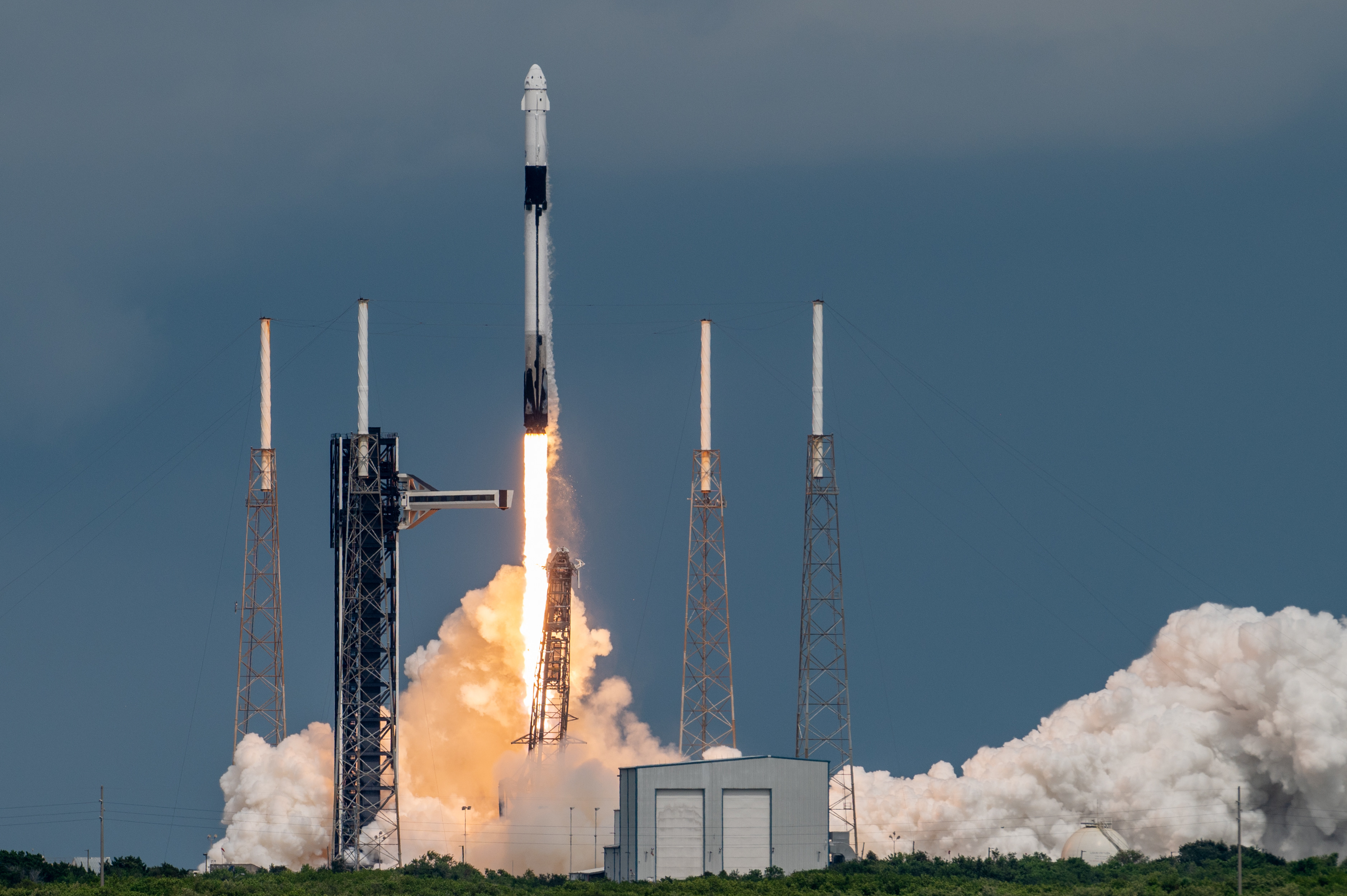
From the iconic launchpads of Cape Canaveral Space Force Station, a colossal Atlas V rocket, towering 205 feet tall and generating a staggering 2.7 million pounds of thrust, prepares for its ascent into low Earth orbit. But beyond the raw power and the spectacle of a rocket tearing through the atmosphere, there lies a deeper narrative, one woven by the dedicated men and women of the United States Space Force, the newest branch of the U.S. military. These are the Guardians, identifiable by the distinctive space blue stitching on their uniforms or the delta patch on their sleeves, whose tireless efforts are integral to every launch, ensuring that a rocket like this one ever leaves the ground. Cape Canaveral itself is more than just a launch site; it is the world's premier gateway to space, a historical landmark that has witnessed over 75 years of American space flight. It was from this hallowed ground that Alan Shepherd made history as the first American in space, that Gemini missions perfected spacewalks, Apollo missions launched astronauts to the moon, and the space shuttle embarked on its journeys for over three decades.
Today, the legacy endures, with the US Space Force spearheading launch operations for critical national security payloads, commercial satellites, and deep space probes. As one Guardian articulates, witnessing a launch, feeling the rumble and the shudder from the wind, "reinforces that what you're doing has a reason".The United States Space Force, established in 2019 as the newest military branch since the Air Force in 1947, comprises less than 1% of the combined military forces. Despite their relatively small numbers, their mission is monumental: to "protect the world's largest war-fighting domain" and safeguard nearly every facet of modern existence. As a Guardian explains, fundamental activities like withdrawing money from an ATM, receiving meal deliveries, or communicating globally are all made possible by the advancements space brings. The Space Force oversees the majority of Department of Defense satellites launched into orbit, primarily through two key launch ranges: Vandenberg Space Force Base in California and the Cape Canaveral Space Force Station in Florida. Their motto, "Semper Supra," meaning "always above," embodies their commitment to protecting the world, the nation, and its allies.

A common misperception, as Sam Eckholm, the narrator, highlights, is that the Space Force constructs and launches its own rockets. However, this is not their mandate. Much like the Air Force relies on companies such as Boeing or Lockheed Martin for fighter jets, the Space Force partners with commercial launch providers like SpaceX, Blue Origin, or, in the case of the Atlas V, United Launch Alliance, for the manufacturing of rockets. The Guardian’s focus is instead on "overseeing, enabling, and protecting access to space". This crucial support is extended to every launch from the Eastern Range, regardless of whether the payload is for national security, commercial endeavors, or even NASA. As a Guardian clarifies, the Space Force is inherently a Department of Defense military, concentrating on national defense and security, including missile warning and GPS, whereas NASA represents the nation's civil aspirations for space exploration, such as the Europa Clipper mission to discover life.
Related article - Uphorial Radio
The intricate choreography of a launch unfolds within the Morell Operations Center (MOC), the central command and control hub for the Eastern Range, an expansive operational area covering approximately 15 million square miles of ocean and airspace off Florida's Space Coast. Within this center, the Mission Control Room (MCR) becomes a specialized hive of activity, staffed by dozens of Guardians as the launch window approaches. This diverse team includes range operations officers, engineers, weather specialists, surveillance personnel, and even cyber experts, all meticulously working to ensure the range is "greened up" and secure for launch. At the helm is the Range Operations Commander (ROC), described by a Guardian as the "quarterback for the range team". The ROC oversees the entire room, ensures smooth launch operations, and ultimately provides the "final go-no-go decision for the range". The paramount objective, as a Guardian states, is "public safety," ensuring that rockets adhere to their intended trajectories and do not impact "anybody or anything that they should not".
Pre-mission planning often spans months, with many teams playing critical roles. The weather team, as Sam Eckholm observes and the Guardian confirms, often represents one of the biggest "go-no-go factors" for a launch. They employ their own weather radar, located in Titusville, and collaborate with the National Weather Service, diligently monitoring cloud formations near the launch pad for any potential lightning. Equally vital is the surveillance team, whose task is to ensure the airspace and waterways within the Eastern Range are clear and secure. A Guardian points to thousands of orange icons on their screens representing ships, like the "Legacy of the Sea" cruise liner, and gray icons for aircraft, emphasizing the demanding coordination required with airspace managers, Mobile Response Units (MRUs), and the Coast Guard, who deploy vessels to manage maritime traffic. Lastly, a less visible but increasingly crucial function is carried out by the cyber team. In an interconnected world where "everything has ones and zeros," as a Guardian explains, they safeguard all systems involved in a launch from potential threats. Without their vigilant involvement, a malicious cyber actor could "alter data" with catastrophic consequences, potentially damaging life and property, especially in the context of crewed missions.
The collective efforts of these Guardians are intensified by the rapidly accelerating launch cadence at Cape Canaveral Space Force Station. The installation is on track to surpass 100 launches this year, a significant leap from 93 last year, the 70s the year prior, and merely 30-something a few years before that. This high-pressure environment is navigated through rigorous training that prepares every individual to meticulously follow procedures and execute their roles. From the initial "status check to proceed with terminal count," where operators calmly call out "Go" for propulsion, hydraulics, pneumatics, and LO2, to the final "Lift off", the entire process within an often tight 30-minute launch window demands unwavering focus and readiness for any eventuality until launch authorization is given. The profound sense of purpose for these dedicated individuals comes from the "feedback loop that launch operations provides," allowing them to tangibly see "everything you've been working towards launch into space".
In essence, space is not a distant, abstract concept or mere science fiction; it is "real, it's strategic, and it's critical to the way we live our lives every single day". The Guardians of the United States Space Force, as Sam Eckholm concludes, are not simply distant figures; they are "people just like you and me who have stepped up to raise their right hand and serve our country". They are the ones diligently ensuring that we remain connected, protected, and, truly, "always above".