Understanding the core components of the AI technology stack is crucial for building systems that move beyond mere answer generation to solve real, meaningful problems. As detailed by IBM Technology, achieving this requires mastering five distinct layers, each introducing critical choices that affect a solution’s quality, speed, cost, and safety. Lauren McHugh Olende, offering insights on the video transcript, emphasizes that the model layer, while important, is only one piece of the puzzle.
The foundation begins with Infrastructure, where AI builders must decide how to support power-hungry Large Language Models (LLMs). LLMs generally demand AI-specific hardware, namely GPUs, which cannot always run effectively on standard enterprise CPU servers. Deployment options include purchasing capacity on-premises, renting scalable capacity via the cloud, or running smaller, lighter-weight models locally on a laptop.
Next is the Model layer, where builders face a wealth of options, with over 2 million models available in catalogs like Hugging Face. Selection dimensions include whether the model is open versus proprietary, its size (ranging from LLMs to smaller, specialized language models), and its specialization. Some models are better at reasoning, generating code, or handling tool calling.
Related article - Uphorial Shopify

The Data layer addresses the fundamental issue of knowledge cutoff dates. Because base models are typically trained on publicly available information, they often lack completeness or currency for specific tasks. For example, helping drug discovery researchers analyze the latest papers—even those from the last three months—requires supplementing the model’s knowledge. This data layer includes the external data sources, processing pipelines, vector databases, and Retrieval-Augmented Generation (RAG) systems. RAG converts external data into embeddings stored in vector databases, allowing the model to quickly retrieve context and augment its base knowledge.
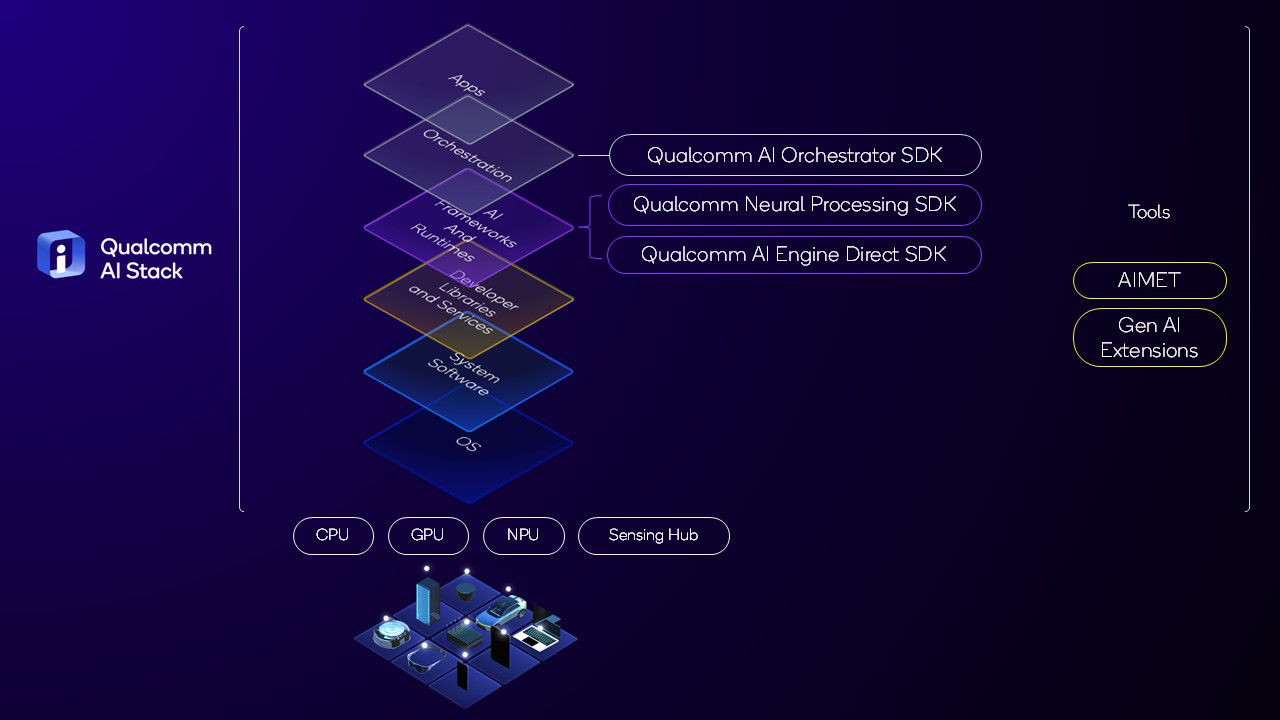
For tackling complex tasks that require more than a single prompt and output, the Orchestration layer is vital. This layer is responsible for breaking a complex user query into smaller tasks and planning the solution. Orchestration leverages the model’s reasoning for ‘thinking,’ executes actions via ‘tool calling’ or ‘function calling,’ and includes crucial steps like ‘reviewing,’ where an LLM critiques generated responses and initiates feedback loops for improvement. This domain is rapidly evolving with new protocols like MCP and new architectures designed to manage increasingly complex interactions.
The final layer is Application, focusing on the usability and end-user experience. While many AI systems follow the simple text in and text out design, the interface must also accommodate other modalities like image, audio, or custom data formats. Critical features for usability include the ability for users to perform revisions or inquire about citations. Furthermore, integrations are necessary for the AI system to accept inputs from other tools or to automate the integration of its outputs back into the user’s day-to-day workflow.
As Lauren McHugh Olende explains, whether one is building a system from scratch or using managed solutions, having a clear understanding of how these five layers—infrastructure, models, data, orchestration, and application—fit together is essential for making practical choices that lead to AI systems that are reliable, effective, and aligned to real-world needs. Ignoring any layer is like having a sophisticated team where one member lacks the right tools or information; the entire project’s success is compromised.