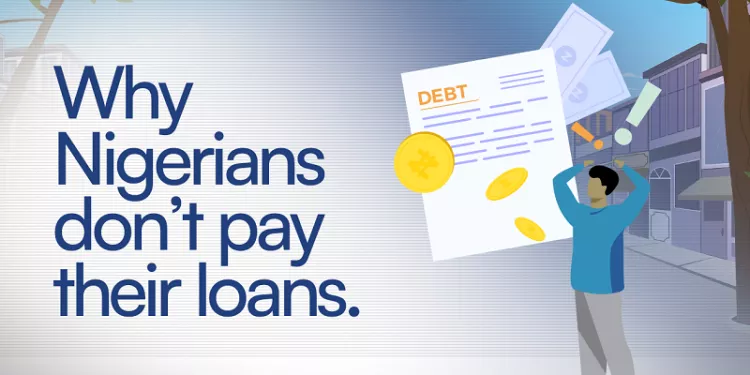
Do you really need to take that loan to begin with?
Though a slight deviation from the actual topic, this should be the very first step to accessing a personal loan. Asking yourself the all-important question if, for starters, you really need to take it. Having a savings or easily liquidate–able assets very quickly answers this question.
Manifestly, the more cash you can put away for a rainy day, and resist the temptation to pilfer ever so often, particularly on inessentials, the more of it, if not more, you will have when you really need it.
Thus, you must learn to adopt a strict savings culture and even if you earn a salary today, ask yourself one critical question before accessing a loan, ‘Say I lose my job tomorrow, do I have enough stashed away to repay my debt, and over the agreed period?’. If the answer is ‘yes’, then by all means go ahead, however, should the answer be ‘no’, then hope is not a strategy you should rely on to repay your debt(s).
Time for a lifestyle change
It’s easy to think that should your answer to the above question about easily being able to repay your loan means business as usual then think again. Murphy’s Law states, ‘If anything can go wrong, it will…’, and as another common saying goes, ‘even the best-laid plans sometimes run amok’. Accessing a loan means you must discipline yourself enough to understand that until the debt is paid, you must keep luxury expenses at bay. Even if you take a personal loan for a luxury holiday, the instant you answer positively to if you can pay the loan back should things go wrong, you must immediately seek to wipe that liability off your books by cutting back on any other excesses, yes, even the cable, Netflix subscription, and eating out, until the current debt is paid, and in full.
That way, not only will you have more confidence in your eligibility to access another loan, but should the need arise, your creditors will also be willing extend you another line.
Try to pay more than the minimum installments, and regularly
Before accessing a loan, always be sure to check if you get breaks or some bonus for early payment. While some lenders charge penalties for early payments because of the fees in interest payments they stand to lose from no longer having your loan as an asset in their books, most of them more than welcome it and even offer rewards for such. So, should, for example, your loan have a repayment period of 30 days, rather than wait till the very last day and minute to pay back, break it down into blocks of 4weeks and allocate a minimum payable amount to a particular day of each week then add a little something on top of that. That way on the day of the last week, you pay a lesser sum than the previous weeks. The same strategy can also apply should you be indebted to an individual even without an incurred interest rate attached to the credit terms.
Look for ways to make an extra income
Let’s face it, the major reason you had to access a loan in the first place was that your current income simply did not meet up to your financial requirement at that time. Should you be the type who doesn’t like being restricted particularly on what and how you spend money then perhaps it’s time to grow your income stream by a pipeline or two. Several articles on this site have been exhaustive on this topic, so we will move on…
Do not use one loan to pay off the other
Tempting as the idea might seem at first, in more cases than one, taking a loan, interest-free or not, to pay off another, simply leads to interring yourself in even more debt and more headaches than you had originally found yourself in. In certain extraneous cases, this may be an acceptable step to take, but do not make it a habit, remember, ‘even the best-laid plans…’
Consider the ‘Snowball’ method of debt repayment
This is a great tactic should you have more than one loan to pay off. This typically involves starting with your smallest loan first, paying that off and then rolling that same payment schedule towards the next loan and then working your way up to the largest. This method can help you build momentum as each balance is paid off and eventually, once you are debt free, you can finally start saving.
In contrast, you may give the ‘Avalanche’ method a go
The Avalanche method focuses on paying the largest loan, particularly with the highest interest rate first. Similar to the Snowball method, when the higher-interest debt is paid off, you put that same money toward the next high-interest rate loan and so on until you are done. By focusing on the loans that are the most expensive to carry, in the long run, would effectively mean you should pay less over time and eventually have more to call your own.
Refinance your loan if you must
Should it become clear that you may not still be able to meet the deadline on your loan then perhaps it is time to discuss refinancing terms with your creditor and request an extended payback tenure. Be warned, however, despite the extended period, refinancing carries heavy interest charges as well.
Restructure your debt if you must
Unlike refinancing which simply offers you an extended payback period on your loan, not only helps you negotiate an extension but also a lower interest rate. Be warned that this is however only accepted by creditors, in more cases than one when it has become clear that insolvency is imminent, in such cases as you have lost your job or other scenarios. Creditors will allow you time to get your affairs in order, but for only a slightly extended timeframe and reduce the previously agreed interest rate only when they must.
Let go of old cargo
We sometimes have things or objects of some value that have been laying around our homes or office for some time and to no apparent use. Auctioning off these old items is also an excellent strategy for raising enough cash to offset your debt without necessarily having to rely on payday to come to your rescue. Plus, it’s a good way of de-cluttering your environment while at it.
Bottomline
There have been several laudable initiatives by regulators and financial institutions towards promoting inclusion in our financial ecosystem, like digitizing access to credit facilities. In a way, this is a good thing as it increases our awareness on loans and other financial matters. However, over and above everything else, responsible borrowing needs to be ingrained in borrowers to help them build a healthy credit score and a balanced life, not be overly dependent on borrowing.
Borrowing, particularly from the now popular online creditor Apps, does certainly help you meet certain extraneous short–term priorities even though your current financial status may not be up to it, but this also means properly evaluating your need and repayment capacity, even before taking the loan, and then adhering to the above simple practices to help you stay on schedule when it comes down to offsetting your loans without people knocking on your door or calling up friends and loved ones to report your credit default.