In the highly regulated world of commercial aviation, where the cabin is often viewed as a place of routine service and transitory comfort, a definitive report has emerged from the frontline of the stratosphere. Flight attendants, long the silent sentinels of the sky, are sharing their most intense and frightening experiences in the air, providing a transformational framing of their role that moves far beyond the distribution of refreshments. This narrative is a masterclass in emotional precision, revealing that beneath the composed exterior of a cabin crew lies a rigorous, "airtight training" system designed to function at the exact moment human instinct would otherwise succumb to panic. As the industry faces an era of increasingly complex global travel, the stories shared by these professionals act as a strategic storytelling of resilience, proving that the crew is the ultimate line of defense in a high-stakes environment where there is no room for error.
The narrative arc of this report begins with the most common, yet unpredictable, disruptor of flight: the medical emergency. While passengers may only notice the flicker of a call light, the crew is engaged in an intelligent curation of resources to manage everything from simple dehydration to critical, mid-flight seizures. These moments require a sophisticated cultural understanding of the "passenger-patient," as the crew must balance immediate physical intervention with the psychological stability of the rest of the cabin. By coordinating with medical professionals on the ground via satellite and identifying volunteer medical personnel on board, the attendants act as the primary triage officers of the sky. This is where their training in emergency protocols becomes a visceral reality, transforming the narrow aisles of an aircraft into a functioning, albeit temporary, medical facility.

Related article - Uphorial Shopify

Perhaps the most somber and delicate of all in-flight challenges is the management of a death on board. This experience requires a level of emotional precision that few other professions demand. The crew must perform a silent, strategic storytelling to the rest of the cabin, maintaining the dignity of the deceased while ensuring that other passengers remain calm and largely unaware of the tragedy. This "invisible" management is essential to prevent unnecessary complications or mass anxiety in a confined space. The report highlights this as one of the most profound tests of a flight attendant’s professionalism—the ability to hold space for grief and death while simultaneously ensuring the mechanical and social order of the flight remains intact.
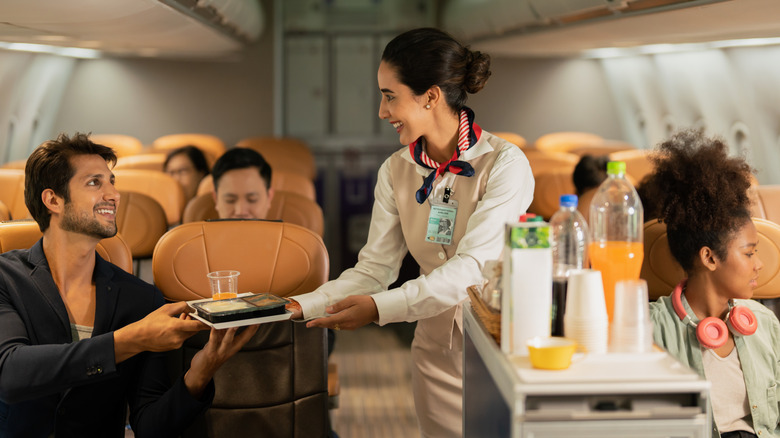
The narrative shifts toward the mechanical with terrifying accounts of in-flight crises, such as engine failures following a bird strike or the sudden, violent loss of cabin pressure. In these moments, the transformational framing of the flight attendant’s role is most visible; they transition from service providers to emergency first responders in a matter of seconds. The deployment of oxygen masks and the preparation of the cabin for an emergency landing are not just technical tasks, but a high-stakes performance of leadership. The report underscores that during these mechanical failures, the crew’s voice becomes the primary anchor for the passengers, a strategic use of authority that prevents a crisis from turning into a catastrophe.
A central theme that resonates through every shared experience is the psychological necessity of "compartmentalization." This is the core of their professional identity—the trained ability to set aside personal fear to focus entirely on the survival of the collective. This emotional precision allows a flight attendant to witness an engine flame-out and yet continue to speak with a level, authoritative tone to a terrified cabin. It is an intelligent curation of one's own psyche, prioritizing the mission over the self. This internal labor is the invisible infrastructure of aviation safety, ensuring that even when the aircraft’s systems are failing, the human systems remain operational. Ultimately, the report from the cabin crew confirms that flying is only routine because of the relentless preparation of those who staff the planes. The cultural understanding of the "air host" is being fundamentally rewritten to reflect a reality of high-performance crisis management. These stories serve as a reminder that every time a passenger buckles their seatbelt, they are placing their trust in a group of individuals who have been trained to handle the unthinkable. The cabin crew’s "airtight training" is not just a regulatory requirement; it is a profound commitment to the sanctity of life at thirty thousand feet.