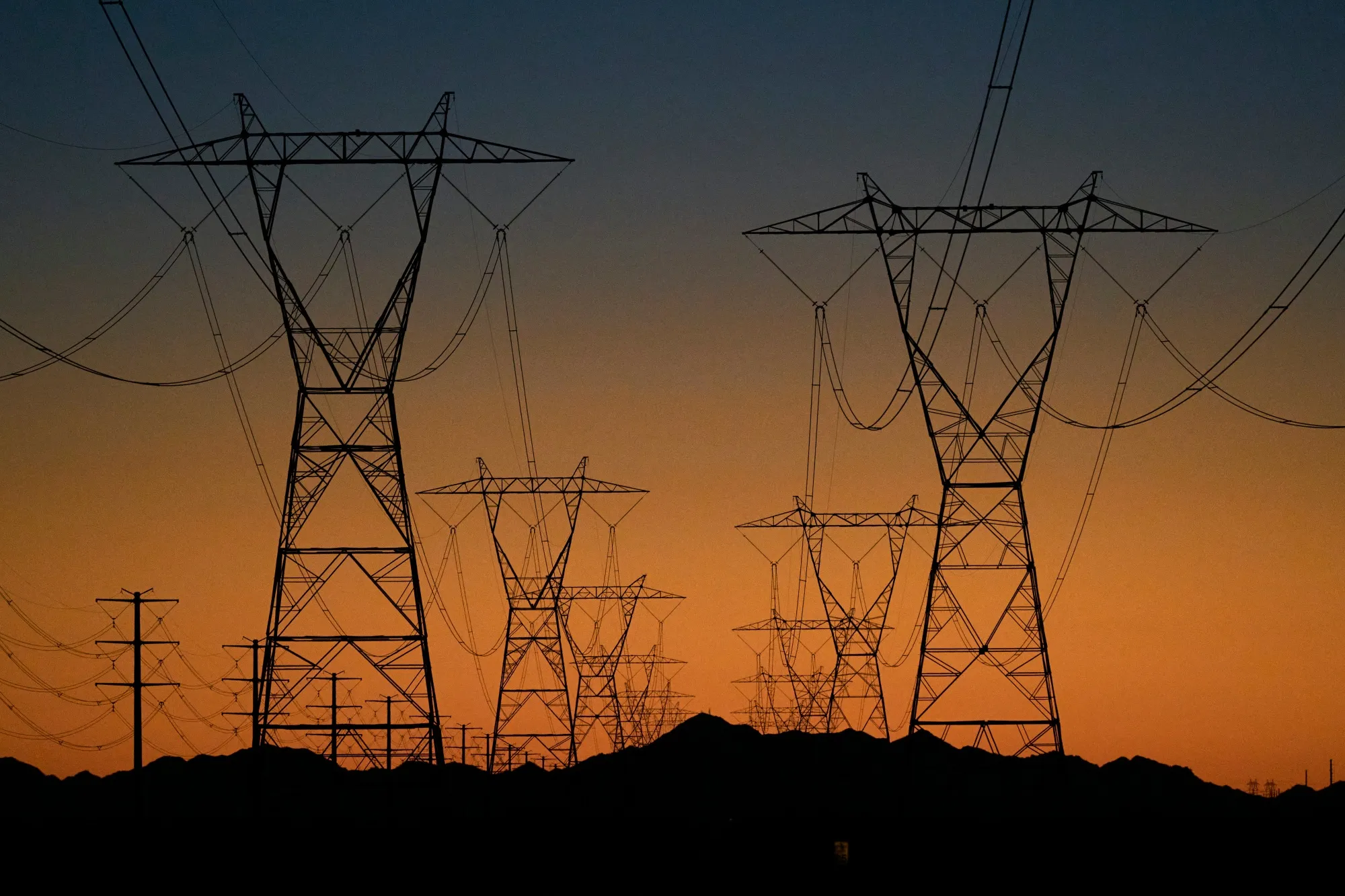
President Trump and a coalition of Northeastern governors are moving to compel major tech corporations to fund the massive energy requirements of artificial intelligence data centers. This unprecedented strategy involves the PJM Interconnection, the largest grid operator in the nation, which has been directed to conduct emergency power auctions. Unlike the standard 12-month intervals typically used, these auctions will involve 15-year contracts designed to support approximately $15 billion in new power plant construction to fuel the AI sector. As explored through the Bloomberg Technology team and the Ed Ludlow and Caroline Hyde contribution to this reporting, while hyperscalers appear willing to pay for this extra generation to ensure pricing stability, the move reflects a significant government intervention in utility markets.
Simultaneously, the United States has solidified a trade agreement with Taiwan to lower tariffs to 15% and stimulate co-investment in semiconductor manufacturing. Although official announcements did not name specific companies, industry sources indicate that Taiwan Semiconductor Manufacturing Company (TSMC) will commit as much as $100 billion to expand its Arizona presence with four additional plants, bringing its total planned facilities in the state to ten. This announcement pushed TSMC shares to record highs even as the broader market faces a critical bottleneck in memory supply. Despite these infrastructure constraints, investor appetite for AI software remains aggressive, evidenced by the coding platform Replit nearing a funding round that would triple its valuation to $9 billion in just four months.
The physical manifestation of AI is also accelerating, with Barclays forecasting that the humanoid robot market could reach $200 billion by 2035. Technological breakthroughs and high-precision manufacturing have caused the per-unit cost of these robots to plummet from $3 million to roughly $100,000 in just five years. This rapid evolution has drawn the attention of the Federal Trade Commission, where Chairman Andrew Ferguson is scrutinizing large-scale acquihire deals. Ferguson noted that some of these multi-billion-dollar talent and licensing transfers might be structured specifically to circumvent premerger antitrust reviews required by the HSR Act. Under the current administration, the FTC plans to offer a fair shake to legal deals but will aggressively enforce the Take It Down Act, which requires platforms to remove nonconsensual AI-generated images.
The administration is also exploring a 10% cap on credit card rates, a proposal that could fundamentally reshape American financial infrastructure and consumer credit access. This comes as the banking sector transitions AI from the experimentation phase to full-scale deployment for fraud detection and credit processing. The comprehensive reporting provided by Bloomberg Technology underscores a year defined by the race to resolve physical power and hardware limitations while navigating an increasingly active regulatory landscape. Industry leaders are now forced to balance the rapid demand for AI implementation with the burgeoning costs of the infrastructure required to support it. Moving forward, the success of this transition will depend on whether the grid and the manufacturing sector can keep pace with digital innovation.