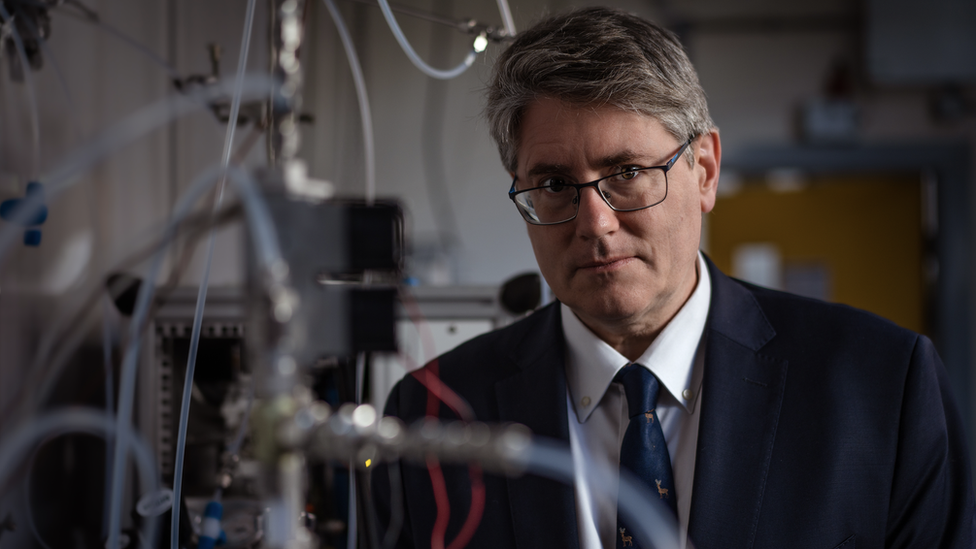
The era of modern medicine has long been framed as an unalloyed triumph of human progress. Since the seminal discovery of penicillin, the pharmaceutical industry has acted as the primary architect of a new longevity, effectively pushing back the boundaries of mortality. Yet, as Dr. Ian Mudway, a senior lecturer at Imperial College London, recently argued in a compelling lecture, we have arrived at a critical juncture where the very tools used to extend our lives have begun to cast a long, complex shadow over the planet. The central tension of our time is no longer just how long we can live, but the environmental and social cost of the health span we have collectively engineered.
The paradox of our modern aging experience is stark. While life expectancy has climbed, recent data from the United Kingdom paints a sobering picture: the duration of "healthy" life is in decline. Instead of living longer in vibrant health, the aging population is increasingly defined by multimorbidity—the management of multiple chronic conditions simultaneously. This shift has necessitated a new reliance on what Dr. Mudway terms the "pharmaceuticalized exposome." Older individuals are now frequently tasked with navigating complex medication regimes that grow in intricacy as the years pass, turning the human body into a daily participant in a global chemical cycle.
The critical insight offered by Dr. Mudway is that these pharmaceuticals are not self-contained entities that vanish once they have performed their biological function. They are dynamic molecules that traverse the body and are inevitably excreted as metabolites. From the bathroom sink to the municipal sewage system, these substances find their way into wastewater, moving beyond the reach of conventional treatment facilities and into rivers, streams, and oceans. The result is a pervasive, low-level chemical contamination of the world’s ecosystems, an invisible burden that has been largely ignored in the conversation surrounding global health and environmental policy.
This hidden cost extends far beyond the chemicals that leave our bodies. Dr. Mudway uses the term "environmental rucksack" to describe the extensive, often invisible overhead of pharmaceutical production. Every pill, inhaler, and treatment carries with it a legacy of high-energy manufacturing processes that contribute significantly to global carbon emissions. The industry’s heavy reliance on single-use plastics and the unintended, cascading effects of other chemicals—such as the widespread use of veterinary flea treatments that eventually wash into biodiversity-rich waterways—create an environmental footprint that is fundamentally at odds with the goal of sustainable living.

Related article - Uphorial Shopify
Perhaps the most alarming consequence of this chemical proliferation is the accelerating crisis of antibiotic resistance. The presence of trace amounts of antibiotics in wastewater creates a high-pressure laboratory for bacterial mutation. By inadvertently exposing microorganisms to sub-lethal concentrations of these drugs, we are cultivating an environment that accelerates the development of resistant strains. This is a battle for the integrity of our modern medical infrastructure, one that humanity is currently losing, as the utility of our most essential medicines is being eroded by their own environmental ubiquity.
However, Dr. Mudway’s lecture was not a counsel of despair, but a call for a radical shift in perspective. He argued that the decline in healthy aging is not a biological inevitability, but a reflection of deep-seated socioeconomic fissures. Poverty and systemic inequality are the primary drivers of poor health outcomes, acting as multipliers that exacerbate the need for pharmaceutical intervention in the first place. Addressing the environmental footprint of our health system requires an acknowledgement that medical progress cannot be decoupled from the social conditions that necessitate it.
The path forward, as Dr. Mudway suggests, lies in the intersection of green chemistry, rigorous regulation, and a fundamental rethinking of our relationship with pharmaceutical intervention. We must demand a future where medical innovation is held accountable to planetary boundaries, favoring drug designs that break down more safely in the environment and manufacturing processes that favor circularity over waste. Maintaining the health of an aging global population is a noble, necessary pursuit, but it must be one that does not compromise the health of the ecosystems upon which all life depends.
Ultimately, the challenge is to move away from a model of reactive, chemical-dependent healthcare toward one that prioritizes preventative well-being and environmental stewardship. If we are to truly honor the promise of the medical revolution, we must ensure that the legacy we leave for future generations is not one of chemical depletion and resistant pathogens, but one of holistic health—where the extension of human life exists in a stable, sustainable equilibrium with the planet. It is a transformational framing of the aging crisis, urging us to recognize that we cannot be healthy on a sick planet, and that the true measure of our success will be our ability to nurture our own longevity without crossing the ecological lines that define our survival.