The enduring career of Sir David Attenborough stands as a singular testament to the power of observation. For decades, he has functioned not merely as a broadcaster, but as a global curator of the natural world, a man whose lifelong fascination with wildlife has consistently translated into a profound, accessible scientific narrative. At the core of his work is a commitment to the "deep audit" of our planet—an insistence on revealing how the most intimate evolutionary adaptations, whether found in the abyss of prehistoric oceans or the hidden micro-habitats of modern rainforests, dictate the survival of entire species and the health of our collective environment.
Perhaps no project captures this intersection of cutting-edge research and narrative urgency quite like his 2018 documentary, Attenborough and the Sea Dragon. In collaboration with fossil hunter Chris Moore, Sir David turned his lens toward the Jurassic Coast of Lyme Regis, where a spectacular, 200-million-year-old ichthyosaur skeleton had been unearthed. This was not treated as a mere exercise in excavation. By utilizing state-of-the-art 3D digital scanning and high-resolution chemical analysis, the team moved well beyond the standard cataloging of fossilized remains. They effectively conducted a prehistoric murder mystery. Through the delicate examination of fossilized skin samples and the identification of specific, violent physical trauma on the skeleton, the team was able to reconstruct a moment of ancient struggle. In doing so, they transformed what could have been a static, academic object into a living, breathing creature of the Jurassic seas, grounding the cold facts of paleontology in the visceral reality of a violent, natural encounter.
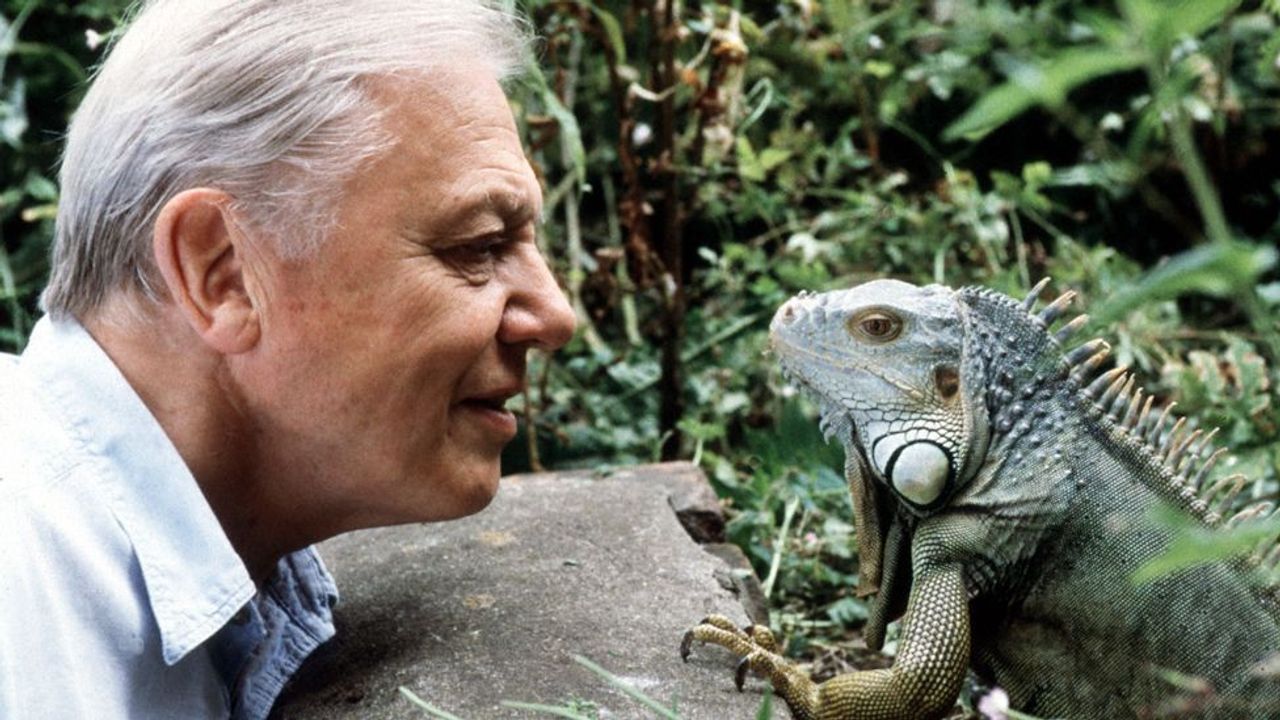
This narrative mastery extends deeply into his explorations of the often-misunderstood world of reptiles and amphibians. In his series Life in Cold Blood, Sir David methodically dismantled the pervasive, anthropocentric misconception that these creatures are solitary, primitive, or sluggish. Instead, he presented them as masters of survival, possessing complex, highly specialized adaptations that allow them to thrive in environments where other species would perish. He highlighted the Regal Horned Lizard, an expert in temperature management, which utilizes its own internal blood circulation to regulate body heat while buried beneath the sand, thereby shielding itself from the lethal intensity of the desert sun. He showcased the Armadillo Lizard, whose unique, defensive tail-biting posture—forming a protective, armored ball to hide its soft underbelly—serves as a striking example of the social and tactical sophistication inherent in reptilian defense. Furthering this understanding of biological interconnectedness, he examined the Leopard Gecko, whose life cycle illustrates a profound environmental dependency; the sex of its offspring is determined entirely by the incubation temperature of the eggs, a phenomenon that underscores the inextricable link between the external world and internal biological development.

The Living Archive - David Attenborough
Related article - Uphorial Shopify
:max_bytes(150000):strip_icc()/Blue-Planet-II-100322-94f60104c6a94fa1b822772a18b0f7d8.jpg)
The complexity of these adaptations is arguably at its most poignant when observing the immense, often overlooked costs of amphibian parental care. Attenborough has frequently highlighted the extreme lengths to which these creatures go to ensure the survival of their young, framing their struggle as a testament to the resilience of life. He has documented the extraordinary, taxing life of the strawberry poison arrow frog. In these species, parental duty is a matter of endurance. The male guards the eggs, but it is the female who must shoulder the primary burden of development. She famously carries her tadpoles individually on her back, navigating the treacherous verticality of the forest canopy to deposit them in remote, isolated bromeliad pools. Because these pools are often nutrient-poor, the mother must return to them regularly to deposit unfertilized, trophic eggs, providing the essential nutrition and chemical defenses required for her offspring to mature. It is a feat of staggering endurance, which Sir David has aptly compared to a human parent attempting to scale a skyscraper while carrying a child on their back. Such observations shift the way we perceive these "small lives," moving them from the realm of mere biology into the realm of profound, emotional sacrifice.

The survival instincts of these creatures are often honed before they have even entered the world. In the case of the Red-eyed Tree Frog, Attenborough illustrated an evolutionary marvel: the ability of the embryo to sense predatory vibrations while still encased within its egg. By detecting the distinct threat of an approaching snake or wasp, these tadpoles can initiate a premature, rapid hatching, allowing them to escape danger moments before they would otherwise be consumed. It is a brutal, high-stakes example of evolutionary strategy, one that reveals the constant, invisible war for survival that characterizes every level of the natural hierarchy.
Underpinning all of these explorations is Sir David’s consistent, unwavering focus on the vital, foundational role of the insect world. He has long advocated for the understanding that insects are the true architects of our global ecosystem, accounting for approximately 80% of all animal species. In his work on Micro Monsters, he utilized pioneering macro-cinematography to strip away our human scale and perspective, revealing the sophisticated, high-speed behaviors of creatures that we usually ignore or dismiss. By capturing the intricate beauty of the Priam birdwing butterfly and detailing the complex, metamorphic stages of its life cycle, he challenged the viewer to reconsider their own place in the biodiversity hierarchy. He argues, with intellectual force and gentle urgency, that the stability of the entire planetary ecosystem is inextricably tied to the health of these "small lives." His career is not merely a collection of footage; it is a sustained, transformational framing of the natural world as a delicate, interconnected machine. He leaves us with the inescapable conclusion that in an age of rapid environmental change, the survival of the largest species depends entirely on the protection and understanding of the smallest. Through his eyes, we are not separate from the natural world; we are its most consequential, and perhaps its most responsible, witnesses.