The enduring anxiety surrounding automation, where the introduction of advanced machinery seems destined to displace human workers, has consistently been proven historically inaccurate, according to Dr. Daniel Susskind, who explored this paradox in his second lecture at Gresham College. The traditional intuition suggests that immense technological progress should lead to large pools of unemployed people, yet this has not happened, either through the Industrial Revolution or the arrival of modern computing. The exploration into why this intuition is flawed has sent economists "back to the sort of intellectual drawing board," leading to a more sophisticated understanding of how technology interacts with labor.
This intellectual shift, which Dr. Susskind discussed at Gresham College, began by challenging the prevalent "skill-biased" view of technological change that dominated the close of the 20th century. This benign perspective assumed technology benefits all workers, albeit benefiting high-skilled workers more than others, primarily due to the explosive, exponential increase in computational power from the 1950s onward. However, two major problems emerged at the turn of the century: the "hollowing out" or polarization of the labor market, where middle-skilled jobs shriveled while high- and low-skilled jobs grew, and the absolute decline in real wages for low-skilled workers in places like the U.S.
The resulting framework relies on two critical distinctions. The first is recognizing the difference between jobs and tasks. Focusing on entire job titles—like lawyers or doctors—encourages the unhelpful mindset that technology only affects work by instantly destroying or creating whole roles. The more subtle and important reality is that technology affects individual tasks and activities within a job.
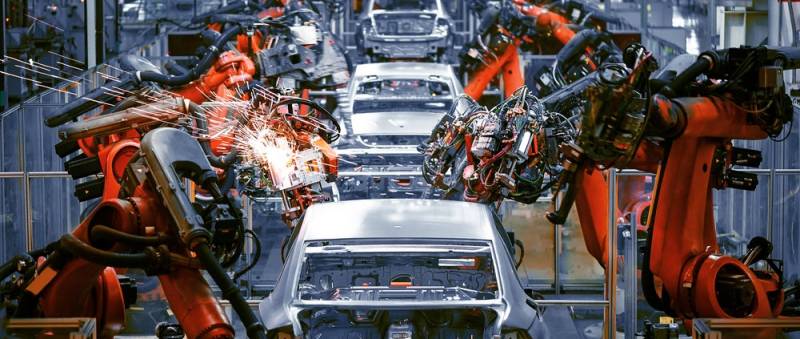
The second distinction is between technology's two rival impacts on labor: the substituting force and the complementing force. The substituting force is the visible, harmful side, where technology displaces humans from performing specific tasks, such as an automated assembly line or a driverless car. The harder-to-spot, helpful complementing force increases the demand for human beings in tasks that remain unautomated.

Related article - Uphorial Shopify
Dr. Susskind identifies three mechanisms through which the complementing force operates:
-The Productivity Effect: Technology makes workers more efficient at unautomated tasks. For example, a driver using a satnav or an accountant using Excel becomes more productive; if this productivity leads to lower prices, demand for human services increases.
-The Bigger Pie Effect: Technological progress drives immense economic growth, making the overall economy (the "pie") larger. As incomes rise, demand for goods and services grows throughout the economy, requiring more human workers for unautomated tasks. For instance, the U.S. economy grew a staggering 15,241-fold between 1700 and 2000.
- The Changing Pie Effect: Rising prosperity causes people to develop tastes for entirely new goods and services, creating new industries and new demand for human labor in previously unimaginable tasks. As an example, no one in the 1780s could have predicted that the NHS would eventually employ more people than the total number of men working on all British farms combined.
This framework explains historical anomalies, such as the persistent employment of bank tellers despite the invention of the ATM. ATMs substituted for tellers in dispensing cash, but they also complemented them by freeing them up to focus on relationship banking and financial guidance, ultimately increasing customer demand and allowing banks to reduce costs.
Similarly, when AI algorithms proved capable of detecting diseases better than radiologists, as predicted by computer scientist Jeffrey Hinton in 2016, employment in U.S. radiology nonetheless increased. Hinton, who received the Nobel Prize in physics in 2024 for his work on neural networks, later conceded he was "wrong on timing but not the direction," having focused too broadly on image analysis displacement. These AI systems often complement radiologists by making them more productive or shifting their focus to other valuable hospital tasks.
Historically, the helpful complementing force has consistently overpowered the harmful substituting force, maintaining sufficient demand for human work. However, Dr. Susskind concluded his Gresham College lecture by raising a crucial, tentative question about the future. He notes that the increasing capability of technologies—which he terms task encroachment—is "gradually but relentlessly encroaching" on manual, cognitive, and affective tasks. The concern is that this increasing technological power might strengthen the substituting force while simultaneously weakening the complementing force, as the "shrinking set of tasks and activities" that machines cannot yet do—the traditional refuge for displaced workers—is becoming smaller. The ultimate question is whether this historical balancing act, which has defined the age of labor, will continue to hold as this century unfolds.