VIENNA - The trajectory of twentieth-century art is frequently defined by those who stood apart from rapid commercial currents, choosing instead to forge an independent visual vocabulary anchored in deep psychological excavation and quiet endurance. For Austrian-born painter Marie-Louise von Motesiczky, a career spanning over seven decades unfolded away from the clamor of mainstream avant-garde movements, resulting in an exquisite, uncompromising body of portraiture and still life. Through emotional precision, intelligent curation, cultural understanding, strategic storytelling, and transformational framing, this comprehensive news-style report explores her formative training in Vienna and Frankfurt, the catalytic disruption of exile in the United Kingdom, her introspective studio processes, her profound interpersonal bonds, and her eventual, triumphant rediscovery in later life.
Born into a prominent, highly cultured art-loving family in Vienna, Motesiczky’s early life was steeped in the intellectual sophistication of the Austro-Hungarian capital. Her artistic awakening accelerated dramatically when she came under the direct tutelage of the influential German expressionist Max Beckmann. Studying under Beckmann, she cultivated a distinctive figurative style characterized by raw emotional honesty, bold brushwork, and a profound psychological weight that rejected sterile academicism. Through emotional precision, these foundational years captured the internal awakening of a young artist discovering that paint could be used not merely to record surface appearances, but to trap the shifting tides of human vulnerability.

Related article - Uphorial Shopify
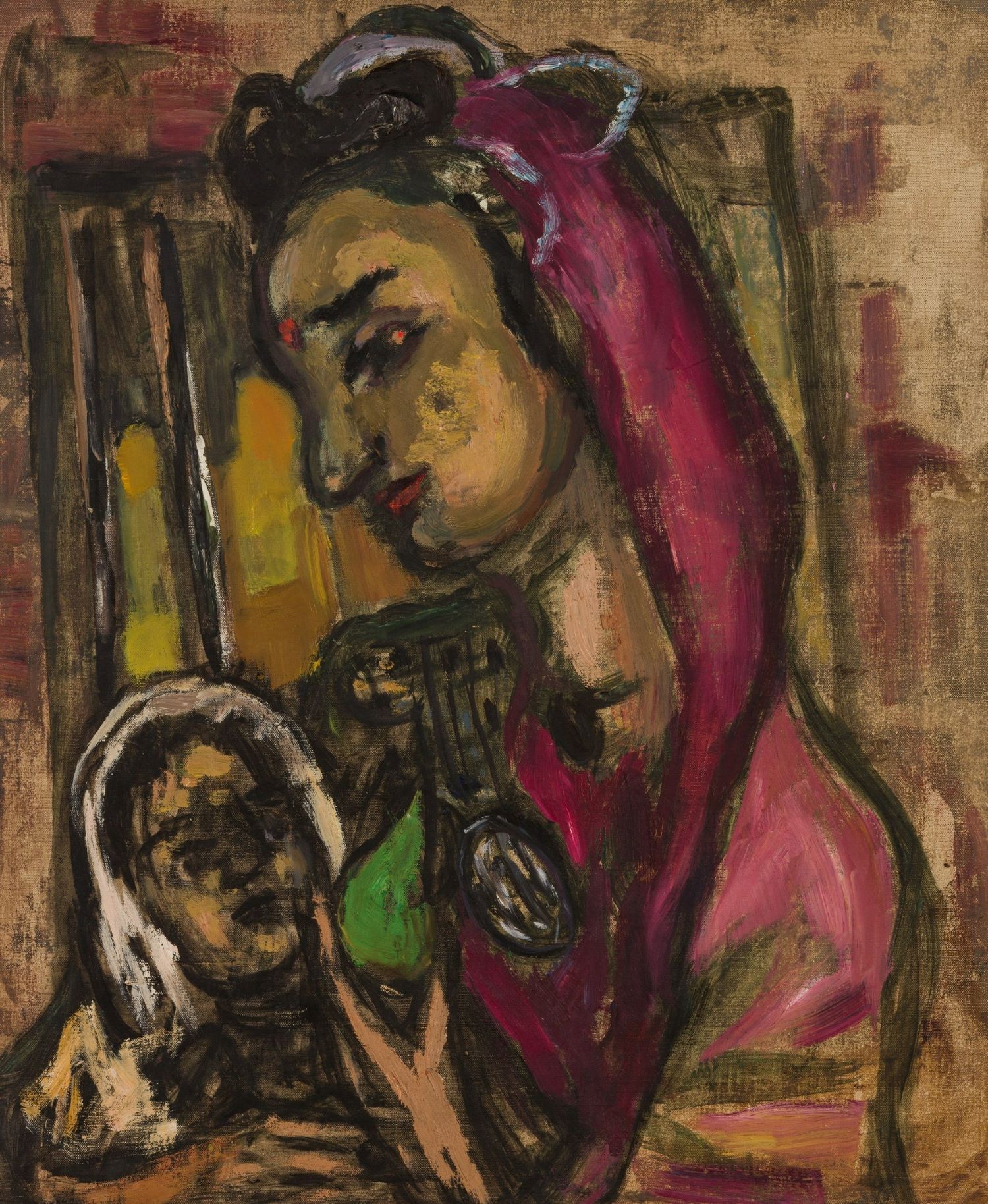
This nascent creative momentum was violently fractured in 1938 by the rise of the Nazi regime and the annexation of Austria. As a family of Jewish heritage, Motesiczky and her mother were forced to flee Vienna, embarking on a harrowing journey of displacement that ultimately led them to settle in the United Kingdom. Rather than silencing her creative voice, this profound rupture served as a powerful catalyst for a deeply productive era in her artistic career. Through strategic storytelling, her transition from the opulent salons of Vienna to the quiet uncertainty of British exile reframed her canvas as a sanctuary of preservation—a space where memory could fight back against the erasure of war.
Within the four walls of her studio, Motesiczky developed a fiercely introspective artistic process that turned the gaze inward and toward those closest to her. She became renowned for her unflinching self-portraits, frequently utilizing mirrors to interrogate aging, identity, and the passage of time with startling candor. Alongside these studies, she frequently incorporated personal objects and family members—most notably her mother, Henriette—into her compositions. Her late-life portraits of her aging mother are widely considered masterworks of empathy, capturing the physical ravages of time alongside an unbreakable emotional tether between parent and child. Through intelligent curation of her subjects, everyday domestic spaces and familial intimacy were elevated into profound meditations on mortality and love.

Motesiczky’s creative existence was equally defined by deep, enduring intellectual connections that sustained her through the trials of exile. Most notable among these was her lifelong bond with the visionary writer Elias Canetti, a complex relationship marked by intense intellectual exchange and creative cross-pollination. Furthermore, she maintained a famously welcoming home that regularly accommodated various lodgers and émigrés, many of whom naturally transitioned from housemates into subjects for her canvas. Through cultural understanding of the émigré experience, her home functioned as a vital cultural microcosm—a transplanted Viennese salon operating on British soil where art, literature, and survival intertwined.
Despite remaining steadfastly committed to a figurative, expressionistic realism throughout a rapidly modernizing art world that often chased abstraction, Motesiczky’s dedication finally received widespread institutional validation in her later years. Refusing to pander to commercial market demands, she painted primarily for the necessity of creation itself. Yet, the decades of quiet labor culminated in major critical acclaim, anchored by a landmark retrospective exhibition in Vienna that cemented her rightful place among the twentieth century's elite portraitists. Through transformational framing, Marie-Louise von Motesiczky’s life-long devotion to the canvas is elevated into a timeless testament of resilience—proving that true artistic immortality belongs not to those who chase transient trends, but to those who have the courage to look into the mirror and paint the unvarnished truth of the human soul.