Taipei, Taiwan - The global technology and artificial intelligence landscapes underwent a seismic shift today as concurrent developments in geopolitics, public markets, and consumer ecosystems signaled a new era of heavy capital investment and regulatory friction. In a series of rapidly unfolding events, the delicate balance of the semiconductor supply chain faced fresh geopolitical strain, while the artificial intelligence sector braced for an unprecedented wave of public listings. Concurrently, the world’s largest consumer technology company found itself at a crossroads with continental regulators, and the industrial automation sector secured massive capital injections aimed at rewriting the future of Western manufacturing. Together, these developments underscore a broader trend where national security, massive financial valuations, and corporate governance are colliding to reshape the next decade of technological infrastructure.
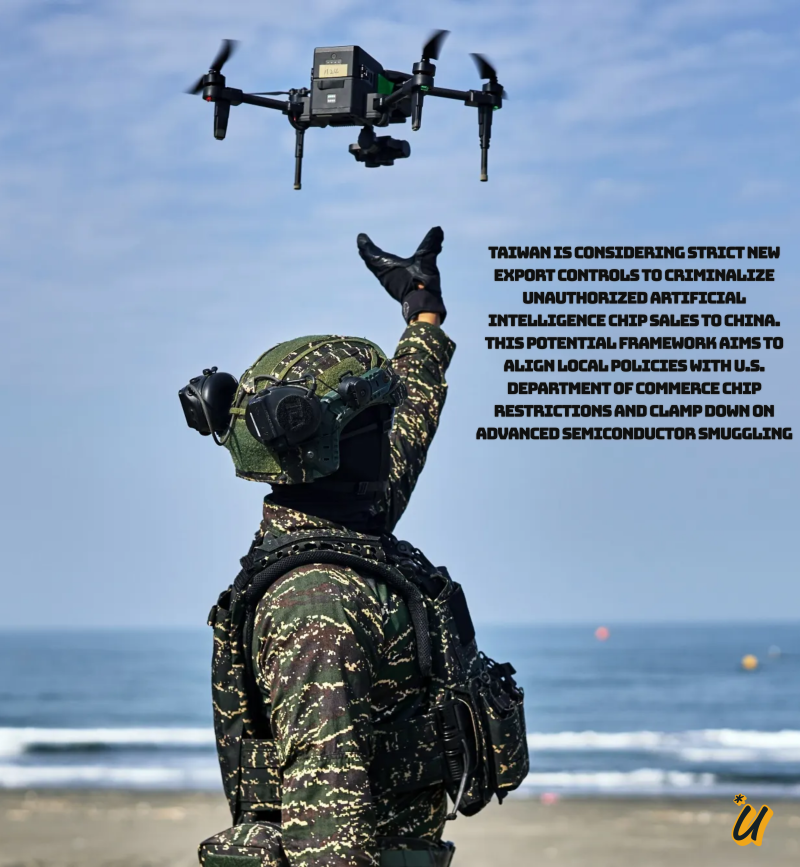
At the heart of the geopolitical friction is a major policy pivot from Taiwan, which is actively considering drastically stricter regulations on the export of advanced artificial intelligence chips to China. This moving target represents a significant tightening of the global chip bottleneck, aligning Taiwan’s economic and industrial strategies far more closely with United States national security priorities. The ripple effects of this decision are already accelerating defensive strategies across the straits, as China moves forward with an aggressive domestic infrastructure buildout. Beijing is planning a massive investment of approximately $300 billion dedicated entirely to the construction of domestic data centers and indigenous computing clusters. This historic capital expenditure is designed to forcefully bolster China's independent AI capabilities and aggressively reduce its long-standing reliance on external Western suppliers, setting up a localized arms race for computing power.
As governments draw structural lines around hardware, the commercial software titans driving the artificial intelligence boom are rapidly moving to cement their financial dominance in the public markets. In a highly anticipated and historic move, OpenAI has confidentially filed its S1 paperwork with the Securities and Exchange Commission, officially entering the race to go public. While the pioneer of generative AI boasts an unprecedented global reach and user base, market analysts are already cautioning that the upcoming initial public offering will face intense regulatory and investor scrutiny. Early assessments point directly to OpenAI's staggering capital expenditure requirements, which continue to strain balance sheets, alongside a notoriously complex non-profit and for-profit governance structure that could give traditional institutional investors pause.
This impending public debut is merely the vanguard of a much larger, high-stakes market dynamic taking shape on Wall Street. Investors are currently preparing for a historic cluster of mega-cap tech listings, with both the aerospace giant SpaceX and OpenAI’s primary rival, Anthropic, hovering on the public horizon. The simultaneous approach of these tech titans has triggered an intense debate among institutional funds, who find themselves forced to weigh eye-watering valuations against the inherent volatility and liquidity strains of multi-billion-dollar listings. The broader market enthusiasm is further complicated by simmering corporate governance concerns, particularly surrounding SpaceX. Ahead of its anticipated market debut, major New York City officials and several influential pension funds have publicly expressed deep anxieties regarding Elon Musk’s near-total voting control over the aerospace firm. The situation has reignited a fierce Wall Street debate over shareholder rights and whether standard public market protections can co-exist with absolute founder control.
Simultaneously, the consumer technology ecosystem is preparing for its own structural transformation, led by Apple’s definitive layout of its artificial intelligence foundation. At its annual Worldwide Developers Conference, the consumer giant introduced a completely overhauled, AI-native iteration of Siri alongside the rollout of its next-generation operating system, iOS 27. The updates represent Apple’s formal commitment to embedding deep, on-device AI models into the daily workflows of billions of global users. However, the tech giant’s grand rollout has instantly run into a formidable political wall in Europe. Apple is currently locked in a tense, high-stakes standoff with European Union regulators regarding the legal and technical implementation of these advanced AI features within European markets. The dispute centers on compliance with continental data privacy and digital competition laws, threatening to delay or fragment the availability of next-generation consumer AI across a significant portion of the developed world.
While consumer software faces regulatory headwinds, physical AI and automation are experiencing a massive surge in capital validation. Standard Bots announced the successful closing of a monumental $200 million funding round, signaling intense investor appetite for physical automation. Chief Executive Officer Evan Beard outlined a strategic vision focused entirely on deploying highly adaptable, AI-powered industrial robots across traditional assembly lines. In making the announcement, leadership fiercely advocated for a structural deployment of intelligent robotics as a primary mechanism to revitalize United States manufacturing competitiveness, arguing that localizing automated production is the only viable path to offsetting overseas labor advantages. From the cleanrooms of Taipei to the trading floors of New York and the regulatory halls of Brussels, the intersection of hardware sovereignty, public capital, and advanced automation has fundamentally redrawn the boundaries of global tech competition.