The rainbow has long occupied a unique, resonant space in the human consciousness, sitting at the precise, flickering intersection of folklore and hard physics. In a recent examination of this atmospheric marvel, astrophysicist Neil deGrasse Tyson and comedian Chuck Nice deconstructed the science behind the arc, stripping away the persistent mythology of buried gold to reveal a phenomenon that is, in many ways, far more extraordinary than the legends suggest. At its core, the discussion serves as a profound lesson in perspective—a reminder that the world we see is often a personal projection, contingent entirely on where the observer chooses to stand.
The physics of the rainbow is a study in precise, angular geometry. When sunlight meets a falling raindrop, it does not simply pass through; it refracts, bends, and disperses into the constituent colors that we have collectively agreed to label as the spectrum. It is a moment of pure, elemental architecture. Yet, it is worth noting, as Tyson observes, that this spectrum is as much a cultural construction as a physical one. Sir Isaac Newton, driven by an almost obsessive fascination with the number seven—a figure he believed held a deep, divine significance—arbitrarily inserted "indigo" into the color list to ensure the rainbow mirrored the seven notes of a musical scale. It is a striking example of how our human desire for cosmic order and harmony can shape our interpretation of raw, natural phenomena, turning a continuous gradient of light into a structured, seven-fold truth.
Perhaps the most transformational framing offered in this exploration is the realization that a rainbow is not an object that exists "out there" in the sky, waiting to be found. It is a strictly personal optical event. Because a rainbow is always centered on the observer’s sightline—specifically, the line pointing from the sun to the back of the observer's head—no two people ever see the exact same rainbow. It is a private geometry, a 42-degree angle of light that follows the viewer as they move across the landscape. This is the ultimate, scientific explanation for why the "end" of the rainbow remains a permanent, frustrating impossibility for treasure hunters; the rainbow is not a destination, but a relationship. You are, by definition, the center of your own optical circle, and as you move, the arc moves with you, forever keeping its secrets just out of reach.
Related article - Uphorial Shopify
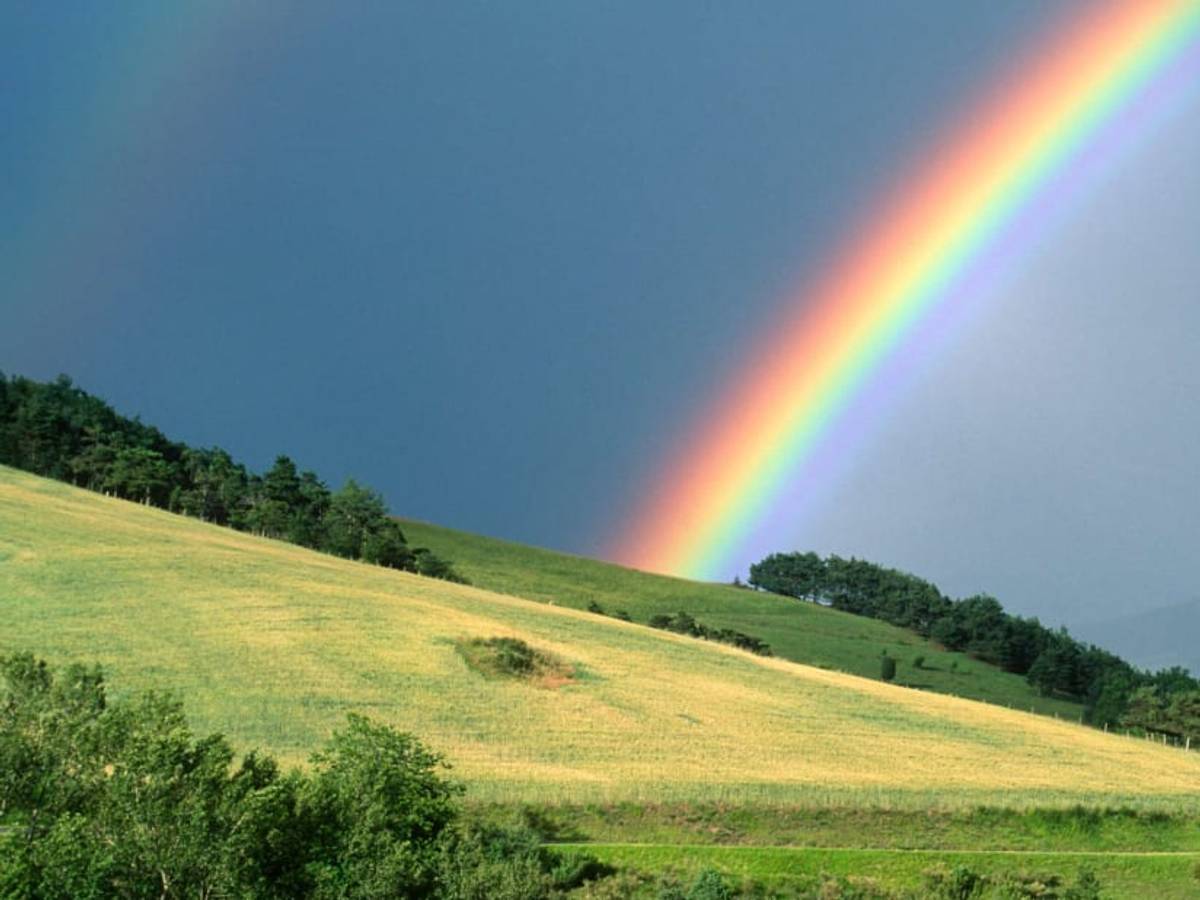
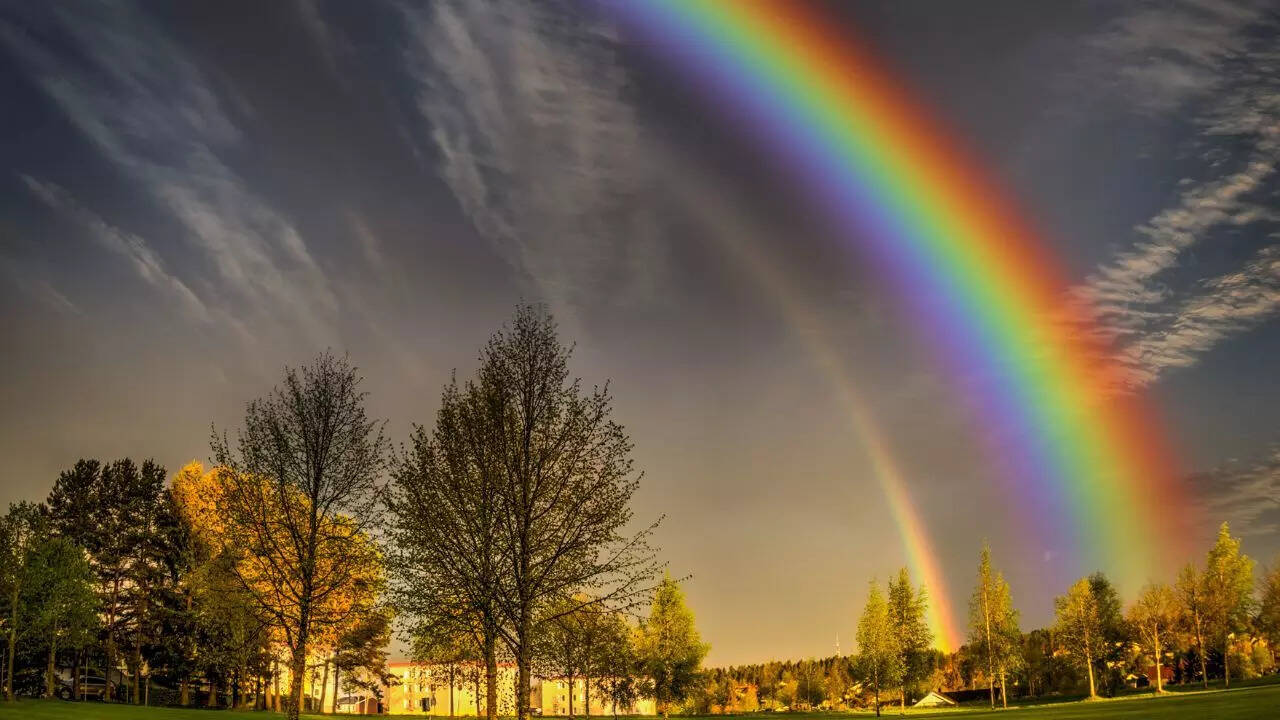
The geometry extends into the often-overlooked complexity of secondary phenomena, which hint at a much larger, more invisible universe of light. Every rainbow is technically a double, though the second arc is frequently too faint for the human eye to resolve against the backdrop of the sky. In this secondary arc, the colors are reversed—a ghost-like mirror image of the primary—and the region between the two bands, known as Alexander’s dark band, is noticeably dimmer than the rest of the atmosphere. This is not a trick of the eye, but a side effect of the way light is refracted out of the droplets. Even more ethereal is the moonbow, a rare, nocturnal cousin to the standard rainbow, formed when moonlight interacts with high-altitude ice clouds rather than liquid rain. It is a reminder that the heavens are constantly performing these silent, magnificent calculations, regardless of whether we are awake to witness them.
Visibility, as the hosts explain, is a matter of timing and celestial position. Rainbows are prisoners of the sun’s height in the sky. They are most commonly witnessed in the early morning or late afternoon, when the sun is low enough to cast that required angle of light across the landscape. In the most perfect conditions—often seen by pilots navigating the high altitudes or those standing atop narrow, isolated peaks—a rainbow can manifest as a full, unbroken circle. It is only the interference of the horizon, the stubborn physical fact of the ground beneath our feet, that usually clips the bottom half from our view.
This scientific audit of the rainbow serves as a powerful, grounding reminder of how we navigate the world at large. We tend to view the environment as an objective, fixed stage, yet phenomena like the rainbow prove that our relationship with the natural world is deeply participatory. The beauty of the rainbow does not exist independent of our presence; it requires the observer, the sun, and the rain to align in a singular, fleeting moment of geometry. It is a humbling perspective: the universe is constantly operating according to laws that are both cold in their precision and breathtaking in their aesthetic output, and we are, at any given moment, the very center of our own unique experience.
As we move through a world increasingly defined by data and digital abstraction, there is a profound comfort in returning to these elemental truths. The rainbow demands nothing of us but our attention. It does not require us to believe in its legends or to chase its ends; it only requires us to stand in the right place, at the right time, and look up. It is a masterclass in the value of the present moment, suggesting that the most beautiful things in life are not the ones we can capture, but the ones we are lucky enough to witness while we are standing in the middle of our own perspective. By understanding the mechanics of the light, we do not diminish the magic of the arc; instead, we gain a deeper appreciation for the intricate, invisible dance that makes the world feel like a place of constant, quiet wonder.