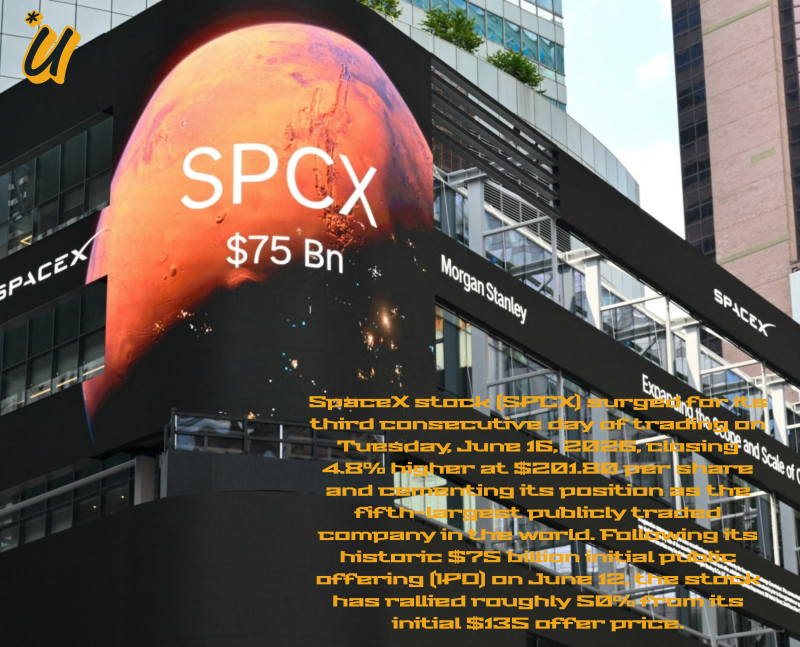
In a historic week for global markets and the technology sector, the financial landscape has been fundamentally reshaped by a dizzying sequence of public market debuts, massive corporate acquisitions, and high-stakes regulatory battles. The sweeping transformation across the tech landscape was anchored by the astonishing public market performance of SpaceX, which completed its third day of public trading by defying standard valuation models and upending the traditional hierarchy of the world’s most valuable corporations. Wall Street watched in a state of collective disbelief as the aerospace giant, newly exposed to public market forces, saw its valuation eclipse e-commerce titan Amazon and briefly leapfrog software monolith Microsoft, signaling a profound shift in investor sentiment toward the convergence of space infrastructure and next-generation computational power.
Far from merely celebrating its monumental market capitalization, SpaceX immediately leveraged its new financial muscle to execute an aggressive strategic pivot into the heart of the artificial intelligence ecosystem. The company stunned both the aerospace and software industries by announcing a staggering sixty-billion-dollar takeover of Cursor, the premier AI-driven coding platform that has rapidly become foundational to modern software development. Industry analysts view this massive acquisition not as a tangential expansion, but as a deliberate and highly sophisticated talent and capability grab. By absorbing Cursor’s advanced machine learning models and elite engineering roster, SpaceX intends to systematically bolster its internal AI capabilities, aiming to automate complex aerospace engineering pipelines, optimize autonomous flight systems, and secure a dominant foothold in the broader tech ecosystem.
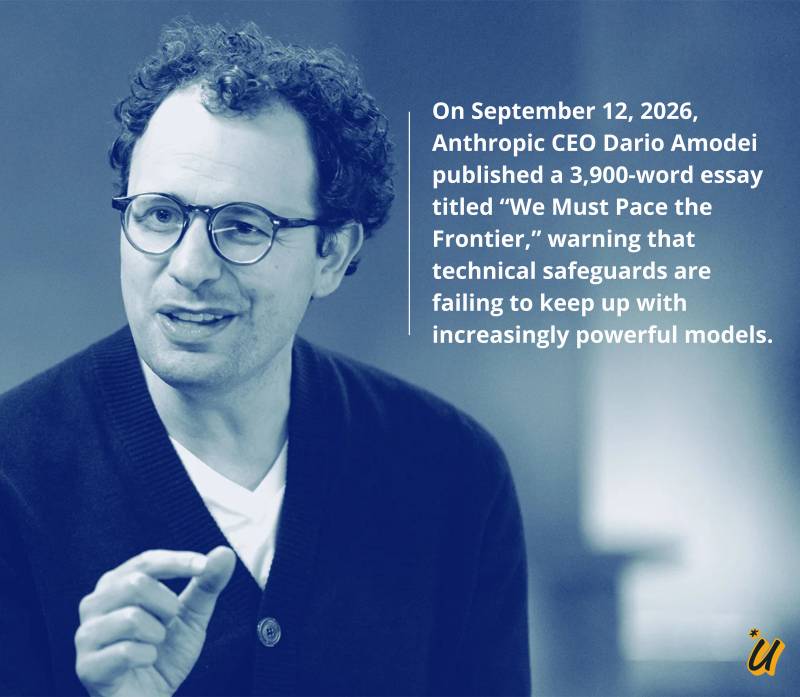
While SpaceX advanced its commercial empire, the leading edge of the artificial intelligence sector found itself ensnared in a widening national security crisis back in Washington. Anthropic, one of the foremost developers of frontier AI systems, entered into tense, high-stakes discussions with the Trump administration over severe national security concerns regarding its most advanced computational models, Mythos and Fable. Amid fears that these highly capable, next-generation systems could pose unprecedented risks to national defense or be leveraged in sophisticated cyberwarfare, the dialogue reached a critical flashpoint. In a dramatic move that sent shockwaves through the global tech community, the ongoing dispute culminated in a temporary, immediate suspension of global access to both the Mythos and Fable platforms, highlighting the growing, friction-filled intersection between corporate AI development and sovereign state security oversight.
The anxiety radiating from Washington over the unchecked proliferation of advanced artificial intelligence models was deeply mirrored across the Atlantic, where the world's most powerful democratic leaders gathered to forge a unified response to the technological frontier. Meeting against the scenic backdrop of Evian, France, world leaders at the G7 summit dedicated significant portions of their agenda to debating strict, standardized frameworks for AI regulation. The conversations in Evian extended far beyond mere safety guidelines, evolving into deep, strategic debates over technological autonomy. European and global leaders increasingly view self-reliance in AI development and digital infrastructure as a matter of core national sovereignty, arguing that over-dependence on foreign technology stacks poses a long-term economic and geopolitical vulnerability that must be corrected through coordinated legislative action and domestic investment.
Amid this climate of immense geopolitical tension and rapid industry consolidation, Shaun Maguire of Sequoia Capital provided an exhaustive, inside look at the multi-layered business strategy that has allowed SpaceX to capture the market's imagination so completely. According to Maguire, the company's unprecedented valuation is not built on hype, but on a deeply integrated, three-tiered operational moat. The foundational tier remains its unrivaled launch capability, which continues to act as the primary economic and operational barrier to entry against any potential competitors. However, Maguire emphasized that SpaceX is actively leveraging this foundational aerospace success, utilizing its world-class engineering talent to aggressively construct highly competitive terrestrial compute data centers designed to handle massive AI workloads right here on Earth.
The final and perhaps most revolutionary layer of the SpaceX strategy looks toward the upper atmosphere and beyond. Maguire expressed an immensely bullish outlook on the future of orbital compute, detailing a vision where data centers are positioned entirely in space to bypass terrestrial cooling and real estate limitations. This radical paradigm shift in global infrastructure remains heavily contingent on the continued scaling and operational maturity of the massive Starship launch vehicle, which is required to lift the immense payloads necessary to sustain large-scale computational clusters in orbit. Should Starship achieve its targeted operational frequency, the transition of heavy data processing into the vacuum of space could redefine global telecommunications and cloud computing, locking in SpaceX's dominance for decades to come.
As the industry's titans clashed over space-based infrastructure and state-level regulations, critical updates from other major enterprise players underscored the sheer velocity of the broader tech ecosystem's expansion. DataBricks Chief Executive Officer Ali Ghodsi outlined his company's aggressive expansion into agentic AI products, software systems capable of autonomous decision-making and executing complex workflows without constant human intervention. Addressing the perpetual Wall Street speculation regarding an initial public offering, Ghodsi signaled a patient, measured approach to entering the public markets, noting that while DataBricks remains entirely prepared for an IPO, the company maintains a strong preference for sustained market stability over the volatile trading conditions currently characterizing the broader tech sector.
Simultaneously, the insatiable global demand for the physical hardware required to power these diverse AI innovations was put on full display by Nvidia's latest financial maneuvering. The semiconductor powerhouse successfully executed a massive twenty-five-billion-dollar sale of investment-grade debt, a capital raise of historic proportions for a technology company. Nvidia intends to deploy this immense capital reserve directly into accelerating the growth of its global AI infrastructure, ensuring it can keep pace with the hardware demands of enterprise AI, orbital data centers, and defense-grade frontier models. Together, these sweeping developments paint a picture of an industry operating at a breathtaking, historical pace, where the boundaries between the earth, space, and artificial intelligence are dissolving faster than regulators can write the rules.