The global technology landscape is undergoing a monumental shift as massive capital deployment, strategic corporate realignments, and intense regulatory debates collide. In a blockbuster edition of Bloomberg Technology, the industry's rapid transformation took center stage, highlighted by a staggering $8 billion aerospace acquisition, a near-trillion-dollar national AI strategy from South Korea, and a historic wave of public market financing that is redefining the limits of the modern tech boom.
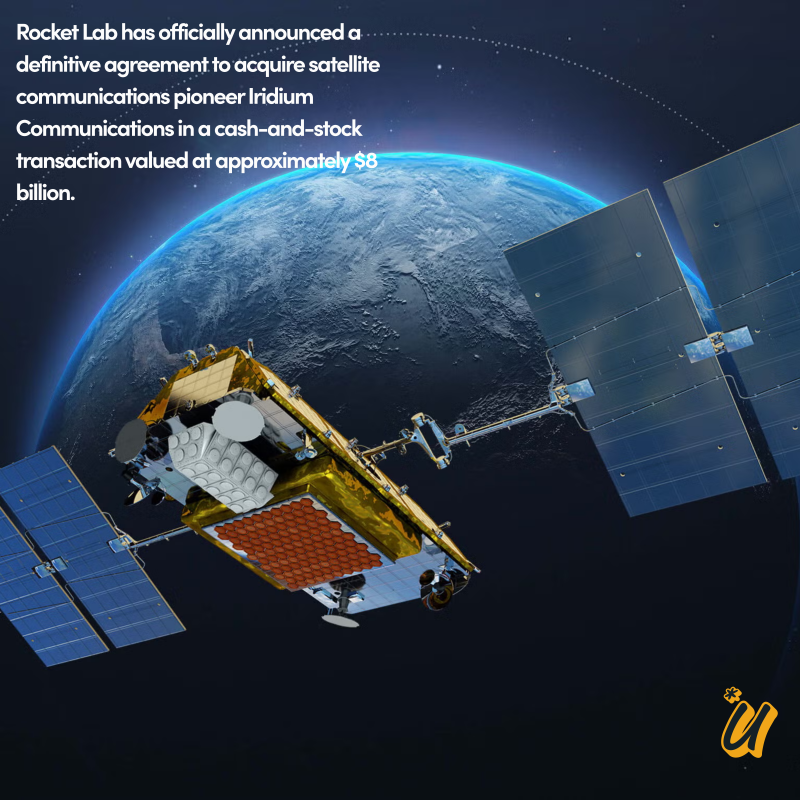
At the forefront of this industrial evolution is Rocket Lab, which has blindsided the aerospace sector by launching a definitive agreement to acquire Iridium Communications in a cash-and-stock deal valued at $8 billion. The aggressive consolidation is a direct, calculated challenge to SpaceX’s long-standing dominance in the orbital economy. Rocket Lab CEO Peter Beck explained that the transaction represents the ultimate play in vertical integration. By merging Rocket Lab's existing launch capabilities and satellite manufacturing infrastructure with Iridium’s deeply entrenched L-band spectrum and operational constellation, the combined entity effectively bypasses the traditional supply chain. Instead of merely acting as a taxi service for other companies' hardware, Rocket Lab is positioning itself to move directly into providing end-to-end satellite applications and global services, fundamentally rewriting the competitive dynamics of private space exploration.
As corporate players jockey for position in orbit, sovereign nations are executing equally aggressive maneuvers on the ground to anchor their dominance in the artificial intelligence supply chain. Most notably, South Korea has committed to a gargantuan industrial strategy, pledging at least $880 billion toward chip fabrication and AI data center infrastructure. This massive state-backed initiative centers on national champions Samsung and SK Hynix, aiming to insulate the country’s economic future from shifting geopolitical tides and to solidify its grip on high-bandwidth memory and advanced semiconductors, which remain the lifeblood of the global AI ecosystem.
This eye-watering level of state expenditure mirrors an unprecedented frenzy in the public capital markets, though it arrives alongside growing undercurrents of skepticism. Analysts on the program scrutinized the long-term sustainability of the current "AI trade" that has dominated Wall Street. While public markets have aggressively rewarded any company receiving or deploying AI capital, a quiet tension is building among institutional investors. There is a rapidly intensifying spotlight on whether these historic infrastructure investments will eventually deliver tangible corporate returns, or if the market is building toward a capital expenditure bubble.
For the time being, however, the financial spigots remain wide open. Driven primarily by the insatiable demand for AI development and data center infrastructure, a record-breaking $251 billion has been raised in United States IPOs and secondary share sales so far this year. This historic haul underlines a broader macroeconomic trend where the traditional technology sector is effectively being cannibalized and rebuilt around the specialized cooling systems, energy grids, and silicon clusters required to power next-generation software.
Simultaneously, the media and entertainment sectors are undergoing their own structural purges to adapt to this tech-centric reality. In a move to sharpen its strategic focus, telecom giant Comcast is planning to spin off NBCUniversal and Sky into a standalone, publicly traded company. By separating its legacy cable and entertainment networks from its core broadband and connectivity business, Comcast is attempting to unlock shareholder value and isolate its media assets in a highly volatile streaming landscape. Meanwhile, the collision of tech capital and live entertainment continues to accelerate, with Disney CEO Bob Iger and Thrive Capital founder Joshua Kushner reportedly exploring a joint bid to secure a highly anticipated NBA expansion franchise in Las Vegas, showcasing how elite tech investment firms are diversifying into premium sports properties.
As AI software weaves itself deeper into the fabric of commerce, the infrastructure of governance and workplace culture is scrambling to keep pace. On the regulatory front, Anthropic has secured vital approval from United States regulators to restore limited, conditional access to its powerful Mythos 5 AI model for highly vetted partners, following an abrupt freeze triggered by national security concerns. The delicate balancing act between rapid commercial innovation and state security was further echoed by Hugging Face CEO Clem Delangue. Speaking on the program, Delangue passionately advocated for an analytical, regulatory distinction between closed-door frontier AI labs and the broader open-source ecosystem. He emphasized that true safety in the digital age stems from architectural transparency, warning that over-regulation could inadvertently stifle decentralized innovation while entrenching a handful of tech monopolies.
Ultimately, the sweeping macroeconomic forces discussed throughout the broadcast are trickling down to alter the mundane realities of daily corporate life. The program concluded by examining the friction point of human-AI integration: the rapid proliferation of automated AI note-takers inside corporate virtual meetings. As digital clones and automated summaries become standard participants in boardroom conversations, a "new etiquette" is being forced upon professionals. Issues ranging from implied consent and data privacy to the subtle suppression of candid workplace dialogue are emerging, proving that while the multi-billion-dollar infrastructure boom captures the headlines, the ultimate legacy of this technological revolution will be measured by how it fundamentally alters human behavior.