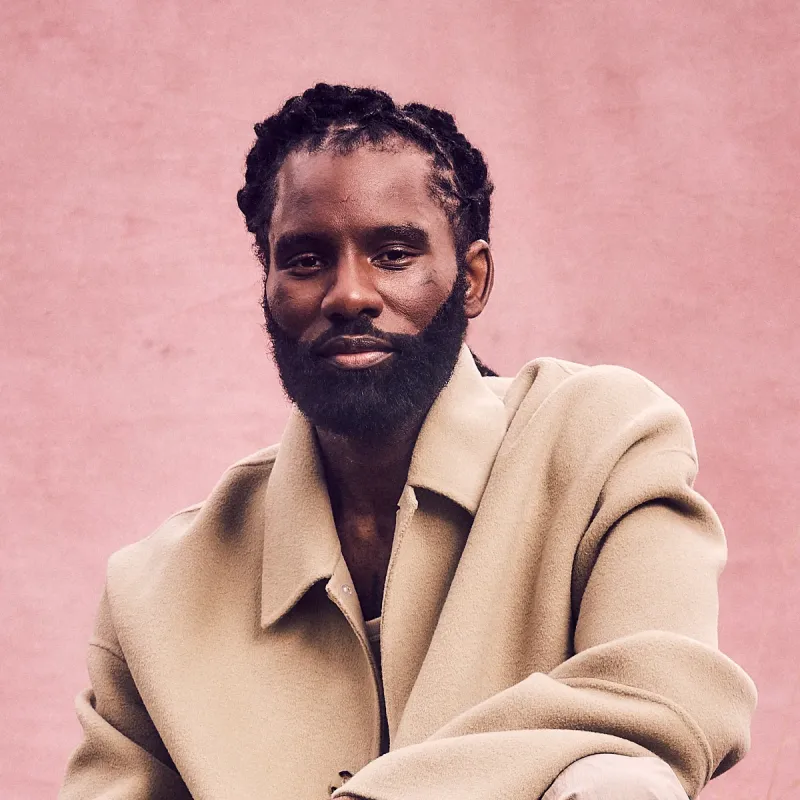
SOUTH BRONX — The narrative of Remi Adeleke is not merely a biography; it is a profound study in the alchemy of human resilience, a transformational framing of how one can dismantle the wreckage of tragedy to build a foundation of service. In this episode of One54, Adeleke, a former Navy SEAL, author, and filmmaker, unfolds a life story that feels less like a sequence of events and more like a series of epic, hard-won reconciliations. His journey, which arcs from the rarefied air of Nigerian royalty to the unforgiving concrete of the South Bronx, and eventually into the sterile, high-stakes precision of elite special operations and the creative dynamism of Hollywood, stands as a testament to the idea that our origins are not necessarily our destination.
The story begins in the visionary ambition of Banana Island, Lagos. It is here that Adeleke traces the roots of his father’s dream: a grand, engineering-focused financial hub that was meant to redefine Nigeria's potential. However, the sudden, mysterious death of his father acted as a seismic fracture in the family’s existence. In an instant, the status of royalty was stripped away, the land was claimed by the state, and the family was plunged into the disorientation of sudden dispossession. It is a moment of raw emotional precision, capturing the visceral reality of how quickly the architecture of a life can collapse when the foundation of power is removed.
The move to the Bronx, where the family grappled with extreme poverty, serves as the crucible of the narrative. For the young Adeleke, the streets were not just a location; they were a siren song of belonging, offering a sense of identity that he had lost in the wake of his father’s death. He speaks with an intelligent curation of his own past, acknowledging the magnetism of the lifestyle he was drawn toward and the very real dangers that threatened to derail his future. It was in this moment of precarity that his mother’s influence became the defining intervention of his life. Her persistence, her faith, and her refusal to let his potential wither in the shadows of the Bronx provided the necessary pivot. The decision to enlist in the military was not just a career choice; it was a strategic reimagining of his own agency, a move that channeled his need for purpose into the disciplined framework of elite special operations.
Adeleke’s transition from the battlefield to the film set is a story of calculated reinvention. After serving as a consultant on Michael Bay’s Transformers films, he found himself drawn to the power of the visual medium. It was a natural evolution; having lived a life of high-stakes, real-world narrative, he understood better than most that the stories we tell can be as impactful as the missions we execute. Pivoting to writing and directing, he began to leverage his unique background, turning his life story into a vehicle for communication. He realized that the same discipline required to operate in special forces was essential to the rigors of production, and he approached the industry with the intent of creating narratives that were not just entertaining, but purposeful.
Related article - Uphorial Shopify

\Perhaps the most compelling aspect of Adeleke’s current work is his transition from a life defined by personal survival to one defined by systemic advocacy. His global impact, particularly in the fight against human and organ trafficking, is a manifestation of a man who has successfully mapped his personal trauma onto the broader struggles of humanity. He describes this work with a sense of urgent cultural understanding—he recognizes that the victims of these systems are not distant abstractions, but individuals who occupy the same spaces of vulnerability he once knew. This is the hallmark of his strategic storytelling: he does not just raise awareness; he seeks to dismantle the economic structures that make trafficking possible. His projects, such as Resilient Cities in Malawi and his work with the AI startup Civil Watch Technologies, serve as the practical applications of his philosophy. They are built on the premise that true advocacy must provide sustainable, economic pathways for the marginalized. By leveraging cutting-edge technology and infrastructure development, he is working to ensure that the vulnerable are no longer left to the mercy of predators. It is a transformational framing of what it means to be a modern advocate: it is not enough to simply decry the injustice of the world; one must be actively involved in constructing the systems that render that injustice obsolete.

The conversation on One54 is a masterclass in the power of the platform. The hosts, throughout the dialogue, emphasize that Adeleke’s story is not a singular anomaly, but an invitation for others to consider how their own experiences—no matter how tragic—can be repurposed. They celebrate his transformation from a boy displaced by the mysteries of power in Nigeria to a man who now wields his own platform to empower others. His life is a rejection of the idea that one’s trajectory is fixed by the circumstances of one’s birth. In reflecting on his journey, Adeleke remains grounded, his tone marked by a humility that only comes from having seen the extremes of human potential and depravity. He posits that resilience is not a static quality, but a daily practice—a persistent choice to engage with the world in a way that prioritizes the dignity of others. His life, having circled from the heights of privilege to the depths of poverty and back again to the heights of achievement, is a narrative of redemption. It serves as a powerful, resonant reminder to the audience that no matter how shattered our beginnings may seem, we possess the capacity to act as the primary author of our own rebirth.
As the interview concludes, the takeaway is as simple as it is profound: purpose is the antidote to tragedy. Adeleke has successfully converted his life into a mission, proving that the most effective way to honor the legacy of those who were taken from us is to dedicate our own remaining time to the service of others. His trajectory, from the lost prince of Banana Island to a global advocate for the voiceless, is a testament to the fact that when we align our talents with our conscience, we move from merely living a life to fulfilling a calling. The resilience he demonstrates is not just for himself; it is a blueprint for everyone listening, a strategic and emotional map for how to navigate the complexities of our own existence while remaining steadfast in the pursuit of a more equitable, more humane world. In a world that often demands we be defined by what we have lost, Remi Adeleke remains an uncompromising champion of what we can still build.