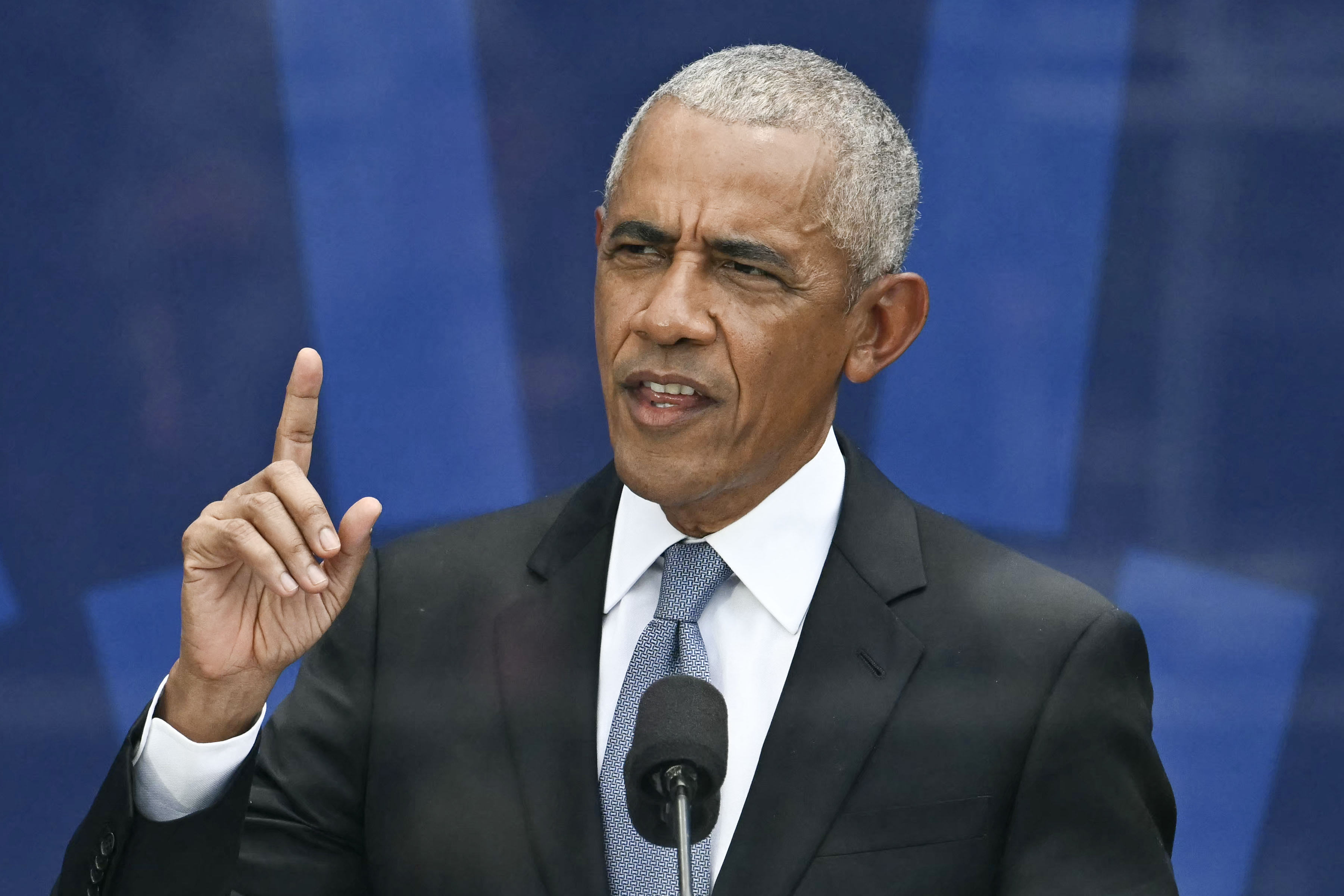
The South Side of Chicago has long been a place of profound stories, but on this day, it became the site of a new chapter in American history. As the doors of the Obama Presidential Center officially opened, the air was thick with the resonance of a journey that began not in the corridors of power, but in the neighborhood blocks of 1985. Standing before a crowd that spanned generations, President Barack Obama did not speak merely as a former leader of the free world, but as a man returning to the wellspring of his own life. For Obama, this center is not an act of self-commemoration; it is a homecoming to the city where he first learned that purpose is not discovered in solitude, but in the messy, beautiful, and demanding work of community.
It was in these streets, over four decades ago, that a young, untested organizer arrived with little more than a sense of duty and a surplus of idealism. Chicago, as he recounted with emotional precision, was the crucible where he found his family, his faith, and the enduring partnership with Michelle Obama that would define his trajectory. By anchoring his presidential center in the heart of the South Side, he is making a deliberate statement: this is not a tomb for artifacts or a static mausoleum designed to freeze a presidency in amber. Instead, it is a living, breathing laboratory for democratic engagement—a space intended to hum with the energy of the people who live here, work here, and dream here. The center stands as a monument not just to one administration, but to the thousands of unsung public servants, organizers, and everyday citizens who toiled in the trenches of change alongside him.
Related article - Uphorial Shopify

In an era defined by a fracturing of the national consensus, the center’s architecture and its mission serve as an intellectual and spiritual ballast for the American experiment. Obama was strikingly candid about the fragility of the republic, acknowledging the historical weight of its struggles and the inherent messiness of its governance. He framed the center’s exhibits as a pedagogical tool for a democracy in need of repair, highlighting the non-negotiable pillars of a functioning society: the sanctity of the rule of law, the vital importance of checks and balances, and the often-overlooked necessity of character in public life. The exhibits are curated to demand that visitors grapple with the reality that democracy is not a gift passed down through generations, but a project that must be actively maintained, defended, and refined by each subsequent era.One of the most transformational aspects of his address was the intentional pivot away from the cult of the presidency. Obama urged those walking through the center’s halls to look past the speeches and the policy blueprints of his two terms. He shifted the focus toward the "ordinary" citizens who had been the true protagonists of his administration: the small business owners struggling to keep their doors open, the cancer survivors whose resilience redefined the necessity of the Affordable Care Act, and the service members whose sacrifices necessitated the decisions he made in the Situation Room. In doing so, he democratized the history of his own presidency, suggesting that the policies of the past were merely the outcomes of the collective struggle and triumph of the American people. He reminded the audience that policy is the reflection of people, and without the heartbeat of the citizen, the architecture of government is hollow.

The address reached its most poignant moment when he confronted the prevailing headwinds of our contemporary moment: the deep-seated cynicism, the hardening of political divisions, and the creeping isolationism fostered by the digital age. He did not offer easy platitudes or superficial optimism. Instead, he acknowledged the profound difficulty of maintaining faith in one another when the incentives of modern technology seem designed to drive us into separate silos of outrage. He challenged this, offering a vision of American life that is rooted in the "shared values" that have historically allowed a diverse nation to bridge its deepest divides. It was an appeal for a return to the messy, face-to-face work of building trust, a call to bridge the gaps that algorithms and political rhetoric have spent the better part of a decade widening.As he concluded, Obama reached for the moral north star that has guided his public life, invoking the timeless sentiment regarding the arc of the moral universe. Yet, he did not treat it as a destiny; he treated it as a choice. He framed the "bending" of that arc not as an inevitable consequence of history, but as an urgent, physical act of human agency. He explicitly handed the pen to the next generation, challenging them to view the imperfections of the current moment not as a reason for despair, but as the invitation to write the next chapter of the American story.
The Obama Presidential Center is now a fixture of the Chicago landscape, but its true dimensions are measured not in concrete or steel, but in the potential it holds for the future. By placing a national institution in the heart of a local community, Obama has created a bridge between the high-level considerations of statecraft and the lived realities of the street. It is a bold, strategic act of storytelling that insists that the future of democracy rests on our ability to see ourselves in one another. In this, he has left a legacy that seeks to outlive his term in office, one that challenges every visitor to recognize that while they may not hold the title of President, they are, in every sense, the authors of the American future. The work of democracy, he reminded us, is never finished; it is simply waiting for a new generation to step up and ensure that the arc continues its bend toward justice.