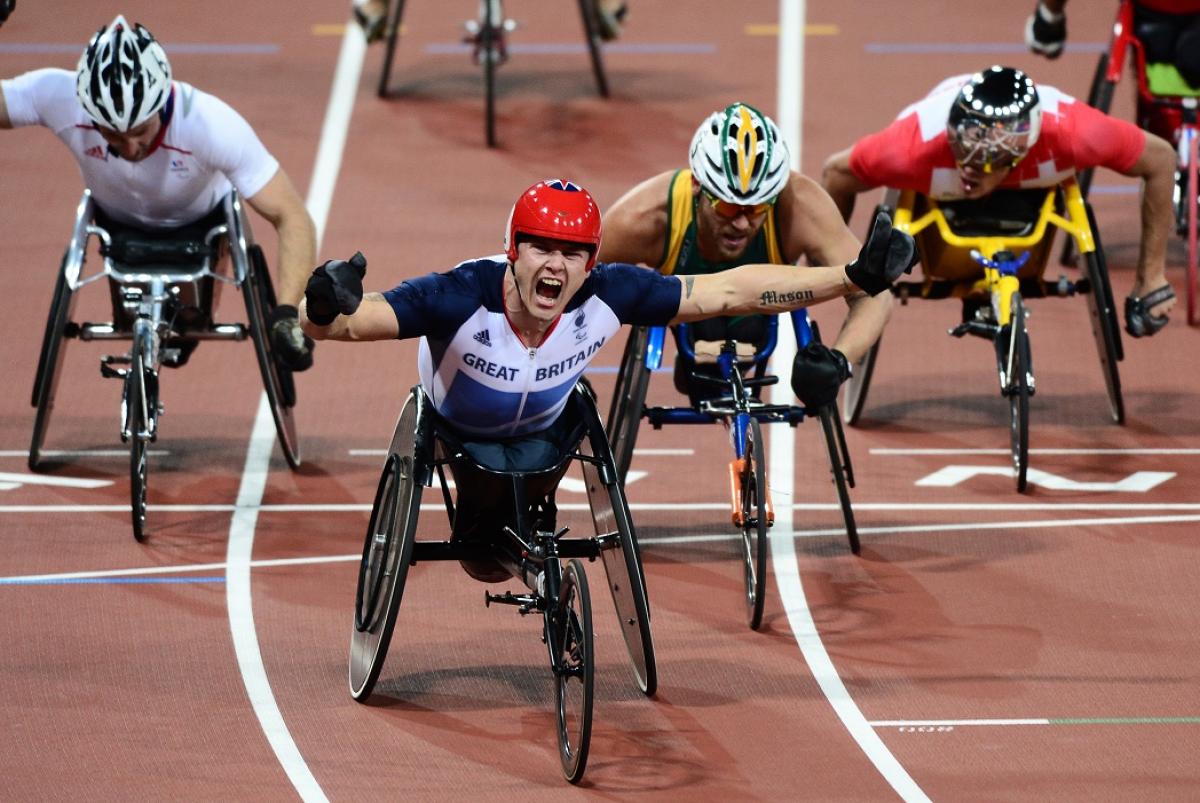
The Paralympics represent a movement defined by elite athleticism and a "parallel" relationship to the Olympic Games, a distinction often misunderstood by the general public. In a detailed exchange with Wired, three-time medalist and Team USA snowboarder Mike Schultz clarifies that the movement’s name signifies parity rather than paralysis, symbolized by the unique agitos logo instead of the traditional Olympic rings. Schultz, who has secured one gold and two silver medals, competes in high-stakes events like border cross, a head-to-head race over bumps and jumps, and banked slalom, a timed race through a course of turns. To maintain a level playing field, athletes are grouped into classifications such as LL1 (two affected joints) and LL2 (one affected joint), though the inherent diversity of disabilities means some degree of performance variation remains a constant challenge within the system.
Schultz’s own path was forged by necessity after a 2008 snow cross injury led to an amputation, prompting him to return to a prosthetic in just five and a half weeks due to intense motivation. Dissatisfied with standard walking legs that lacked necessary resistance, he utilized his background as a "maker" to engineer the Moto Knee and Versa Foot in his garage. This system utilizes mountain bike shocks filled with compressed air and hydraulic oil to mimic the resistance of human quadriceps, providing the stability needed for high-G turns and the flexibility to absorb the impact of 50 to 60-foot jumps. His innovations have since grown into a company that supplies equipment to many of his direct competitors on the world stage.
Related article - Uphorial Shopify

Operating at this level requires overcoming extreme environmental and physical barriers that able-bodied athletes do not face. In single-digit temperatures, the viscosity of hydraulic oil in a prosthetic increase, forcing athletes to perform squats to get the fluid moving before a race. To ensure durability during high-impact landings—which Schultz personally tests by jumping off six-foot ladders—he employs high-grade materials like 7000 series aluminum, titanium, and 3D-printed carbon fiber-infused nylon. Furthermore, as an above-knee amputee, he must rely on perfect body positioning to anticipate the snow’s reaction because he cannot physically feel his board or foot in space.
Despite the common misconception that Paralympians are merely participants, Schultz asserts they are true competitors who undergo rigorous World Cup tours to qualify for the games. The economic reality of the sport remains a hurdle, as only about one percent of Paralympians can support themselves solely through competition, with most relying on strategic partnerships with companies like Autodesk to fund their four-year training cycles. Looking ahead, the next frontier in adaptive sports lies in electronics integrated with the nervous system, which would allow athletes to control their limbs directly rather than relying on reactive weight shifts. As performance levels and speeds continue to increase, the 2026 Milano Cortina games promise to showcase a level of professional athleticism that has evolved exponentially since snowboarding's Paralympic debut in 2014.