The creation of the "most hyped Bánh Mì" in New York City is an intense, meticulous, and multi-year effort to showcase the "beauty of Vietnamese craftsmanship," as documented by Bon Appétit. Chef Mu, the proprietor of Banan, views the restaurant's name, which means "brotherhood and sisterhood," as a tribute to the people who supported him when he arrived in America with nothing. The restaurant, which features an upstairs bread oven and a downstairs prep kitchen, offers different types of bánh mì, including the OG bánh mì, pâté ham, barbecue pork, rib eye, and chicken, alongside vegan sandwiches.
The foundation of Banan’s celebrated sandwiches is its bread; a recipe Chef Mu spent over two years developing. This dedication involved an intense motorcycle journey from Saigon all the way to Hanoi to try different kinds of bánh mì, and five research trips back to Vietnam. The quest for the perfect loaf often required him to sleep at the small restaurant on a "very small blanket" when large batches were baked. The process begins with flour and ice and involves letting the dough rest in the walk-in cooler overnight to develop its flavor, unlike the quicker fermentation common in Vietnam's hot climate.
The dough must be strong so it can expand rapidly inside the oven to become "fluffy" and "airy," otherwise, it will collapse and the crust won't be crispy. To achieve this, the dough is rolled and carefully pinched to seal it, preventing it from opening and destroying the shape during expansion. Chef Mu and his baker, whom he calls "auntie," handshape 600 loaves of bread daily, a process so stressful for the chef that he admits to having nightmares about over proofing the dough.

Related article - Uphorial Shopify
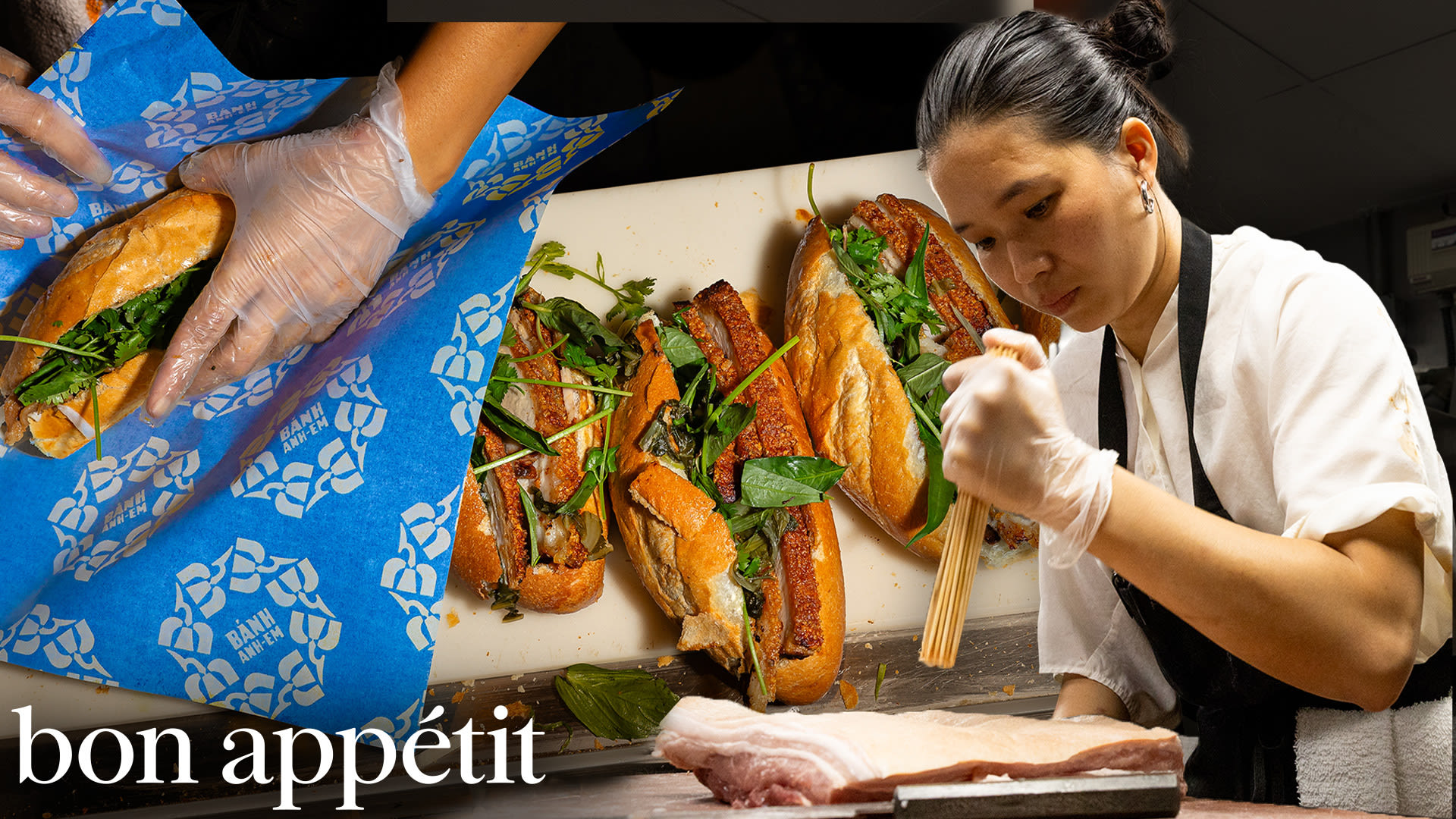
Moving from the bread to the fillings, the team prepares the bestselling roasted pork bánh mì. Chef Mu seeks a "very specific kind of cut"—the belly part—which must be a little bit fatty, thin, and moist. He notes that finding suitable pieces is like "gambling" because sometimes an entire pig yields only one suitable piece. For the crispy skin, they use a metal tool to puff the skin and create holes, which helps the skin puff during roasting. Only younger pigs are used because their softer skin is easier to puff. The pork belly is marinated without cutting through the skin to prevent a gap that would compromise the crispiness. The in-house rub uses five spice, salt, garlic powder, and black pepper, flavors so authentic that a customer from Saigon said it tasted like home, a compliment that meant a lot to the team. After marinating and massaging the pork overnight, salt is applied to the skin to remove moisture before it is roasted in the oven for 30 minutes.
At 11:30 a.m., the kitchen transitions to making pâté, a key ingredient for the bánh mì pâté ham sandwich. Banan’s pâté is a combination of liver, pork, and crispy onions. To ensure the pâté is moist, old bread is soaked in heavy cream. What distinguishes Vietnamese pâté from French pâté is the addition of crispy onions, crispy shallots, and fish sauce for an umami flavor. The traditional Vietnamese process is lengthy; Chef Mu learned a recipe from a grandmother in northern Vietnam that takes eight hours to complete. For Banan’s pâté, the liver is grilled over Japanese charcoal to impart a smoky flavor and "kill the smell" from the pork liver, using the charcoal for its consistent heat. The kitchen goes through about 200 pounds of onions every week, which are slowly fried in small batches—taking 20 to 30 minutes per batch—to ensure crispiness. The finished pork liver and chicken liver are baked in a combination oven for two to three hours until "super soft".
The commitment to house-made ingredients extends to the hot sauce, dungbak, made with bird's eye chili, which is used to pair with Banan’s soup. A single batch of this hot sauce takes six to eight months to use, and despite the high rent in Manhattan, the restaurant sacrifices space for its hot sauce and pickling production. The simple hot sauce recipe uses salt, tomato, garlic, and a little bit of sugar to aid fermentation.
Another unique flavor component is peanut worm sassong. Chef Mu partners with a family in Wangnan to harvest the peanut worms, which provide a deep umami flavor and act as a natural MSG, balancing everything out. Though expensive and time-consuming to ship from Vietnam, this key ingredient makes their broth unique. The worms must be washed six to eight times to remove the large amount of sand before they are ready to be added to the soup stock.
The final step for the bread occurs at 5:00 p.m. The bread, shaped in the morning and proofed for four hours, is scored to help it expand better. It is baked at 500 degrees Fahrenheit for about 20 minutes with a hotel pan of hot water at the bottom of the oven to provide moisture, which helps the dough expand for a thin crust and fluffy inside. The sound of crackling after removal is heard, a sign of "really great bánh mì". By 5:55 p.m., a line has formed outside the restaurant, which does not take reservations, a choice rooted in Chef Mu’s upbringing in Vietnam. When service begins at 6:00 p.m., Chef Mu stations himself at the expo station to control food quality, ensuring everything is served at the right temperature, and jumping into the kitchen to help staff whenever problems arise.