The contemporary culinary kitchen is a high-octane theater of fire, knife edges, and relentless psychological pressure, where a single miscalculation can destroy months of professional ambition in seconds. Yet, for an ambitious executive chef named Julian, the thermal stress of orchestrating a flawless service pales in comparison to the suffocating weight of domestic expectation standing silently in the corner of his dining room. In the poignant, darkly comedic short dramedy Mushroom Dad, the chaotic environment of a high-end restaurant becomes the crucible for an overdue emotional reckoning between a driven second-generation son and his fiercely critical, authoritarian immigrant father, Paul. It is a narrative that explores the profound cultural gulf between immigrant sacrifice and modern aspiration, woven together with emotional precision, intelligent curation of human awkwardness, and a transformational framing of familial love.
The tension reaches a boiling point on what is easily the most critical night of Julian’s professional career: a high-stakes evening playing host to a notoriously severe food critic whose review could make or break the restaurant's reputation. Every workstation in the kitchen is operating at peak velocity, and Julian’s nerves are frayed to a microscopic wire as he coordinates his line cooks and monitors plating schedules. Into this hyper-controlled environment steps Paul, whose very presence acts as an immediate psychological anchor dragging Julian back into a lifetime of unfulfilled approval. True to his character, Paul does not offer encouragement or calm reassurance; instead, his sharp, disapproving eyes scan the establishment, embodying the generational trauma of an immigrant parent who views creative ambition through the narrow lens of financial security and pragmatic survival.

Related article - Uphorial Shopify

Amidst the roaring fires of the kitchen and the escalating panic of the incoming critic, the narrative takes a wildly surreal and comedic turn through a completely innocent domestic accident. Seeking nothing more than a comforting cup of tea to soothe his throat, Paul inadvertently bypasses ordinary refreshments and consumes a potent, highly concentrated psychedelic mushroom tea that belongs to one of Julian’s eccentric line cooks. What follows is a magnificent, hallucinatory descent into the absurd as the powerful mind-altering substances take rapid, uncompromising hold of the stoic patriarch. The gruff, unyielding exterior that Paul has maintained for decades as a shield of authority begins to dissolve in real-time, giving way to a bizarre, hyper-vulnerable, and startlingly honest emotional state that turns the restaurant upside down.
As the psychedelic trip intensifies, Julian finds himself trapped in an impossible, laugh-out-loud juggling act: he must simultaneously manage a chaotic commercial kitchen on the brink of disaster, impress a feared food critic, and guide his tripping, hallucinating father through a series of increasingly bizarre public encounters. The comedy is sharp and deeply human, juxtaposing the pristine, delicate plating of gourmet cuisine with Paul’s uninhibited, reality-bending philosophical revelations and physical antics. Yet beneath the hysterical surface chaos lies a profound emotional current. Stripped of his defensive armor by the mushroom tea, Paul's traditional emotional constipation shatters, forcing father and son into an unfiltered dialogue where years of unspoken pain and expectations are finally dragged out into the open air.
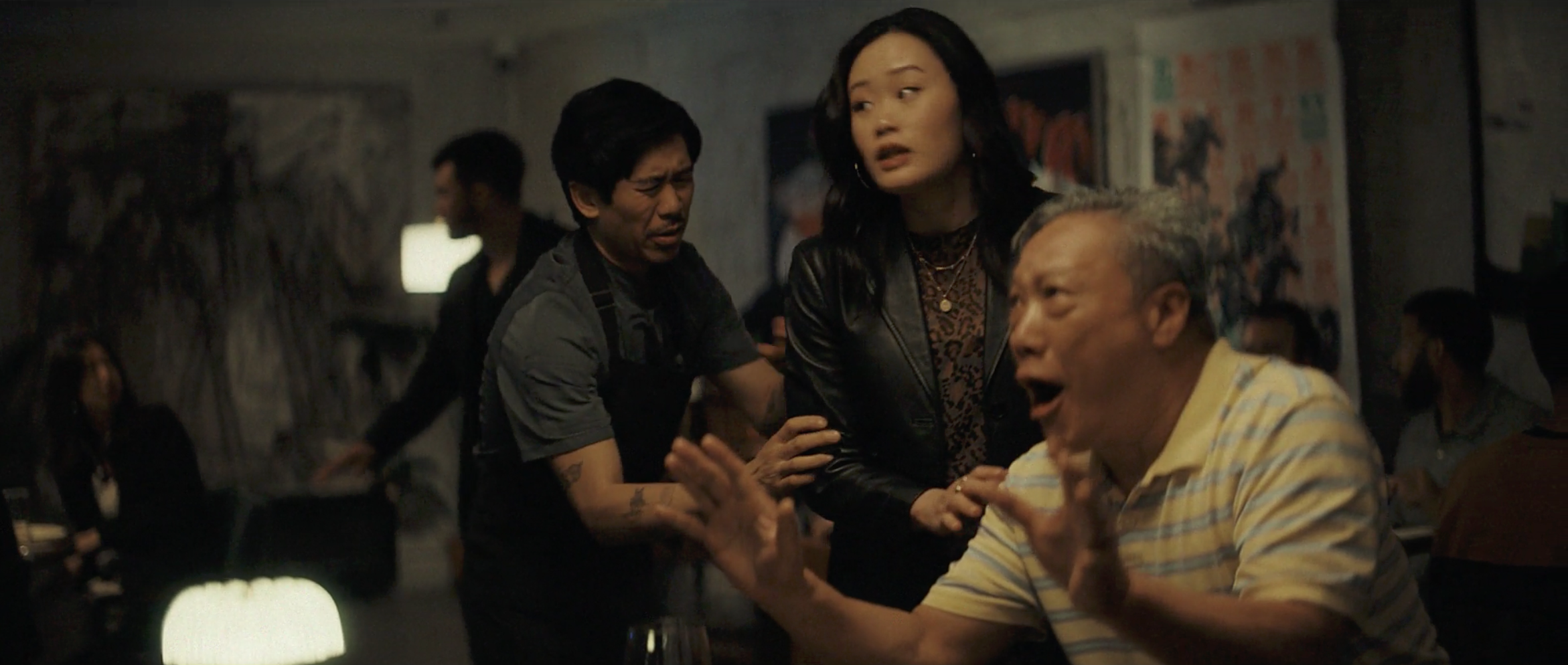
The psychedelic crisis ultimately serves as an unexpected, miraculous catalyst for emotional healing. Trapped together in the swirling aftermath of the kitchen service and the fading euphoria of the trip, Julian and Paul are stripped of their usual roles as the rebellious son and the tyrannical father. Through the smoke of the chaotic night, they begin to address the long-simmering resentments, cultural misunderstandings, and heavy, generational expectations that have strained their bond to its breaking point. Paul’s chemical vulnerability allows him to express pride he was never able to articulate while sober, while Julian realizes that his father's harsh criticisms were always a distorted, protective expression of immigrant anxiety in an unfamiliar land.
The film concludes on a resonant, deeply heartfelt note that lingers long after the kitchen lights are turned off. It highlights the fierce, abiding loyalty and shared love that have always persisted quietly beneath their notoriously difficult communication. By journeying through the surreal looking glass of a mushroom trip, the father and son manage to dismantle the invisible walls of pride and fear that separated them for decades. Ultimately, Mushroom Dad offers a transformational framing of family reconciliation, proving that sometimes it takes a total disruption of reality to finally see the truth standing right in front of you—allowing a fractured relationship to evolve toward genuine, hard-won appreciation and enduring peace.