Montenegro, long "hiding in the shadow of its big Balkan neighbor Croatia," is suddenly drawing significant attention, revealed by Malini Angelica as a small country that "more than makes up for in natural beauty" what it lacks in size. The country is "packed with jaw-dropping mountains, crystal-clear Adriatic waters and old towns that look like they belong in a fairy tale". As the country gains attention, Malini Angelica urges travelers to "go now while it still feels like a bit of a hidden gem".
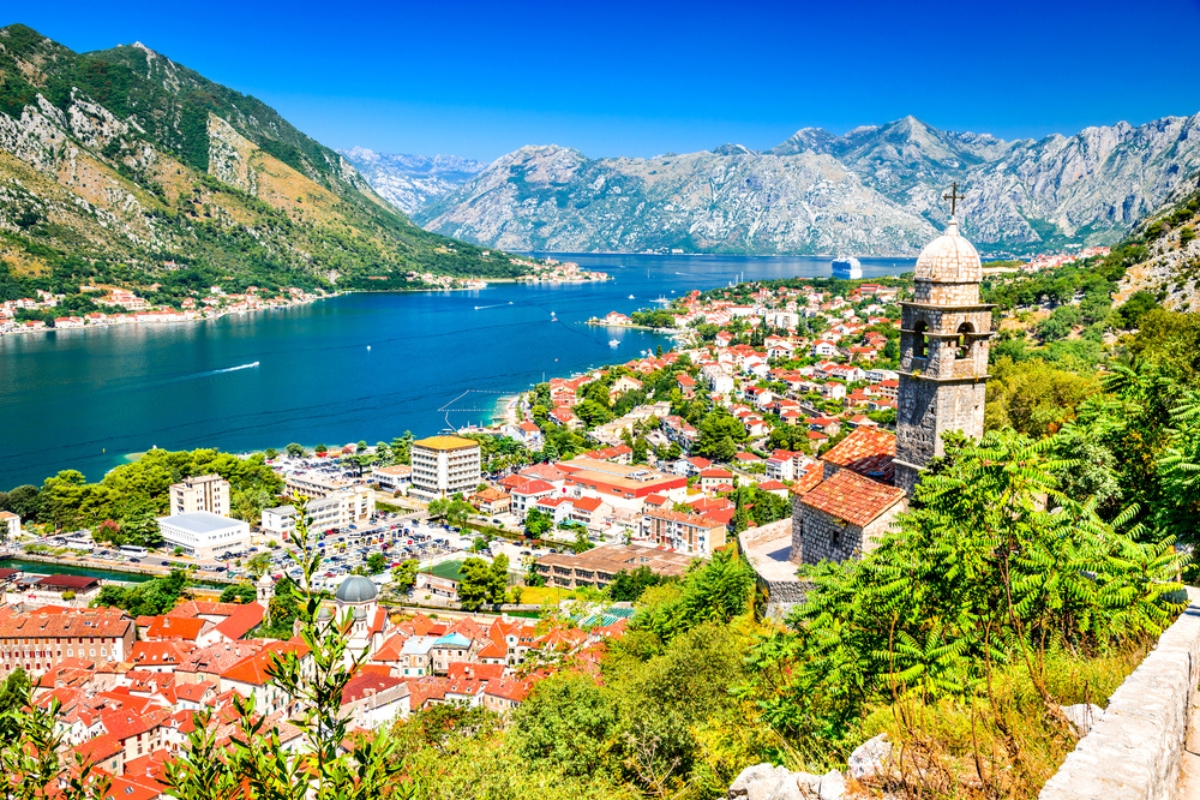
The journey into this "tiny Bulan gem's coastline" begins in Kotor, Montenegro's oldest town, settled some 2,000 years ago by the Yrians. Kotor, which has UNESCO World Heritage status, is nestled at the end of a winding bay where "fjorded light cliffs rise dramatically out of the Adriatic". Its "maze of stone alleys, old churches and sleepy squares make you feel as though you stepped back in time". Over the centuries, empires including the Romans, Venetians, and Ottomans have ruled Montenegro, leaving architectural marks such as Renaissance palaces to Baroque towers. The old town was mainly developed between the 12th and 14th centuries. To defend from invaders, the whole of the old town is encircled with ancient walls that started being built in the 9th century and are "incredibly well preserved". These walls extend all the way up the hill behind the old town to St. John's Fortress. The climb involves more than 1,300 steps, but the effort is rewarded with "breathtaking panoramic views of the Bay of Kotor and the old town". Malini Angelica notes that the harbor of Kotor is now popular with the "cruise ship port".
Related article - Uphorial Shopify

From Kotor, Malini Angelica takes a boat trip to explore the nearby Venetian town of Perast. Perast is "incredibly ancient"—more than a thousand years old—and came into power during the Venetian Empire rule. Walking along its waterfront, it feels "like a chunk of Venice kind of floated and made its way down the Adriatic", characterized by numerous churches and grand palazzo. Just off the promenade lies the famous Lady of the Rocks, a man-made island in the Adriatic, built up by sailors centuries ago who spotted a sighting of Madonna and child there and began dumping rocks in the spot. For Malini Angelica, "Montenegro is really the land of myth and legend" and possesses a "real sort of magic fantasy to the place".
Heading further up the coast, the Budva Riviera is highlighted as "one of the most beautiful stretches of Montenegro's Adriatic coastline". This area has seen dramatic recent change, with modern apartment blocks transforming once sleepy fishing villages. Sveti Stefan is an iconic island that juts out into the sea, featuring two beaches with "beautiful turquoise water". Once a retreat for the rich and famous in the late 1960s, it became an "exclusive area". The development has created tensions, as the luxury resort that owned the rights to the beaches faced protests recently by the locals because of course they want to enjoy their beach. The Budva Riviera also contains a quaint old town that is fortified and was built up a lot during the Venetian period, offering a contrast between the modern hotels and apartments and the "kind of original area which still has an air of that kind of ancient life".
Leaving the coastline, the journey ventures into the "historic heartland" of Montenegro, winding up a narrow road, once a "rugged donkey path," that ascends high above the sea, reaching altitudes of about 800 meters. The "dark, imposing mountains" that surround this basin gave Montenegro its name. Life in the mountains remains very rustic, lived in much the same way as a century ago. Malini Angelica met locals who live an "idyllic life," owning animals and growing their own grapes. Vitis culture in Montenegro is ancient, dating back to the Yrian period, and families continue the tradition of winemaking. Locals share products like honey, nuts, rakia (the national, strong drink), and pršut (cured meat). The strong rakia is sometimes said to cure every disease, including acting as a guard against the coronavirus. Malini Angelica found that the "landscapes feel untouched, the culture is rich", and the people are "proud of their traditions and more than happy to share them with newcomers".