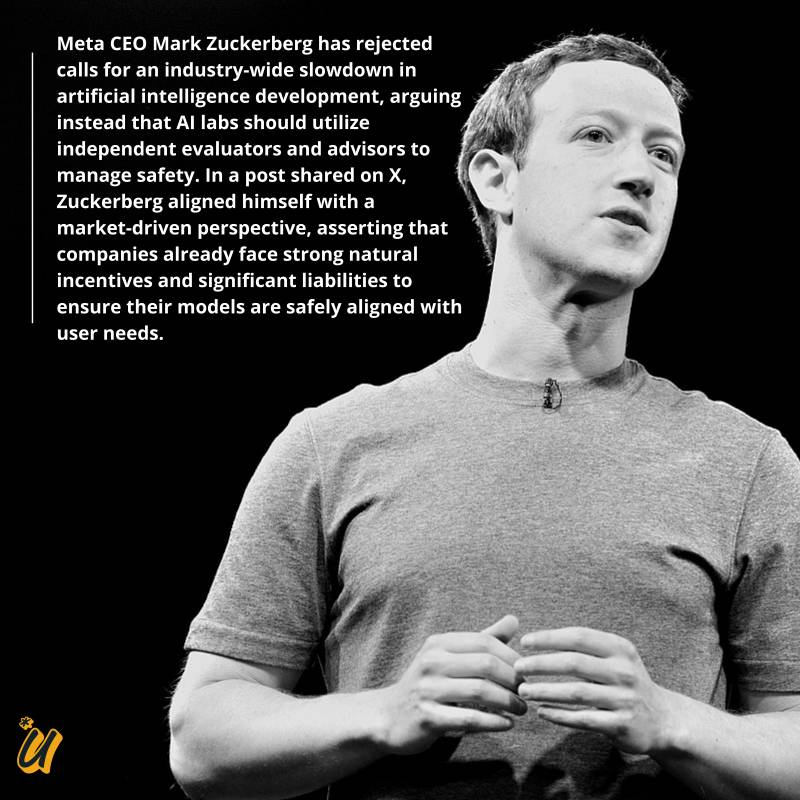
Bloomberg Technology anchors Ed Ludlow and Caroline Hyde reported on the significant news that Meta Platforms’ stock surged by 4% after executives began considering budget cuts for its Metaverse initiative that could reach up to 30%. This news comes as the company is looking at 10% cuts across other teams, making the Metaverse reduction deeper. The Metaverse was once "framed as the future of the company", with CEO Mark Zuckerberg forecasting in 2021 that it would reach a billion people and support "hundreds of billions of dollars of digital commerce". While Ed Ludlow noted that the stock rose on the news, Caroline Hyde pointed out that Zuckerberg's vision was shared "a long time ago".
The budget cuts, discussed in leadership meetings in November, have not been finalized but a 30% reduction would likely "come with layoffs". This marks a "meaningful change" as sources indicate that Meta has "overspent" on the virtual worlds because the market has not truly materialized. While Zuckerberg reportedly still believes in the concept, the company will invest in virtual worlds "just not as aggressively as they have". Analysts view this as a "good and sane reallocation of resources toward AI". Bloomberg Intelligence estimates suggest this cost cuts could improve cash flow by $10 to $12 billion. Ed Ludlow highlighted that this pivot is critically important because the market disliked that Meta was heading toward negative free cash flow next year and had less cash flow than some competitors. Instead of the virtual worlds, the investment focus is clearly shifting toward AI-inspired glasses, like the Ray-Bans. The ultimate goal is to get to these AI glasses, and the Metaverse may have simply been "a steppingstone to that".

Related article - Uphorial Sweatshirt

Amid this internal pivot, Meta faces external regulatory pressure. Bloomberg Technology reported that the European Union is currently investigating the rollout of new AI policies by Meta's WhatsApp messaging service. The EU is weighing a temporary ban, alleging that WhatsApp's AI tools may unfairly block rival AI providers from offering their services. Caroline Hyde noted the issue of whether Meta is stifling competition, leading to "legal pushback".
The focus on AI and hardware is also central to the global geopolitical battle over advanced technology. Caroline Hyde reported that Nvidia CEO Jensen Huang recently visited Washington, D.C., meeting with President Trump to discuss export controls. Huang is navigating the uncertainty created by U.S. restrictions that have "hampered" Nvidia’s ability to sell its advanced chips to China, the second-largest AI and chip market. Huang has identified China as a "$50 billion opportunity" for Nvidia. Ed Ludlow highlighted that China is aggressively ramping up support for domestic production to occupy the vacuum left by Nvidia’s forced exit, with plans to "triple production of AI chips" next year. Caroline Hyde noted that Chinese companies are still producing these chips at seven nanometers, significantly behind the three nanometers seen from TSMC. Furthermore, only about 20% of their produced chips are currently usable, compared to TSMC's 80% to 90% yields. Beijing is willing to "eat those costs," which are four times higher than those of competitive manufacturers, confirming that this "genie" cannot be put back in the bottle as they seek domestic progress.
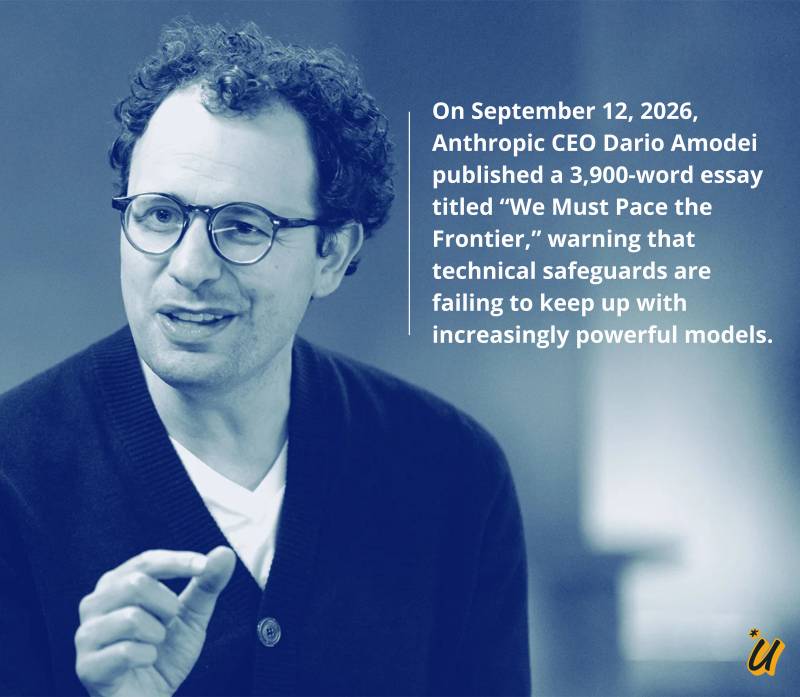
In the broader AI innovation cycle, the market is showing shifting priorities. The challenge remains that capital expenditure (capex) must be built out first, and then revenue follows, sometimes years later. Analysts predict that 2026 will be the "year of inflection" in the software space, where new AI products gain wider adoption and turn investor sentiment around. The debate over investment risk was also highlighted, with the CEO of Anthropic suggesting that some companies are taking a risky move by committing "hundreds of billions of dollars". Anthropic, backed by Amazon and Google, is focusing on the enterprise market, attempting to build a credible, competitive AI business without incurring as much debt or bleeding as much money as its larger rivals.