DUBAI ---- The pursuit of peak physical performance often focuses on the destination of aesthetic perfection, but a recent report from the high-altitude fitness suites of The Lana in Dubai reveals a more profound narrative of psychological and structural reclamation. Following a significant injury that shattered her confidence and disrupted her kinetic chain, media personality Kate Ferdinand has undergone a transformational framing of her relationship with fitness. Working alongside personal trainer Amandio Costa, Ferdinand has moved beyond the superficial "grind" of the industry to embrace a disciplined, back-to-basics methodology. This shift represents an intelligent curation of movement, prioritizing the restoration of posture and stability over the raw pursuit of heavy weights—a strategy that serves as a visceral report on the power of professional resilience in the 2026 wellness landscape.
The narrative of Ferdinand’s comeback is rooted in the emotional precision of acknowledging fear. An injury is rarely just a physical setback; it is a psychological barrier that creates a "hesitation" in movement, particularly in high-stakes gym environments. By choosing the serene, disciplined atmosphere of The Lana as her training ground, Ferdinand has curated an environment that fosters both mental and physical rebuilding. Her collaboration with Costa is built on a foundation of technical transparency, where every exercise is a strategic storytelling device aimed at protecting the spine and reinforcing the core. This is not about rapid "results," but about the slow, deliberate work of re-teaching the body how to move with confidence and structural integrity.
A central pillar of this restoration project is the mastery of the push-up, an exercise often overlooked but here treated with the reverence of a masterclass. Utilizing a resistance band to facilitate proper form, Costa ensures that Ferdinand maintains a perfect line from head to heels. This mechanical intervention is designed to prevent the common pitfall of dropping hips, a move that often leads to lower back strain. By using the band as a tactile guide, the workout transcends mere exertion; it becomes an exercise in anti-compensation, forcing the core to engage and the posture to stabilize. This "mastery of the basics" serves as a transformational framing of the push-up, repositioning it as a fundamental tool for long-term spinal health rather than just an upper-body developer.

Related article - Uphorial Shopify

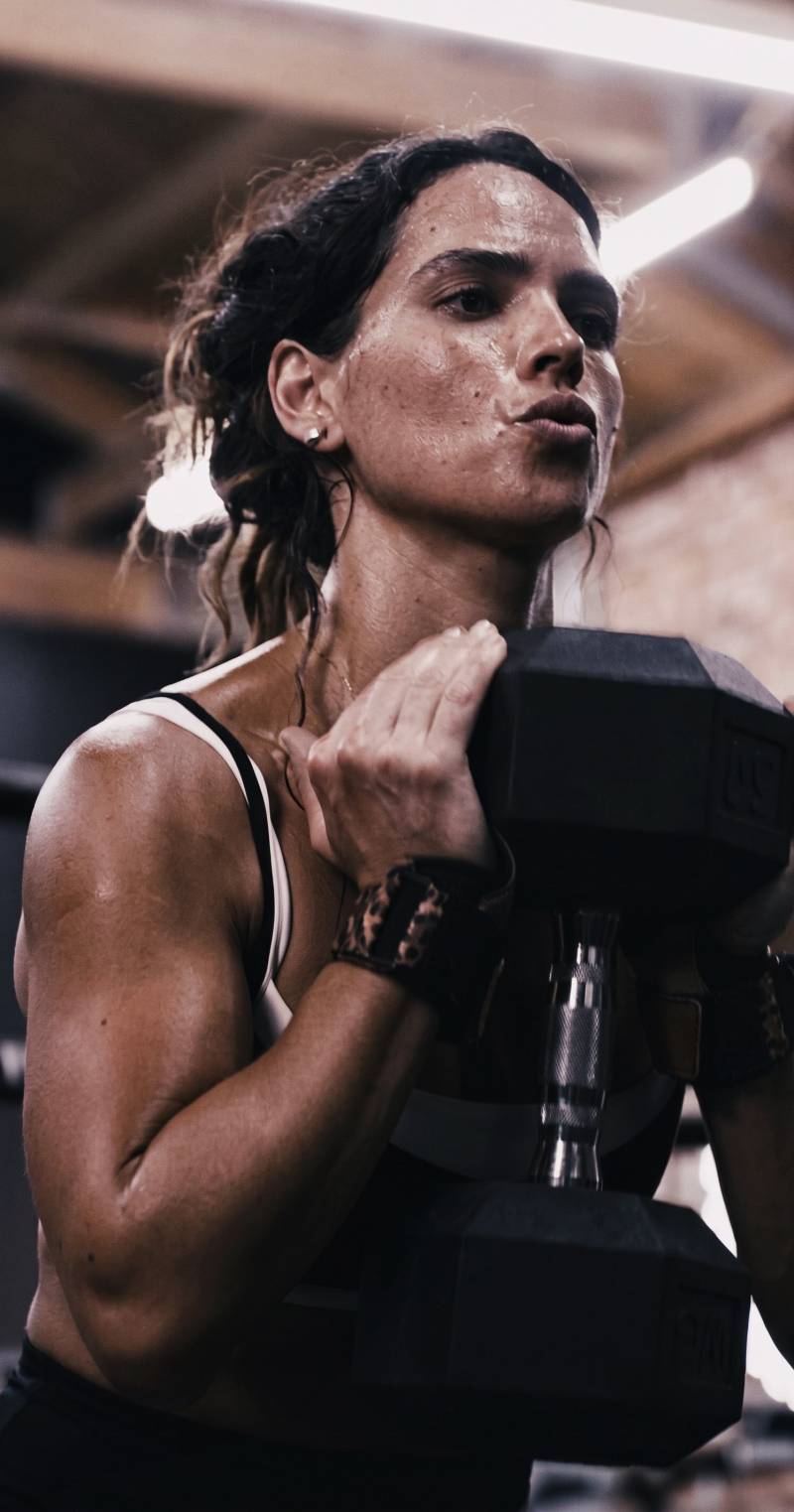
The strategic storytelling of the session continued with the introduction of dynamic reverse lunges, a unilateral movement that Ferdinand candidly admits she does not enjoy. However, her willingness to engage with the exercise highlights a sophisticated cultural understanding of the "functional sacrifice" required for elite fitness. Incorporating a goblet dumbbell hold for core stability and ending with a powerful knee drive, the movement targets glute strength while testing the body’s reactive balance. This is where Ferdinand’s commitment to "long-term health" is most visible; she recognizes that the exercises that feel the most challenging are often the ones that provide the most significant structural protection as the body ages.
To further test this newfound stability, the report details an intensive segment involving the Swiss ball plank. In a move designed to build high-level reaction and core fortitude, Costa introduces controlled instability while Ferdinand maintains her position. This exercise is the ultimate stress test for a post-injury athlete, demanding a level of total-body coordination that can only be achieved through consistent, disciplined training. The "emotional precision" of this segment lies in the trust between trainer and athlete; by allowing for instability, Ferdinand is effectively "re-wiring" her nervous system to handle the unpredictable stresses of daily life, transforming her core into a fortress of anti-rotation.
Perhaps the most technical highlight of the session was the Bird Dog Row, a complex movement that requires coordination between the upper and lower body while balancing on one leg. This exercise focuses on anti-rotation and posture, forcing the athlete to protect their back from unnecessary strain while engaging in a pulling motion. For Ferdinand, who has integrated her love for Pilates with this rigorous strength training, the Bird Dog Row represents the pinnacle of her "new era" of fitness. It is a movement that bridges the gap between the flexibility of the studio and the power of the weight room, resulting in a physical profile that is as functional as it is aesthetic. Ultimately, the report from Dubai confirms that Kate Ferdinand has reached a point where her confidence is no longer anchored in how she looks, but in what she can do. By stripping away the ego and returning to the foundational principles of movement, she has built a version of herself that is stronger and more resilient than the one that existed before her injury. Her journey serves as a blueprint for the modern woman who refuses to be sidelined by physical setbacks, proving that a "back-to-basics" approach is often the most innovative way forward.