LOS ANEGELES – In a revealing and wide-ranging new interview, Thomas Wesley Pentz—known globally as Diplo—has pulled back the curtain on a career defined by high-stakes creative risks and a relentless pursuit of the "unconventional." The legendary producer and DJ, who has navigated the music industry from its underground raves to the apex of the global charts, shared his unique philosophy on why a producer’s role is shifting toward that of a creative director. In a digital-first era where 15-second viral moments often drive commercial success more than full-length albums, Diplo argues that the ability to curate a visual and sonic "vibe" has become the most powerful tool in a musician’s arsenal.
The discussion traced the origins of Major Lazer, the genre-bending project Diplo founded alongside the producer Switch. He recalled the early days of the collective as an exercise in creative freedom, born out of high-energy collaborations with artists like M.I.A. and Santigold. The objective, he explained, was to craft "super weird" beats that defied the rigid structures of the then-nascent EDM scene by infusing it with the raw, rhythmic pulse of Jamaican dancehall. This experimental period not only redefined the sound of the festival circuit but also set the stage for Diplo’s eventual transition into the mainstream pop world.

Related article - Uphorial Shopify

One of the most pivotal moments in this transition was his collaboration with Justin Bieber. Diplo detailed the strategic delicate balance required to make avant-garde electronic sounds accessible to a massive pop audience without losing their edge. He emphasized that the goal was never to dilute the sound, but to package a unique, left-field production in a way that resonated on a universal scale. This philosophy has since made him a go-to collaborator for the biggest names in the global East, particularly in the highly polished world of K-Pop.
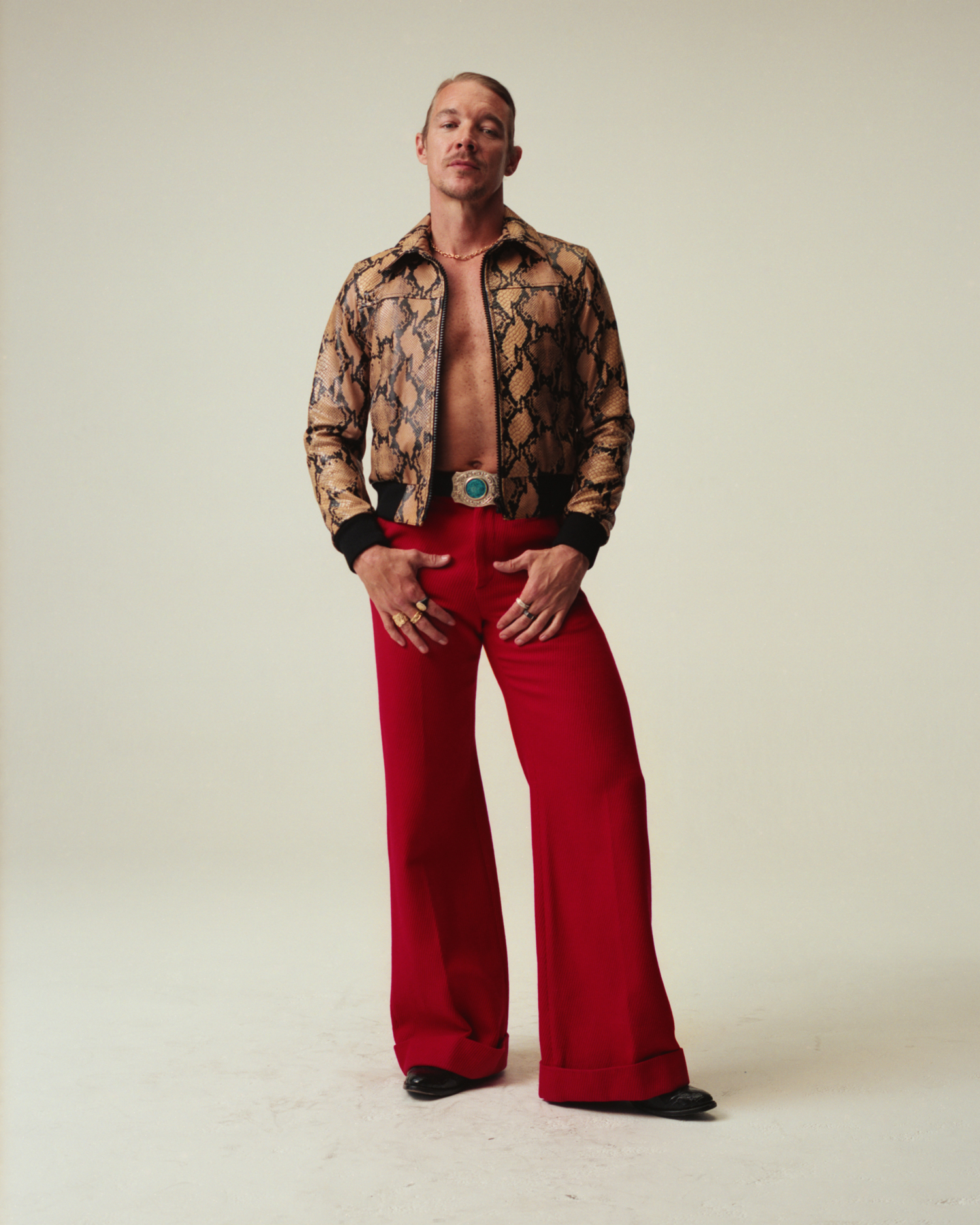
Addressing his work with the record-breaking group BLACKPINK, Diplo highlighted the specific demands of the genre. For the track "Ready for Love," he noted that the production required an immediate, high-octane energy—hooks that land instantly and a level of sonic "polish" that is rare in Western pop. This emphasis on "instant impact" was further explored in his account of a high-pressure session with BTS in Los Angeles. Working alongside other songwriting titans such as Ryan Tedder and Jon Bellion, Diplo described the atmosphere as one of intense, rapid-fire creativity, where the focus remained on crafting a global anthem that could bridge cultural and linguistic divides.
Ultimately, Diplo’s interview paints a picture of an artist who is as much a cultural strategist as he is a musician. He suggests that the modern producer must be a "creative director" first—someone who understands how a song lives on a smartphone screen just as much as how it sounds in a club. As the industry continues to move toward bite-sized, visual-driven content, Diplo remains at the forefront by treating music not just as a series of tracks, but as a series of moments designed to capture the world's attention in an instant.