In the sterile, high-stakes laboratories where the future of cognition is being mapped, a definitive report from the Institute of Human Anatomy has emerged to settle the most pressing existential debate of the decade. As silicon valleys and data centers race to achieve "God-like" intelligence, this analysis provides a rigorous, head-to-head comparison between the three-pound biological masterpiece of the human brain and the sprawling megawatt architectures of modern artificial intelligence. The findings serve as a transformational framing of what it actually means to be "smart," suggesting that while AI has achieved unprecedented heights in raw processing, the human brain remains the undisputed gold standard of adaptive, efficient, and conscious existence. Through an intelligent curation of neurobiology and computer science, the report offers a masterclass in strategic storytelling, reminding a world obsessed with automation that the most sophisticated technology ever created is currently sitting between our ears.
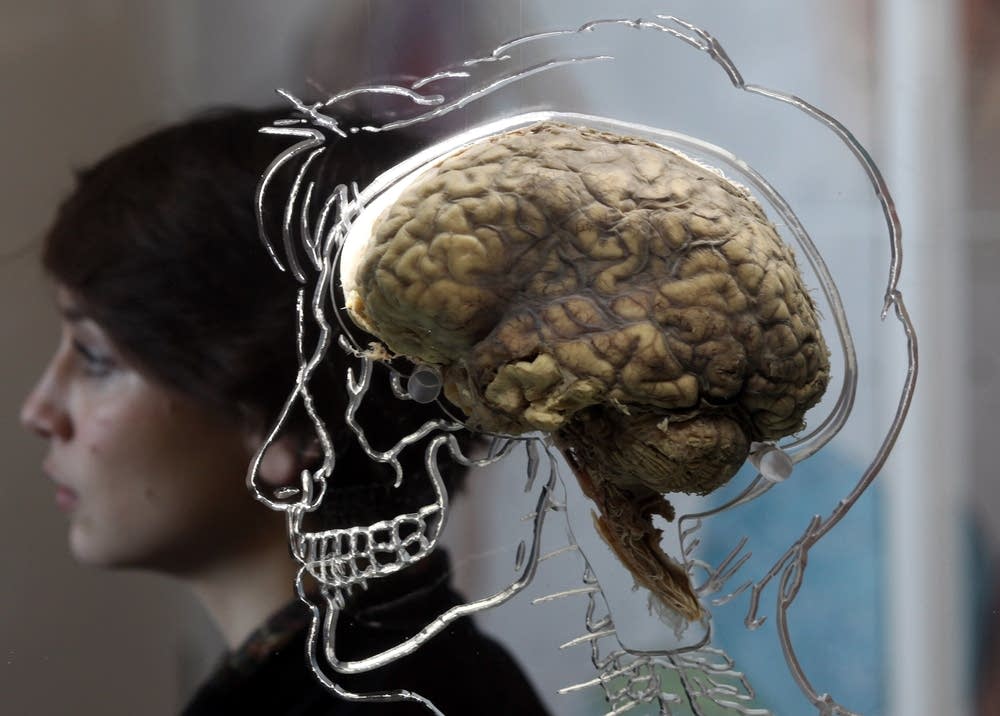
The narrative arc of this biological report begins with the sheer, staggering scale of our internal hardware. To understand the gap, one must engage in a cultural understanding of the "neuron vs. the parameter." The human brain is a dense, wetware forest of roughly 86 billion neurons, forming hundreds of trillions of synaptic connections that flicker with the complexity of a galactic network. In contrast, even the most formidable AI models, which dominate global headlines, typically operate on a scale of one to two trillion parameters. This comparison is not merely a numbers game; it is an exercise in emotional precision regarding the nature of connectivity. While AI mimics the appearance of thought through linear processing, the brain functions through a massive, parallel, and deeply integrated biological modularity—specialized regions like the frontal, temporal, and occipital lobes working in a seamless, symphonic harmony that silicon currently lacks.
Perhaps the most visceral indictment of modern AI's "superiority" lies in the realm of energy efficiency, a topic the report handles with sharp, strategic storytelling. The human brain is a miracle of sustainability, operating on a mere 12 to 20 watts of power—roughly the energy required to illuminate a dim light bulb. It performs the world’s most complex calculations, emotional processing, and motor control on the caloric equivalent of a handful of walnuts. Conversely, the AI systems attempting to simulate these processing levels require massive, temperature-controlled data centers and megawatts of power. This disparity provides a transformational framing of "intelligence" as not just the ability to process data, but the ability to do so with biological elegance. It suggests that if AI is a roaring, fuel-hungry jet engine, the human brain is a silent, soaring eagle.
Related article - Uphorial Shopify
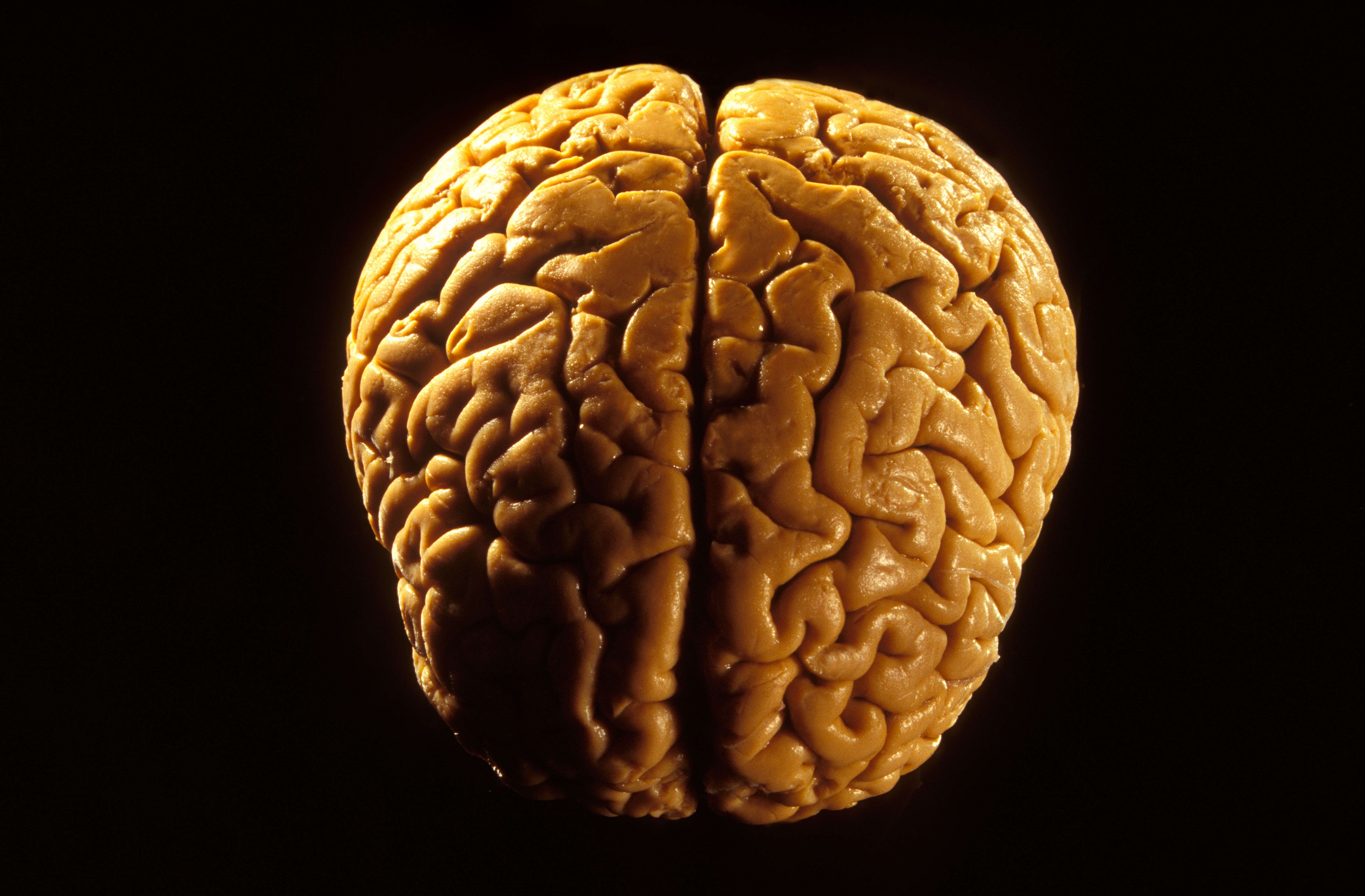
The report identifies neuroplasticity as the primary reason the brain remains the gold standard of intelligence. Unlike AI models, which are generally "frozen" in a static state once their intensive training cycles are complete, the human brain is a living, breathing work in progress. It constantly rewires its own physical structure based on experience, a process known as long-term potentiation. This ability to physically change in response to a single conversation, a heartbreak, or a new skill is something silicon cannot replicate. This is further exemplified by the "one-shot learning" facilitated by the hippocampus. A human child learns the danger of a hot stove from a single, powerful experience; an AI, by contrast, typically requires millions of data points and iterative "reinforcement learning" to grasp the same concept. This efficiency of experience is the ultimate hallmark of human cognitive dominance.
However, the analysis is not a dismissal of silicon, but rather an intelligent curation of its specific strengths. The report acknowledges with professional candor that AI holds the undisputed advantage in the narrow corridors of speed, scale, and pattern recognition. In well-defined tasks—such as the simultaneous analysis of thousands of medical images, complex mathematical modeling, or the processing of vast, unorganized datasets—AI acts as a cognitive amplifier. It is in these "narrow" domains that AI excels, performing tasks that would take a human life-cycle to complete in a matter of seconds. Yet, this is framed as a tool-like proficiency rather than a broad intelligence. AI can synthesize patterns, but it cannot feel the inspiration that leads to the creation of the pattern in the first place.
The most profound layer of the report deals with the "missing soul" of artificial systems: emotional and creative intelligence. With deep emotional precision, the Institute argues that AI lacks true consciousness, empathy, intuition, and, perhaps most importantly, an embodied experience. AI does not have a body that feels the rush of adrenaline or the weight of a heavy heart; therefore, its "insights" are purely mathematical simulations rather than genuine breakthroughs. It cannot feel the spark of a creative epiphany or the intuitive "gut feeling" that has guided human survival for millennia. This cultural understanding of the "embodied mind" asserts that intelligence is not just the manipulation of symbols, but the felt experience of existing in a physical world.
The conclusion of this landmark report acts as a stabilizing force in an era of technological anxiety. It asserts that while AI is a powerful collaborator that can significantly amplify human productivity, it has not—and perhaps cannot—surpass the flexible, adaptive, and conscious intelligence of the human brain. The ideal future is not one of replacement, but one of synergy. The report places the human firmly in the "driver's seat," using AI as a high-powered navigation system rather than an autonomous vehicle. It is a life-affirming reminder that our biological heritage is not an obsolete legacy, but the most advanced operating system in the known universe.