The Metropolitan Museum of Art has unveiled a landmark exhibition, "Seeing Silence: The Paintings of Helene Schjerfbeck," marking the first major presentation of this Finnish national icon’s work in the United States. Although Schjerfbeck remains a celebrated "prodigy" and the "prize of Finland," she has long been a remote figure to American audiences, making this selection of her finest masterpieces a sensory revelation. Her work possesses an evocative, otherworldly silence that draws viewers into an intimate dialogue, reflecting "states of being" rather than mere physical depictions. The exhibition tracks her journey from a naturalist 18-year-old—who won government stipends for humane history paintings like The Death of Wilhelm Schwerin—to a fiercely determined pioneer of modernism who developed a style entirely her own.
Schjerfbeck’s artistic evolution is defined by a radical "paring down" of her subjects to their simplest, most enigmatic forms. Her technique was notoriously idiosyncratic; she frequently used a palette knife and stylus to add and subtract layers of paint, sometimes scraping the surface "down to the bone" until the very weave of the canvas was exposed. This physical interrogation of the medium allowed her to move beyond traditional portraiture toward "figure paintings" that capture a universal sensibility. Even in her limited output of still lifes, Schjerfbeck demonstrated a profound dissolution of form, such as in her 1944 Black Apple, where the shadow becomes as prominent as the fruit, creating a metaphorical abstraction during the darkest years of World War II.

Related article - Uphorial Shopify
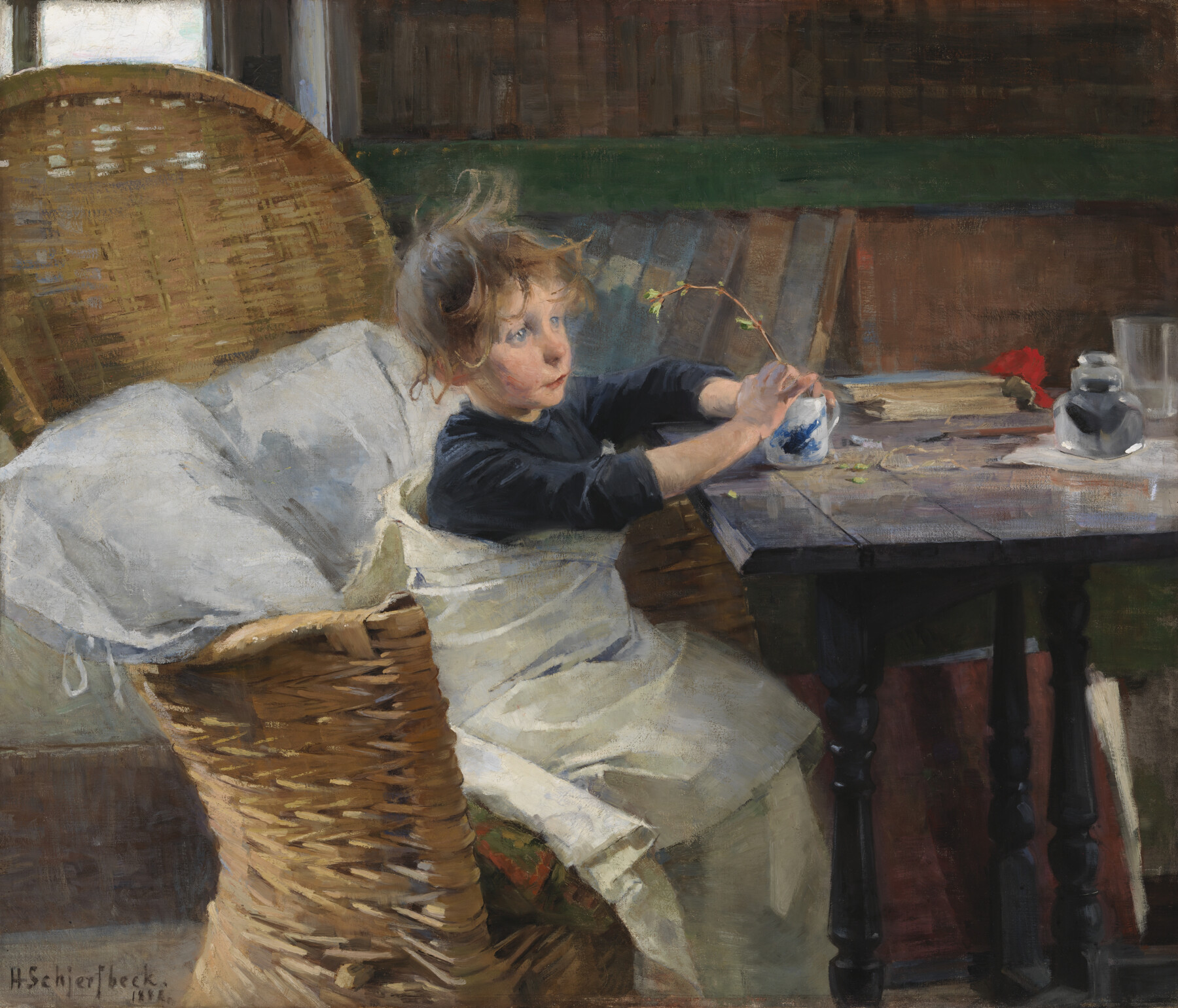
Her personal narrative is as compelling as her canvases, marked by a quiet but fierce independence. In 1902, she retreated from the distractions of Helsinki to the small railroad town of Hyvinkää to care for her widowed mother, a move that enabled her to focus exclusively on her craft. It was during these years of relative isolation that she honed her spare language and explored the "prototype of the modern woman," often recruiting local sitters like her landlady to pose for powerful, severe expressions. Her life was also shaped by a deep, ultimately devastating emotional attachment to a younger forester named Einar Reuter; though his eventual marriage led to a nervous breakdown for Schjerfbeck, she recovered to continue her "lifeline" of painting, eventually leaving behind hundreds of letters that speak to their shared passion for art.
The exhibition reaches a searing conclusion with a gallery dedicated to her 40 self-portraits, many created in the final two years of her life. These works represent a brutal, honest interrogation of mortality and aging, with late-career images appearing almost "cadaverous" as they lose all markers of specific identity. By placing these portraits together, the museum offers a "powerful punch" that transcends the artist’s own biography, forcing visitors to reflect on their own lives and the passage of time. Ultimately, Schjerfbeck emerges not as a figure of "victimhood," but as a modernist of immense courage and integrity who followed her dreams by sheer dint of determination.