The global technology landscape is experiencing a profound reconfiguration as record-breaking infrastructure expenditures, major regulatory battles, shifting energy debates, and historic executive realignments collide. Across global financial markets and corporate boardrooms, the sheer capital required to sustain the artificial intelligence boom is reshaping balance sheets and sparking intense political debate, while legacy tech titans undergo structural shifts that will define the industry for the next decade.
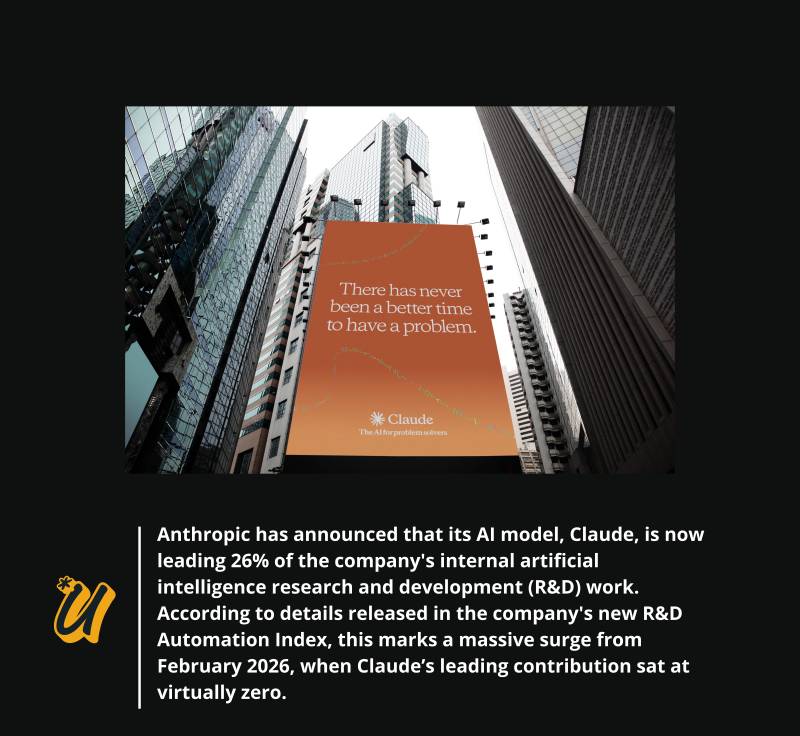
At the epicenter of the physical infrastructure race, artificial intelligence startup Anthropic has committed to a massive $35 billion cloud computing deal with Nvidia-backed infrastructure provider Lambda. The arrangement underscores the escalating cost of compute capacity necessary to train, optimize, and scale next-generation foundation models. As frontier AI developers race to build increasingly sophisticated systems, access to specialized clusters of graphics processing units has become the primary bottleneck—and the defining financial expense—for the sector. Partnerships of this scale reflect a broader trend across Silicon Valley, where technology firms are locking in multi-billion-dollar computing capacity years in advance to avoid being outpaced by rivals.
This relentless demand for capital is sending shockwaves through global financial markets. Global bond yields have surged to their highest levels since 2008, driven in large part by heavy borrowing from technology conglomerates seeking to fund massive AI infrastructure expansions. Corporate debt issuance among mega-cap tech firms has surged to record levels as companies construct hyperscale data centers, purchase high-end hardware, and secure private power grids. Market analysts warn that the massive supply of corporate debt is pushing yields upward across the broader fixed-income landscape, elevating borrowing costs across multiple economic sectors and forcing institutional investors to adjust to a higher-yield environment driven by tech-sector demand.

Despite market pressures, prominent industry leaders contend that the long-term economic upside of artificial intelligence outweighs the immediate financial friction. Speaking at a G20 ministerial meeting in North Carolina, Elon Musk offered an optimistic forecast for the global economy, projecting that AI technology could expand global gross domestic product by 20% to 30%. Addressing international delegates, Musk argued that the automation of complex workflows, combined with massive productivity gains in logistics, software, and industrial manufacturing, will create an economic surge unparalleled in modern history. However, he emphasized that achieving such growth will depend entirely on nations successfully scaling power grids and computing networks to keep pace with operational demands.
Yet, the rapid expansion of physical data infrastructure is triggering fierce political friction on the ground. A widening geographic divide has emerged over how governments approach the construction of massive server farms. In Brazil, political candidates across the spectrum are actively promoting new data center developments as essential engines of economic modernization, digital sovereignty, and high-tech job creation. Conversely, the United States is witnessing sharp political backlash. Local communities and policymakers across several states are raising alarms over the strain data centers place on regional power grids and municipal water supplies. With data hubs requiring gigawatts of electricity and millions of gallons of cooling water daily, state legislatures and local councils are increasingly questioning whether the tax revenues generated by these facilities compensate for their environmental and utility footprints.
While infrastructure debates heat up, regulatory pressure on big tech continues to mount on other fronts. The Federal Trade Commission, joined by 22 U.S. state attorneys general, has filed a landmark lawsuit against Amazon, alleging that the e-commerce giant systematically overcharged more than 1.2 million advertising customers. The complaint asserts that Amazon manipulated its internal ad-auction system—specifically across its Sponsored Products, Sponsored Brands, and Sponsored Display offerings—to secretly inflate prices paid by merchants and corporate brands. Regulators claim the company overrode competitive bidding mechanics to drive up its high-margin advertising revenue, extracting billions of dollars in excess fees from small businesses and enterprise sellers alike. Amazon has vigorously denied the charges, maintaining that its auction mechanics are transparent and designed to reflect true market relevance.
Simultaneously, the industry is witnessing historical shifts in corporate leadership. At Apple, a momentous chapter has drawn to a close as John Ternus officially assumes the role of Chief Executive Officer, succeeding Tim Cook after his transformative 15-year tenure at the helm. Ternus, who previously served as Senior Vice President of Hardware Engineering, takes over as Cook moves into the position of Executive Chairman of Apple's Board of Directors. The executive handoff comes at a pivotal juncture for the Cupertino tech giant. The company is putting the final touches on its high-stakes autumn product launch event scheduled for next week, where analysts expect Apple to unveil its long-rumored foldable iPhone—a product intended to redefine its hardware lineup and anchor its next growth cycle under Ternus's leadership.
Even traditional consumer hardware categories are being reshaped by the industry's technological push, as artificial intelligence makes its way into everyday household personal care products. Appliance maker Dyson is venturing deeper into health and wellness technology with the reveal of its new $499 smart toothbrush. Equipped with onboard AI algorithms and high-precision sensors, the device analyzes brushing patterns, mapping technique, and pressure in real time to provide personalized oral hygiene recommendations. The premium device highlights how consumer tech manufacturers are embedding machine learning into high-end hardware, extending the reach of AI from hyperscale server farms directly into the consumer bathroom.