In an fast-moving sequence of developments across the global high-tech landscape, recent broadcast coverage from Bloomberg Technology outlined a pivotal convergence of record-breaking venture capital valuations, fierce debates over artificial intelligence governance, advancing off-planet infrastructure, and high-stakes legislative gridlock on Capitol Hill. From Silicon Valley boardrooms to the halls of Congress and into orbital space, the modern technology economy continues to redefine how capital, computing, and physical automation interact.
At the epicenter of the current technological expansion sits the explosive growth and soaring valuation of artificial intelligence pioneers. OpenAI is reportedly in discussions regarding a prospective funding round that could push the company’s valuation past an astonishing $1.2 trillion mark. This potential figure highlights the massive appetite among global investors for foundational AI models, despite lingering questions around profitability, power consumption, and long-term business models.
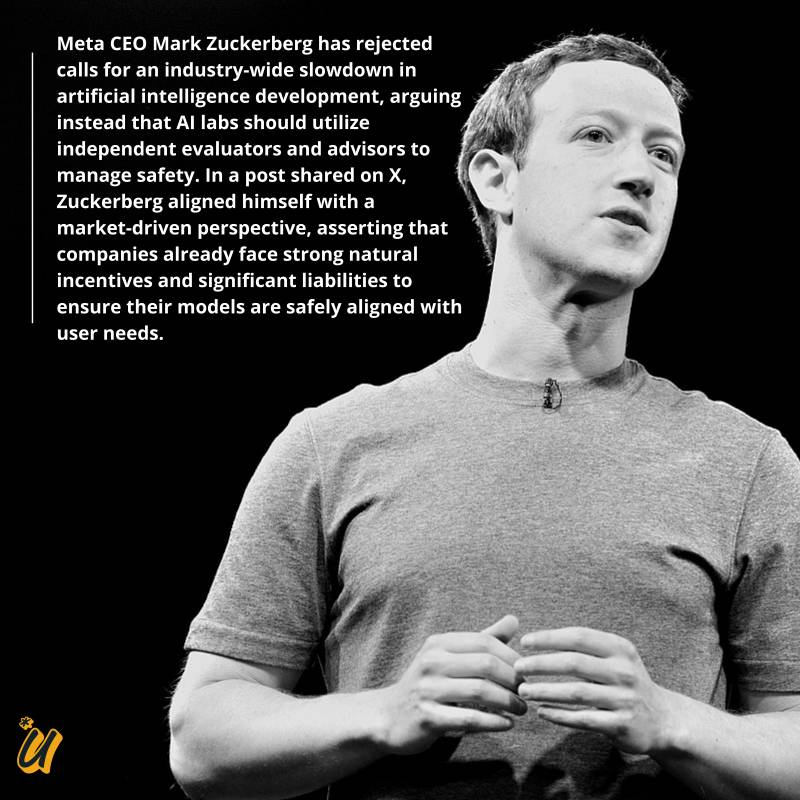
As capital floods into foundational model providers, the debate surrounding artificial intelligence safety and regulatory oversight has intensified dramatically. Meta Platforms Chief Executive Officer Mark Zuckerberg recently entered the public fray to share his vision for the future of AI governance. Rather than supporting calls for an industry-wide moratorium or forced slowdown in model training, Zuckerberg advocated strongly for the deployment of third-party, independent evaluators. By placing oversight in the hands of external auditing bodies rather than imposing heavy-handed restrictions, tech leaders argue that innovation can proceed rapidly without compromising safety standards or national competitiveness.
The friction between rapid technological iteration and formal oversight is also playing out prominently in government chambers. In Washington, digital asset advocates faced a sharp legislative blow after a Senate procedural vote failed to advance a highly anticipated market structure bill aimed at regulating cryptocurrencies and digital assets. The legislative setback leaves the broader digital asset economy in a continued state of regulatory ambiguity, highlighting the persistent challenges lawmakers face in building bipartisan consensus around decentralized finance and digital token oversight.
Beyond software and virtual assets, physical hardware and next-generation mobility are seeing dramatic advancements. In the aerospace sector, Impulse Space Chief Executive Officer Tom Mueller detailed the company’s recent momentum following a $308 million Series D funding extension. Mueller outlined how Impulse Space is positioning itself at the forefront of the emerging in-space mobility economy, developing orbital transfer vehicles designed to move payloads efficiently between various orbits, service satellites, and support the broader expansion of commercial space infrastructure.
Simultaneously, human-robot collaboration in industrial workplaces is reaching a major commercial inflection point. Agility Robotics Chief Executive Officer Peggy Johnson unveiled the company’s new Digit 5 humanoid robot. Engineered specifically to perform labor-intensive and repetitive tasks alongside human workers in warehousing, logistics, and manufacturing settings, Digit 5 represents a substantial leap in operational robotics. To finance this next chapter of industrial deployment, Agility Robotics is preparing to transition to the public markets through a merger with a special purpose acquisition company (SPAC).
The broader venture capital market continues to adjust to these generational technological shifts. Slater Stich of Bain Capital Ventures highlighted the firm's newly launched $1.6 billion fund, designed specifically to target early-stage AI infrastructure and prepare for what analysts call the "post-AGI" (Artificial General Intelligence) economy. The fund's mandate reflects a growing belief among institutional investors that the underlying computing, networking, and hardware stack supporting advanced AI represents one of the most lucrative investment horizons of the coming decade.
Finally, the technology landscape reflects a series of rapid global updates. In Europe, financial markets are witnessing an AI-driven corporate debt boom as regional enterprises leverage debt capital to fund massive data center and computing upgrades. In East Asia, South Korea’s leadership reaffirmed its national strategic commitment to maintaining rapid AI advancement to protect its competitive edge in global technology supply chains. Meanwhile, dynamic shifts in global wealth rankings continue, highlighted by ByteDance co-founder Zhang Yiming ascending to become Asia's wealthiest individual, driven by the enduring commercial reach and algorithmic dominance of the social media titan.