The economic trajectory of China presents a fascinating paradox, a phenomenon described by George Magnus, a research associate at the China Center at Oxford University and former chief economist at UBS, in a discussion hosted by Gresham College. Magnus proposes that China, much like Japan four decades ago, can simultaneously boast "islands of technological excellence" within a "sea of macroeconomic turbulence". This turbulence includes fiscal, financial, and debt problems, compounded by a rigid, Leninist governance system.
Magnus introduced his analysis by referencing a leading American academic's 1987 description of the U.S.’s principal adversary, Japan, which was then viewed as achieving "spectacular advances and growing supremacy" in fields like semiconductors, robotics, and solar energy, leading to fears that the U.S. could "no longer compete". Magnus pointed out that these exact words "could have been written about China today".
At the heart of the current debate is China's industrial policy and manufacturing prowess, driven by President Xi Jinping’s stated ambition for China to dominate what he calls the fourth industrial revolution. The Communist Party (CCP) is "deadly serious about this", aiming not just to compete but to leapfrog rivals and ultimately "dislodge the United States from its perch". China is "determined to push its industrial and manufacturing prowess to the limit" to pursue the CCP’s domestic and international goals. This ambition is supported by arguably the most expensive industrial program on Earth, estimated by the IMF to cost China about 4.4% of GDP annually, with other estimates running closer to 6% or 7%—potentially twice what most countries spend on national defense.
Programs like Made in China 2025 (Mick 25) aim for self-sufficiency in strategic industries. This strategy has yielded "unquestioned almost unrivaled success" in areas such as electric vehicles (EVs) and basic metals, helping China account for about 30% of global manufacturing. For example, China now accounts for approximately 8 million out of 14 million global EV sales.
Related article - Uphorial Shopify

However, this "very dynamic modern sector," which accounts for about 13.5% of the economy, is simply not large enough to substitute for the shrinking real estate sector, which broadly defined accounted for about 26% of the economy just a few years ago. The crippling four-year crisis in real estate has caused an estimated destruction of household wealth between $7 and $10 trillion. Other deep structural problems include massive overcapacity, deflation, high youth unemployment, and significant inequality. The high output, particularly in sectors like EVs, is leading to "involution competition"—a vicious cycle of overproduction where, for instance, only about half a dozen of 150 EV producers in China are currently making money.
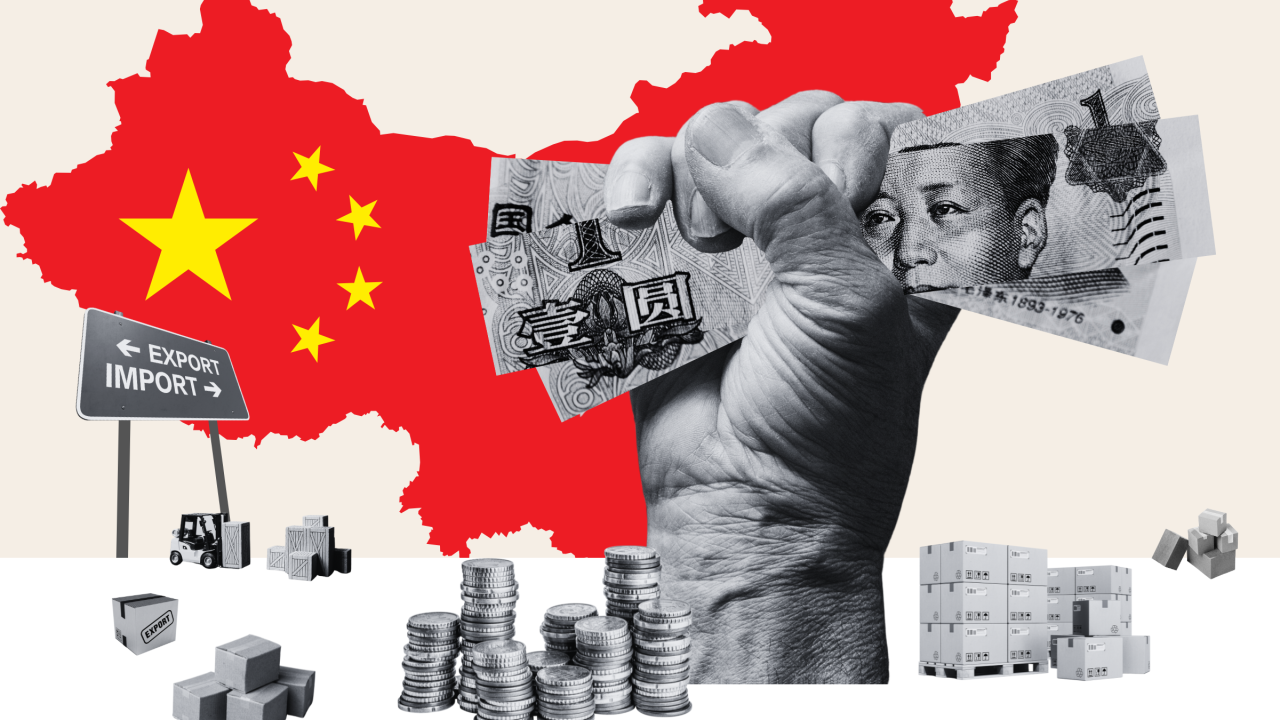
China's economic model remains fundamentally unbalanced, with household consumption very low (about 40% of the economy) and investment extremely high (also around 40%). Policy leaders acknowledge the need to shift toward consumption. However, Dr. Magnus argues that to "radically change the model" to prioritize households and private firms would necessitate changing the distribution of political power, which the CCP, particularly under Xi Jinping, cannot allow. This weak domestic demand forces massive production overseas, leading to a kind of mercantilism where exporting is a virtue but importing is not. This strategy is increasingly generating trade defense measures from countries around the world, including Mexico, Indonesia, Brazil, and India, not just the US and the EU.
Furthermore, China faces severe demographic deterioration, being the fastest-aging country on the planet. The cohort of first-time homebuyers (aged 25–35) is projected to drop by 30–35% between now and 2040, ensuring that the property market remains in "shrinkage mode".
Magnus concludes that there is "no precedent for industrial policy and prowess to resolve the myriads of economic and social problems" that afflict the country. The world is currently in a process of "managed disengagement" (or decoupling/de-risking) from China regarding technology, supply chains, and national security. Ultimately, while China's technological progress is expected to continue, the critical focus should be on whether the door is open to more "inclusive and robust institutions and political change". On this basis, Magnus posits that China is currently at a plateau, not a precipice, but must be careful not to allow its macroeconomy to deteriorate to the point where it is driven closer to the edge.